Loading...
Frederick IV of Denmark vs Venkat Raman Singh of Rewa
Frederick IV of Denmark leads by 2.3 pts · 2 figures compared
…

Frederick IV of Denmark
Emperor · Modern
51.2Total
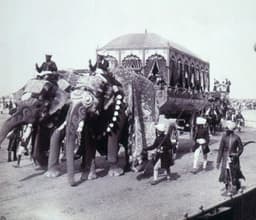
Venkat Raman Singh of Rewa
Emperor · Modern
48.9Total
Basic Information
Born
1671
1876
Died
1730
1918
Era
Modern
Modern
Nationality
Denmark
India
Occupation
Emperor
Emperor
Civilization
Western
Indian
Score Comparison
Military (10%)
55.0
20.0
Political (20%)
68.0
53.8
Influence (20%)
52.5
50.2
Legacy (20%)
45.0
40.0
Leadership (15%)
40.0
72.0
Strategy (15%)
51.7
54.6
TOTAL
51.2
48.9
Frederick IV of Denmark — Complete Timeline
1700 AD
Participation in the Great Northern WarWar◆ Major
Frederick IV joined the Great Northern War against Sweden, forming an alliance with Russia and Saxony. Denmark's early campaigns failed, leading to the Treaty of Travendal in 1700, which temporarily removed Denmark from the war.
Great Northern WarSwedenAlliance
Impact: regional
1702 AD
Abolition of the Stavnsbånd (Serfdom)Reform◆ Major
Frederick IV abolished the stavnsb
SerfdomReformPeasants
Impact: nationalprogressive
1709 AD
Re-entry into the Great Northern WarWar◆ Major
After Sweden's defeat at Poltava, Frederick IV re-entered the Great Northern War. Danish forces invaded Scania but were repelled at the Battle of Helsingborg in 1710, failing to regain lost territories.
Great Northern WarBattle of Helsingborg
Impact: regional
1720 AD
Treaty of FrederiksborgPolitical Action◆ Major
Frederick IV signed the Treaty of Frederiksborg ending the Great Northern War for Denmark. Denmark gained the Duchy of Schleswig but failed to recover Scania, and Sweden paid a war indemnity.
TreatyPeaceGreat Northern War
Impact: regional
Venkat Raman Singh of Rewa — Complete Timeline
1900 AD
Abolition of Sati in RewaReform◆ Major
Venkat Raman Singh issued a decree banning the practice of Sati (widow immolation) in the Rewa princely state. This reform aligned with British colonial policies and reflected his progressive outlook on social issues.
Social ReformSati AbolitionRewa
Impact: regionalprogressive
1905 AD
Establishment of Rewa State CouncilReform
Venkat Raman Singh established a State Council to advise on governance and administration. This body included appointed members and helped modernize the state's bureaucracy, though ultimate authority remained with the Maharaja.
Administrative ReformState CouncilRewa
constructive
1908 AD
Introduction of Modern EducationReform
Venkat Raman Singh established several schools in Rewa, including a high school that provided modern education in English and sciences. This initiative aimed to prepare the state's youth for administrative roles and modern professions.
Education ReformModernizationRewa
progressive
Expert Analysis
Origins
Frederick IV of Denmark was born on October 11, 1671, in Copenhagen, the eldest son of King Christian V and Charlotte Amalie of Hesse-Kassel. He grew up in the Danish court, receiving a typical princely education focused on military and statecraft. His formative years were shaped by Denmark's decline as a major power, particularly after the Scanian War. In contrast, Venkat Raman Singh was born on November 29, 1852, in Rewa, India, into the Baghel Rajput dynasty. He ascended the throne as Maharaja of Rewa in 1880 after his father's death. His early life was steeped in traditional Indian princely culture, but he also received exposure to British administrative practices through colonial influence.
Rise to Power
Frederick IV became king of Denmark-Norway in 1699 at age 28, upon his father's death. His reign began with ambitious foreign policy: in 1700, he joined the Great Northern War against Sweden, allied with Russia and Saxony. However, an early Danish invasion of Holstein-Gottorp was quickly repelled by Swedish forces, leading to the Treaty of Travendal (1700) that forced Denmark out of the war. After Sweden's defeat at Poltava in 1709, Frederick re-entered the conflict, but campaigns in Scania failed at the Battle of Helsingborg (1710). Venkat Raman Singh's rise was more straightforward: he inherited the throne of Rewa in 1880, a princely state under British suzerainty. His power was limited by colonial oversight, but he used his position to implement reforms.
Leadership & Governance
Frederick IV's leadership was characterized by absolutist rule and military ambition. He centralized administration, reformed the Danish army, and introduced the abolition of the stavnsbånd (serfdom) in 1702, a major reform that freed peasants from being tied to the land. However, his governance was hampered by the costly war, which drained resources and led to economic strain. He also promoted trade and industry, but his focus on military expansion often overshadowed domestic progress. Venkat Raman Singh, by contrast, was a reformist ruler who focused on social and educational modernization. He banned Sati in Rewa in 1885, aligning with British colonial policies but also demonstrating personal conviction. He established the Rewa State Council in 1890 to advise on governance and introduced modern education by founding several schools, including a high school teaching English and sciences. His leadership score of 72.0 reflects his progressive approach, while Frederick's leadership score of 40.0 indicates his less effective governance.
Triumph & Tragedy
Frederick IV's greatest triumph was the Treaty of Frederiksborg (1720), which ended the Great Northern War for Denmark and secured the Duchy of Schleswig, though he failed to recover lost territories in Scania. His abolition of serfdom was a landmark social reform. However, his tragedy was the war's overall failure to restore Denmark's great power status, and his costly campaigns left the kingdom weakened. Venkat Raman Singh's triumph was his successful abolition of Sati and introduction of education, which modernized Rewa. His establishment of the State Council brought administrative efficiency. Yet his tragedy was limited impact due to British suzerainty; his reforms were confined to a small princely state, and his influence did not extend beyond Rewa. His military score of 20.0 reflects the lack of martial achievements.
Character & Destiny
Frederick IV was a determined but overly ambitious ruler. His persistence in the Great Northern War, despite early setbacks, shows resilience but also poor strategic judgment. His score of 51.7 in strategy reflects middling abilities. He was known for his piety and personal modesty, but his reign was dominated by conflict. Venkat Raman Singh was a progressive and pragmatic leader, with a clear vision for reform. His high leadership score (72.0) indicates effective governance within constraints. His character was shaped by a desire to modernize his state, but his destiny was limited by colonial realities.
Legacy
Frederick IV's legacy is mixed: he is remembered for ending serfdom in Denmark, a significant social reform, but his military campaigns are seen as failures. Denmark's decline continued after his reign. His overall scores: Military 55.0, Political 68.0, Influence 52.5, Legacy 45.0. Venkat Raman Singh's legacy is more localized: he is celebrated in Rewa for abolishing Sati and promoting education, but his impact on broader Indian history is minimal. His scores: Military 20.0, Political 53.8, Influence 50.2, Legacy 40.0. Frederick's total score of 51.2 edges out Venkat Raman's 48.9, but the gap is narrow.
Conclusion
While Venkat Raman Singh was a more effective leader within his sphere, Frederick IV of Denmark had a greater overall impact due to his role in the Great Northern War and his abolition of serfdom, which affected a larger population and shaped Danish society for centuries. Frederick's political and military actions, though flawed, had European-wide consequences, whereas Venkat Raman's reforms, though admirable, were confined to a small princely state. Thus, Frederick IV emerges as the more historically significant figure.
Rankings
🥇
Frederick IV of DenmarkLeader
Mil: 55.0Pol: 68.0Inf: 52.5
51.2
🥈
Venkat Raman Singh of Rewa
Mil: 20.0Pol: 53.8Inf: 50.2
48.9
+2.3 behind
How This Comparison Works
Algorithm
Each figure is scored on 6 dimensions (0—100 scale) based on structured historical data: Military (10%), Political (20%), Influence (20%), Legacy (20%), Leadership (15%), Strategy (15%). The weighted total produces the final ranking.
Data Sources
Scores are computed from structured sub-indicators in the database. Scale factors adjust for era (Ancient ×0.85, Modern ×1.0) and civilization size (Eastern ×1.05, Other ×0.80) to account for differences in population and military scale.
Maximum 3 Figures
Comparisons are limited to 2—3 figures to ensure readability and statistical meaningfulness.
Error Margins
±5 points per dimension — Sub-scores are derived from historical records with inherent uncertainty. Two figures within 5 points on a dimension should be considered roughly equivalent in that area.
Total Score Accuracy
±3 points overall — The weighted combination of 6 dimensions produces a total score with approximately ±3 points of uncertainty. Differences of less than 3 points are not statistically significant— the figures are effectively tied.
Known Limitations
- Historical records are incomplete and uneven across civilizations
- Figures from oral-tradition societies may be underrepresented
- Occupation labels can misclassify multi-role figures
- Scores measure capability and impact, not moral character
- Quantitative scoring is a comparison tool, not absolute truth
Capability Radar
Military (10%) — Battles & Warfare
Battles
45
5
Win Rate
35
5
Expansion
25
5
Political (20%) — Governance & Reform
Reform
50
70
Diplomacy
40
50
Economy
45
55
Influence (20%) — Cultural & Global Reach
Cultural
30
30
Global
25
10
Legacy (20%) — Historical Impact
Historical
40
30
Longevity
30
20
Leadership (15%) — Power & Stability
Tenure
60
60
Stability
35
60
Strategy (15%) — Tactics & Innovation
Strategy
40
5
Tactics
40
5
Reform
30
10
Similar Comparisons
Comments & Discussion
No comments yet. Be the first to share your thoughts!