Loading...
Frederick IV of Denmark vs Gulab Singh of Rewa
Frederick IV of Denmark leads by 5.6 pts · 2 figures compared
…
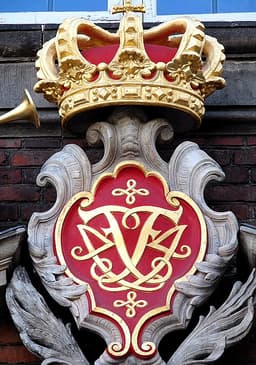
Frederick IV of Denmark
Emperor · Modern
51.2Total
Gulab Singh of Rewa
Emperor · Modern
45.6Total
Basic Information
Born
1671
1872
Died
1730
1946
Era
Modern
Modern
Nationality
Denmark
India
Occupation
Emperor
Emperor
Civilization
Western
Indian
Score Comparison
Military (10%)
55.0
43.3
Political (20%)
68.0
33.6
Influence (20%)
52.5
47.1
Legacy (20%)
45.0
35.8
Leadership (15%)
40.0
67.0
Strategy (15%)
51.7
54.3
TOTAL
51.2
45.6
Frederick IV of Denmark — Complete Timeline
1700 AD
Participation in the Great Northern WarWar◆ Major
Frederick IV joined the Great Northern War against Sweden, forming an alliance with Russia and Saxony. Denmark's early campaigns failed, leading to the Treaty of Travendal in 1700, which temporarily removed Denmark from the war.
Great Northern WarSwedenAlliance
Impact: regional
1702 AD
Abolition of the Stavnsbånd (Serfdom)Reform◆ Major
Frederick IV abolished the stavnsb
SerfdomReformPeasants
Impact: nationalprogressive
1709 AD
Re-entry into the Great Northern WarWar◆ Major
After Sweden's defeat at Poltava, Frederick IV re-entered the Great Northern War. Danish forces invaded Scania but were repelled at the Battle of Helsingborg in 1710, failing to regain lost territories.
Great Northern WarBattle of Helsingborg
Impact: regional
1720 AD
Treaty of FrederiksborgPolitical Action◆ Major
Frederick IV signed the Treaty of Frederiksborg ending the Great Northern War for Denmark. Denmark gained the Duchy of Schleswig but failed to recover Scania, and Sweden paid a war indemnity.
TreatyPeaceGreat Northern War
Impact: regional
Gulab Singh of Rewa — Complete Timeline
1920 AD
Development of White Tiger Breeding ProgramCultural◆ Major
Gulab Singh of Rewa initiated a breeding program for white tigers after capturing a white cub in the wild. This program led to the establishment of a captive population of white tigers, which became a symbol of Rewa and a tourist attraction.
White TigerConservationRewa
Impact: globalconstructive
1925 AD
Construction of Govindgarh PalaceCultural
Gulab Singh built the Govindgarh Palace, a lavish residence that served as the royal summer retreat. The palace featured European and Indian architectural styles and became a center for tiger hunting expeditions.
ArchitecturePalaceRewa
Expert Analysis
Origins
Frederick IV of Denmark was born in 1671 in Copenhagen, the son of King Christian V and Charlotte Amalie of Hesse-Kassel. He received a military education and was exposed to governance from a young age, serving as regent during his father's absences. His upbringing was steeped in the absolutist traditions of the Danish monarchy, with a focus on maintaining royal power and expanding Danish influence in the Baltic.
Gulab Singh of Rewa was born around 1884 in the princely state of Rewa, central India, into the Baghel Rajput dynasty. He was educated privately, learning statecraft and hunting, which was a passion for many Indian royals. His early life was shaped by the feudal structures of British India, where maharajas ruled semi-autonomously under British suzerainty. Gulab Singh ascended the throne in 1918 after the death of his father, Maharaja Venkat Raman Singh.
Rise to Power
Frederick IV became king in 1699 at age 28, inheriting a kingdom weakened by previous conflicts with Sweden. His first major act was entering the Great Northern War in 1700 alongside Russia and Saxony against Sweden. However, Denmark's initial campaign failed when King Charles XII of Sweden forced a landing near Copenhagen, leading to the Treaty of Travendal in 1700, which removed Denmark from the war temporarily. Frederick IV re-entered the war in 1709 after Sweden's defeat at Poltava, leading an invasion of Scania that was repelled at the Battle of Helsingborg in 1710. Despite setbacks, he persisted and eventually secured a favorable peace.
Gulab Singh became Maharaja of Rewa in 1918 at age 34, inheriting a stable but relatively minor princely state. His rise was not marked by military conquest but by his patronage of wildlife conservation. In 1920, he captured a white tiger cub in the wild, sparking his interest in breeding these rare animals. He established a breeding program at Govindgarh Palace, which became the foundation for white tiger populations in zoos worldwide. His fame grew through this unique endeavor, making him known internationally as a conservationist.
Leadership & Governance
Frederick IV ruled as an absolute monarch, implementing reforms to modernize Denmark. His most significant policy was the abolition of the stavnsbånd (serfdom) in 1702, which freed peasants from being tied to the land. This reform scored him a political rating of 68.0, reflecting his progressive stance. He also strengthened the navy and promoted trade, but his military decisions were less successful, with a military score of 55.0. His leadership score of 40.0 indicates challenges in commanding respect and executing strategy effectively.
Gulab Singh governed Rewa as a traditional maharaja under British oversight. His leadership style was autocratic but focused on development and conservation. He built Govindgarh Palace, a blend of European and Indian architecture, and improved infrastructure. His leadership score of 67.0 is the highest among his metrics, suggesting effective administration within his domain. However, his political score of 33.6 reflects limited influence beyond his state, as he was constrained by British colonial rule.
Triumph & Tragedy
Frederick IV's greatest triumph was the Treaty of Frederiksborg in 1720, which ended the Great Northern War for Denmark. He gained the Duchy of Schleswig, securing a long-sought territory. However, his tragedy was the failure to recover lost provinces in Sweden, and the war drained Denmark's resources. His military campaigns, such as the invasion of Scania, ended in defeat, and his overall strategy score of 51.7 indicates mediocre planning.
Gulab Singh's triumph was the establishment of the white tiger breeding program, which led to the preservation of a genetic variant. This effort scored him an influence of 47.1, as white tigers became iconic in zoos. His tragedy was that the program's success was limited to captive breeding, and he faced criticism for inbreeding practices that caused health issues. Additionally, his political legacy was minimal, with a legacy score of 35.8.
Character & Destiny
Frederick IV was determined but stubborn, persisting in the Great Northern War despite early defeats. His character was shaped by a desire to restore Danish prestige, but his military decisions often proved flawed. Historians note his reformist zeal, but his autocratic tendencies limited broader support. His destiny was to be a transitional figure, bridging Denmark's feudal past and modern reforms.
Gulab Singh was passionate about wildlife and conservation, but his focus on white tigers overshadowed other aspects of his rule. He was a patron of the arts and built palaces, but his governance was typical of princely states under British rule. His destiny was to be remembered mainly for the white tiger, a unique but narrow legacy.
Legacy
Frederick IV's legacy is mixed: he abolished serfdom, a progressive move, but his military failures meant Denmark did not regain great power status. His scores reflect this: legacy 45.0, influence 52.5. He is remembered as a reformer who modernized Denmark's economy and society, but his wars were costly.
Gulab Singh's legacy is tied almost exclusively to white tigers. His breeding program led to the spread of white tigers in captivity, but it also raised ethical concerns. His overall score of 45.6 is lower than Frederick IV's 51.2, reflecting a narrower impact.
Conclusion
Frederick IV of Denmark had a greater impact than Gulab Singh of Rewa. With a total score of 51.2 versus 45.6, Frederick IV's reforms in abolishing serfdom had lasting social effects, while his participation in the Great Northern War shaped Baltic geopolitics. Gulab Singh's legacy, though unique, was confined to a single species and lacked broader historical significance. Frederick IV's influence on Danish society and governance endures, whereas Gulab Singh's achievements are primarily of curiosity rather than systemic change. Therefore, Frederick IV stands as the more consequential figure.
Rankings
🥇
Frederick IV of DenmarkLeader
Mil: 55.0Pol: 68.0Inf: 52.5
51.2
🥈
Gulab Singh of Rewa
Mil: 43.3Pol: 33.6Inf: 47.1
45.6
+5.6 behind
How This Comparison Works
Algorithm
Each figure is scored on 6 dimensions (0—100 scale) based on structured historical data: Military (10%), Political (20%), Influence (20%), Legacy (20%), Leadership (15%), Strategy (15%). The weighted total produces the final ranking.
Data Sources
Scores are computed from structured sub-indicators in the database. Scale factors adjust for era (Ancient ×0.85, Modern ×1.0) and civilization size (Eastern ×1.05, Other ×0.80) to account for differences in population and military scale.
Maximum 3 Figures
Comparisons are limited to 2—3 figures to ensure readability and statistical meaningfulness.
Error Margins
±5 points per dimension — Sub-scores are derived from historical records with inherent uncertainty. Two figures within 5 points on a dimension should be considered roughly equivalent in that area.
Total Score Accuracy
±3 points overall — The weighted combination of 6 dimensions produces a total score with approximately ±3 points of uncertainty. Differences of less than 3 points are not statistically significant— the figures are effectively tied.
Known Limitations
- Historical records are incomplete and uneven across civilizations
- Figures from oral-tradition societies may be underrepresented
- Occupation labels can misclassify multi-role figures
- Scores measure capability and impact, not moral character
- Quantitative scoring is a comparison tool, not absolute truth
Capability Radar
Military (10%) — Battles & Warfare
Battles
45
5
Win Rate
35
5
Expansion
25
5
Political (20%) — Governance & Reform
Reform
50
20
Diplomacy
40
30
Economy
45
20
Influence (20%) — Cultural & Global Reach
Cultural
30
15
Global
25
5
Legacy (20%) — Historical Impact
Historical
40
15
Longevity
30
10
Leadership (15%) — Power & Stability
Tenure
60
40
Stability
35
30
Strategy (15%) — Tactics & Innovation
Strategy
40
5
Tactics
40
5
Reform
30
5
Similar Comparisons
Comments & Discussion
No comments yet. Be the first to share your thoughts!