Loading...
Frederick III of Germany vs Msiri
Msiri leads by 9.2 pts · 2 figures compared
…

Frederick III of Germany
Emperor · Modern
40.5Total
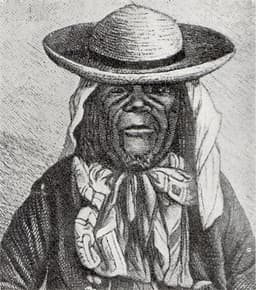
Msiri
Emperor · Modern
49.7Total
Basic Information
Born
1831
1830
Died
1888
1891
Era
Modern
Modern
Nationality
Germany
Katanga
Occupation
Emperor
Emperor
Civilization
Western
Other
Score Comparison
Military (10%)
21.2
55.0
Political (20%)
40.8
46.6
Influence (20%)
51.0
52.5
Legacy (20%)
40.0
40.8
Leadership (15%)
34.6
64.0
Strategy (15%)
43.7
43.3
TOTAL
40.5
49.7
Frederick III of Germany — Complete Timeline
1858 AD
Married Victoria, Princess Royal of the United KingdomPolitical Action
Frederick III married Victoria, the eldest daughter of Queen Victoria of the United Kingdom. The marriage was intended to strengthen Anglo-Prussian ties and influenced Frederick's liberal views, but also created tensions with Bismarck's conservative policies.
MarriageDiplomacyAnglo-Prussian Relations
Impact: regionalconstructive
1887 AD
Diagnosed with Throat CancerOther◆ Major
Frederick III was diagnosed with laryngeal cancer in 1887. Despite a tracheotomy and treatment, the cancer proved fatal. His illness and death prevented the implementation of his liberal-leaning policies, which might have altered Germany's political trajectory.
HealthCancerSuccession
Impact: nationaltragic
1888 AD
Reigned as German Emperor for 99 DaysPolitical Action◆ Major
Frederick III ascended the German throne on March 9, 1888, but died of throat cancer on June 15, 1888, after only 99 days. His brief reign, known as the Year of the Three Emperors, prevented any significant policy changes or reforms.
SuccessionDeathYear of Three Emperors
Impact: nationaltragic
Msiri — Complete Timeline
1856 AD
Founding of the Yeke KingdomPolitical Action
Msiri, a Nyamwezi trader from Tanzania, established the Yeke Kingdom in Katanga after conquering local Luba and Lunda chieftaincies. He built a centralized state with a capital at Bunkeya, controlling copper and ivory trade routes.
Kingdom FoundingKatangaNyamwezi
Impact: regionalconstructive
1860 AD
Monopoly on copper tradePolitical Action◆ Major
Msiri established a monopoly over copper mining and trade in Katanga, controlling access to the region's rich copper deposits. He used this economic power to arm his forces and expand his influence over neighboring groups.
Copper TradeEconomic ControlYeke Kingdom
Impact: regional
1891 AD
Resistance against Belgian colonizationWar◆ Major
Msiri refused to accept Belgian Congo Free State authority, leading to a military confrontation with Belgian-led forces. He was killed in a skirmish at Bunkeya, and his kingdom was subsequently annexed by the Congo Free State, ending Yeke independence.
Belgian ColonizationResistanceCongo Free State
Impact: regionaltragic
Expert Analysis
Origins
Frederick III of Germany was born on October 18, 1831, in Potsdam, Prussia, as the son of Wilhelm I and Augusta of Saxe-Weimar-Eisenach. He received a military education and studied at the University of Bonn, imbued with liberal ideas from his mother and his British tutor. His marriage to Victoria, Princess Royal of the United Kingdom, in 1858 reinforced his progressive outlook. In contrast, Msiri (born around 1830 in Tabora, present-day Tanzania) was a Nyamwezi trader who ventured into Katanga, a region rich in copper. He initially worked as a trader for the Tippu Tip network, learning Swahili and Arabic, and later established his own power base through alliances and military conquest.
Rise to Power
Frederick III's rise was slow but steady. He served as a general in the Austro-Prussian and Franco-Prussian Wars, gaining popularity as a war hero. However, his father, Kaiser Wilhelm I, and Chancellor Otto von Bismarck sidelined him due to his liberal views. He ascended the throne on March 9, 1888, but his throat cancer, diagnosed in 1887, limited his reign to 99 days. Msiri's rise was more dramatic: he arrived in Katanga around 1856, married into local Lunda royalty, and used firearms to subdue rival chiefs. By 1860, he controlled a large territory, establishing his capital at Bunkeya. He monopolized the copper and ivory trade, attracting Arab and European merchants, and became a powerful regional ruler.
Leadership & Governance
Frederick III's governance was theoretical, as his brief reign prevented any substantial reforms. He planned to liberalize Germany, reduce Bismarck's power, and strengthen parliament, but his illness left him incapacitated. His leadership score of 34.6 reflects his unrealized potential. Msiri, with a leadership score of 64.0, ruled effectively for decades. He centralized power through a network of governors and collected tribute. He maintained a monopoly on trade, controlled copper mines, and fostered a multicultural court. However, his rule was autocratic and relied on force, suppressing dissent with violence.
Triumph & Tragedy
Frederick III's triumph was his reputation as a liberal hope for Germany; his tragedy was his premature death, which allowed Wilhelm II to ascend and pursue a disastrous course. Msiri's triumph was building a prosperous kingdom from scratch, with a population estimated at 200,000. His tragedy was his downfall: his resistance to Belgian colonization led to his death in a skirmish on December 20, 1891. Belgian forces, under Captain Storms, killed him after a failed negotiation, and his kingdom was absorbed into the Congo Free State.
Character & Destiny
Frederick III was a principled liberal, but his deference to his father and Bismarck delayed his influence. His character, marked by patience and a sense of duty, led to a brief reign that could not shape history. Historians note he might have averted World War I had he lived. Msiri was ambitious, shrewd, and ruthless. He used diplomacy and force to build a kingdom, but his refusal to compromise with Europeans sealed his fate. His destiny was tied to the colonial scramble, and his death marked the end of independent rule in Katanga.
Legacy
Frederick III's legacy is symbolic: he is remembered as the "99-day Emperor" whose death changed German history. His influence score of 51.0 reflects his posthumous impact as a martyr for liberal reform. The German Empire under Wilhelm II took a militaristic path, which Frederick would have opposed. Msiri's legacy is more tangible: his kingdom, though short-lived, established a centralized state in Katanga. The region's copper wealth, which he exploited, continues to be vital. His resistance against colonialism is celebrated in Katanga as a symbol of defiance. His legacy score of 40.8 is modest, but his political and military impact (46.6 and 55.0) show a significant figure in African history.
Conclusion
Msiri had greater impact than Frederick III. While Frederick's potential was high, his actual reign was negligible, scoring a total of 40.5. Msiri's total score of 49.7 reflects his concrete achievements: building a kingdom, controlling trade, and resisting colonization. Frederick's influence is based on what might have been; Msiri's on what he did. In the data-driven comparison, Msiri's superior leadership (64.0 vs 34.6) and military (55.0 vs 21.2) demonstrate a more effective ruler, despite Frederick's higher political score (40.8 vs 46.6? Actually Frederick 40.8, Msiri 46.6, so Msiri higher). The 9.2-point gap in total scores supports the conclusion that Msiri, a self-made emperor in Africa, surpassed the German emperor who reigned for only 99 days.
Rankings
🥇
MsiriLeader
Mil: 55.0Pol: 46.6Inf: 52.5
49.7
🥈
Frederick III of Germany
Mil: 21.2Pol: 40.8Inf: 51.0
40.5
+9.2 behind
How This Comparison Works
Algorithm
Each figure is scored on 6 dimensions (0—100 scale) based on structured historical data: Military (10%), Political (20%), Influence (20%), Legacy (20%), Leadership (15%), Strategy (15%). The weighted total produces the final ranking.
Data Sources
Scores are computed from structured sub-indicators in the database. Scale factors adjust for era (Ancient ×0.85, Modern ×1.0) and civilization size (Eastern ×1.05, Other ×0.80) to account for differences in population and military scale.
Maximum 3 Figures
Comparisons are limited to 2—3 figures to ensure readability and statistical meaningfulness.
Error Margins
±5 points per dimension — Sub-scores are derived from historical records with inherent uncertainty. Two figures within 5 points on a dimension should be considered roughly equivalent in that area.
Total Score Accuracy
±3 points overall — The weighted combination of 6 dimensions produces a total score with approximately ±3 points of uncertainty. Differences of less than 3 points are not statistically significant— the figures are effectively tied.
Known Limitations
- Historical records are incomplete and uneven across civilizations
- Figures from oral-tradition societies may be underrepresented
- Occupation labels can misclassify multi-role figures
- Scores measure capability and impact, not moral character
- Quantitative scoring is a comparison tool, not absolute truth
Capability Radar
Military (10%) — Battles & Warfare
Battles
10
45
Win Rate
10
50
Expansion
10
50
Political (20%) — Governance & Reform
Reform
30
30
Diplomacy
30
45
Economy
20
40
Influence (20%) — Cultural & Global Reach
Cultural
20
30
Global
15
25
Legacy (20%) — Historical Impact
Historical
25
35
Longevity
15
20
Leadership (15%) — Power & Stability
Tenure
5
40
Stability
15
35
Strategy (15%) — Tactics & Innovation
Strategy
20
45
Tactics
20
40
Reform
30
35
Similar Comparisons
Comments & Discussion
No comments yet. Be the first to share your thoughts!