Loading...
This comparison has not been analyzed yet.
One-time AI generation (~1 minute). Scores and timeline are already available below.
Francis Walsingham vs S. W. R. D. Bandaranaike
Francis Walsingham leads by 0.9 pts · 2 figures compared
…
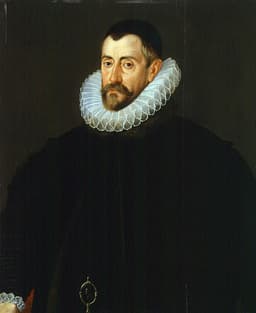
Francis Walsingham
Politician · Modern
57.7Total

S. W. R. D. Bandaranaike
Politician · Modern
56.8Total
Basic Information
Born
1532
1899
Died
1590
1959
Era
Modern
Modern
Nationality
England
Sri Lanka
Occupation
Politician
Politician
Civilization
Western
Indian
Score Comparison
Military (10%)
50.0
49.3
Political (20%)
55.0
62.7
Influence (20%)
59.0
56.4
Legacy (20%)
55.0
49.2
Leadership (15%)
78.0
67.0
Strategy (15%)
42.7
60.0
TOTAL
57.7
56.8
Francis Walsingham — Complete Timeline
1571 AD
Discovery of the Ridolfi PlotPolitical Action◆ Major
Walsingham uncovered the Ridolfi Plot, a Catholic conspiracy to assassinate Elizabeth I and replace her with Mary, Queen of Scots. His intelligence work led to the execution of the Duke of Norfolk and the tightening of surveillance on Mary.
ConspiracyIntelligenceSecurity
Impact: nationalconstructive
1573 AD
Appointed Secretary of StatePolitical Action◆ Major
Walsingham was appointed Secretary of State by Queen Elizabeth I, becoming her principal secretary and spymaster. He established an extensive intelligence network across Europe to protect Elizabeth from Catholic plots and foreign threats.
AppointmentIntelligenceGovernment
Impact: national
1585 AD
Treaty of NonsuchPolitical Action◆ Major
Walsingham negotiated the Treaty of Nonsuch, which committed England to military support for the Dutch rebels against Spanish rule. This treaty marked England's direct entry into the war with Spain and led to the Spanish Armada's invasion attempt.
TreatyDiplomacyWar
Impact: regional
1586 AD
Babington Plot and Execution of Mary, Queen of ScotsPolitical Action
Walsingham's agents intercepted coded letters revealing the Babington Plot, in which Mary, Queen of Scots, conspired to assassinate Elizabeth. He used this evidence to secure Mary's trial and execution in 1587, eliminating the Catholic threat to the throne.
ConspiracyExecutionIntelligence
Impact: regionaldestructive
1590 AD
Death of Francis WalsinghamPolitical Action◆ Major
Walsingham died in London, heavily in debt due to his intelligence expenses. His death left England without its most effective spymaster, and his network declined. He is remembered as a pioneer of modern espionage and a key defender of the Elizabethan state.
DeathLegacyIntelligence
Impact: national
S. W. R. D. Bandaranaike — Complete Timeline
1956 AD
Election as Prime Minister of CeylonPolitical Action
S. W. R. D. Bandaranaike became Prime Minister of Ceylon on April 12, 1956, leading the Mahajana Eksath Peramuna (MEP) coalition. His victory marked a shift from the UNP's pro-Western policies to a more nationalist and socialist agenda.
ElectionNationalist GovernmentMEP
Impact: nationalconstructive
Sinhala Only ActPolitical Action◆ Major
Bandaranaike's government passed the Official Language Act, making Sinhala the sole official language of Ceylon. This act marginalized the Tamil-speaking minority, leading to increased ethnic tensions and the first anti-Tamil riots in 1958.
Language PolicyEthnic ConflictSinhala Nationalism
Impact: nationaldestructive
1957 AD
Bandaranaike-Chelvanayakam PactPolitical Action◆ Major
Bandaranaike signed a pact with Tamil leader S. J. V. Chelvanayakam to devolve power to Tamil regions, including recognition of Tamil as a minority language. The pact was never implemented due to opposition from Sinhala nationalists, contributing to his assassination.
Tamil RightsDevolutionFailed Pact
Impact: national
1959 AD
Assassination by a Buddhist MonkPolitical Action
Bandaranaike was assassinated on September 25, 1959, by Talduwe Somarama, a Buddhist monk, at his residence in Colombo. The assassination was motivated by opposition to his policies, including the Bandaranaike-Chelvanayakam Pact, which aimed to address Tamil grievances.
AssassinationPolitical ViolenceBuddhist Monk
Impact: nationaltragic
This comparison has not been analyzed yet.
One-time AI generation (~1 minute). Scores and timeline are already available below.
Rankings
🥇
Francis WalsinghamLeader
Mil: 50.0Pol: 55.0Inf: 59.0
57.7
🥈
S. W. R. D. Bandaranaike
Mil: 49.3Pol: 62.7Inf: 56.4
56.8
+0.9 behind
How This Comparison Works
Algorithm
Each figure is scored on 6 dimensions (0—100 scale) based on structured historical data: Military (10%), Political (20%), Influence (20%), Legacy (20%), Leadership (15%), Strategy (15%). The weighted total produces the final ranking.
Data Sources
Scores are computed from structured sub-indicators in the database. Scale factors adjust for era (Ancient ×0.85, Modern ×1.0) and civilization size (Eastern ×1.05, Other ×0.80) to account for differences in population and military scale.
Maximum 3 Figures
Comparisons are limited to 2—3 figures to ensure readability and statistical meaningfulness.
Error Margins
±5 points per dimension — Sub-scores are derived from historical records with inherent uncertainty. Two figures within 5 points on a dimension should be considered roughly equivalent in that area.
Total Score Accuracy
±3 points overall — The weighted combination of 6 dimensions produces a total score with approximately ±3 points of uncertainty. Differences of less than 3 points are not statistically significant— the figures are effectively tied.
Known Limitations
- Historical records are incomplete and uneven across civilizations
- Figures from oral-tradition societies may be underrepresented
- Occupation labels can misclassify multi-role figures
- Scores measure capability and impact, not moral character
- Quantitative scoring is a comparison tool, not absolute truth
Capability Radar
Military (10%) — Battles & Warfare
Battles
27
45
Win Rate
33
45
Expansion
35
47
Political (20%) — Governance & Reform
Reform
60
65
Diplomacy
85
55
Economy
55
50
Influence (20%) — Cultural & Global Reach
Cultural
40
45
Global
55
35
Legacy (20%) — Historical Impact
Historical
75
55
Longevity
65
40
Leadership (15%) — Power & Stability
Tenure
70
40
Stability
75
30
Strategy (15%) — Tactics & Innovation
Strategy
38
51
Tactics
43
59
Reform
42
56
Similar Comparisons
Comments & Discussion
No comments yet. Be the first to share your thoughts!