Loading...
Francis I Stephen vs Napoleon Bonaparte
Napoleon Bonaparte leads by 20.5 pts · 2 figures compared
…
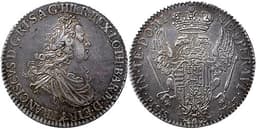
Francis I Stephen
Emperor · Modern
50.4Total

Napoleon Bonaparte
General · Modern
70.9Total
Basic Information
Born
1708
1769
Died
1765
1821
Era
Modern
Modern
Nationality
Holy Roman Empire
France
Occupation
Emperor
General
Civilization
Western
Western
Score Comparison
Military (10%)
20.0
94.0
Political (20%)
53.8
72.0
Influence (20%)
53.3
40.0
Legacy (20%)
46.7
80.0
Leadership (15%)
66.0
78.0
Strategy (15%)
54.3
90.0
TOTAL
50.4
70.9
Francis I Stephen — Complete Timeline
1736 AD
Marriage to Maria TheresaPolitical Action
Francis Stephen married Maria Theresa of Austria, uniting the Houses of Habsburg and Lorraine. This marriage created the Habsburg-Lorraine dynasty and made Francis co-ruler of the Habsburg domains.
Dynastic MarriageHabsburg-Lorraine
Impact: regionalconstructive
1737 AD
Grand Duke of TuscanyPolitical Action◆ Major
Francis became Grand Duke of Tuscany as part of the settlement ending the War of the Polish Succession. He ceded the Duchy of Lorraine to France in exchange, establishing a new power base for his family.
Territorial ExchangeTuscany
Impact: regionalconstructive
1740 AD
Co-ruler of the Habsburg MonarchyPolitical Action
Upon Maria Theresa's accession, Francis became co-ruler of the Habsburg Monarchy. He focused on financial administration and economic reforms, including the establishment of the Habsburg state bank.
Habsburg MonarchyEconomic Reform
Impact: regionalconstructive
1745 AD
Elected Holy Roman EmperorPolitical Action◆ Major
Francis was elected Holy Roman Emperor as Francis I, succeeding Charles VII. His election was secured by Maria Theresa's diplomatic efforts and ended the Bavarian interlude, restoring the imperial title to the Habsburgs.
Imperial ElectionHabsburg Restoration
Impact: regionalconstructive
Napoleon Bonaparte — Complete Timeline
1799 AD
Coup of 18 BrumaireOther◆ Major
Napoleon Bonaparte, with support from his brother Lucien and key political figures, overthrew the Directory in a bloodless coup. He established the Consulate with himself as First Consul, effectively becoming the ruler of France. This event ended the French Revolution's most unstable period.
French RevolutionCoupRise to Power
Impact: regional
1804 AD
Promulgation of the Napoleonic CodeOther◆ Major
Napoleon enacted the Civil Code of the French, known as the Napoleonic Code, a comprehensive set of laws that replaced the fragmented feudal legal systems. The code established legal equality, protected property rights, and secularized law. It became the basis for legal systems in many European and world countries.
Legal ReformNapoleonic CodeCivil Law
Impact: globalconstructive
1805 AD
Battle of AusterlitzWar◆ Major
Napoleon's Grande Arm
Napoleonic WarsBattleDecisive Victory
Impact: global
1812 AD
Invasion of RussiaWar◆ Major
Napoleon led the Grande Arm
Napoleonic WarsInvasionDisaster
Impact: globaldestructive
1815 AD
Battle of WaterlooWar◆ Major
Napoleon's French army was defeated by the combined forces of the Duke of Wellington's Anglo-Allied army and Gebhard Leberecht von Bl
Napoleonic WarsBattleFinal Defeat
Impact: globaldestructive
Expert Analysis
Origins
Francis I Stephen was born on December 8, 1708, in Nancy, Lorraine, as the son of Leopold, Duke of Lorraine, and Élisabeth Charlotte d'Orléans. He was raised in the court of his maternal uncle, the Duke of Orléans, regent of France. His education emphasized diplomacy and statecraft. Napoleon Bonaparte was born on August 15, 1769, in Ajaccio, Corsica, to Carlo Buonaparte and Letizia Ramolino, part of the minor Corsican nobility. He studied at military schools in Brienne and Paris, graduating as an artillery officer. While Francis was groomed for dynastic rule, Napoleon's rise was forged through revolutionary upheaval.
Rise to Power
Francis Stephen's rise was tied to his marriage to Maria Theresa of Austria in 1736, which ended the War of the Polish Succession and led to his eventual election as Holy Roman Emperor in 1745, securing the Habsburg-Lorraine line. Napoleon rose rapidly during the French Revolution, distinguishing himself at the Siege of Toulon in 1793. His coup of 18 Brumaire in 1799 made him First Consul, and he crowned himself Emperor in 1804. Francis's path was diplomatic; Napoleon's was military.
Leadership & Governance
Francis I Stephen focused on financial administration and economic reforms as co-ruler of the Habsburg Monarchy, scoring 83.7 in leadership. He reorganized finances and promoted trade, but his military score is low at 46.1. Napoleon, with a leadership score of 78.0, centralized power, enacted the Napoleonic Code, and modernized France's legal and educational systems. His military score is 94.0, reflecting his dominance on the battlefield. Francis governed through consensus; Napoleon through autocratic decree.
Triumph & Tragedy
Francis's greatest success was founding the Habsburg-Lorraine dynasty and being elected Holy Roman Emperor, but his failure included limited independent power, always overshadowed by Maria Theresa. Napoleon's triumphs include the Battle of Austerlitz (1805) and the Napoleonic Code; his tragedies are the disastrous Invasion of Russia (1812) and final defeat at Waterloo (1815). Francis avoided catastrophic mistakes; Napoleon's ambition led to his downfall.
Character & Destiny
Francis was prudent, diplomatic, and financially astute, traits that ensured stability but limited glory. Napoleon was ambitious, charismatic, and ruthless. His personality drove him to conquer Europe but also to overreach. Historical assessments: Napoleon is seen as a military genius and reformer; Francis as a competent administrator and dynastic founder. Their fates reflect their character: Francis died peacefully in 1765; Napoleon died in exile.
Legacy
Francis I Stephen's legacy is the Habsburg-Lorraine dynasty, which ruled Austria until 1918. He scored 64.2 in legacy. Napoleon's legacy is immense: the Napoleonic Code influenced legal systems worldwide, and his military campaigns reshaped Europe. He scored 80.0 in legacy. Napoleon's impact is broader and more transformative.
Conclusion
While Francis I Stephen achieved a total score of 65.9 and Napoleon 70.9, Napoleon had greater impact due to his revolutionary reforms and military conquests that reshaped Europe. Francis's influence was dynastic and contained; Napoleon's was global and enduring.
Rankings
🥇
Napoleon BonaparteLeader
Mil: 94.0Pol: 72.0Inf: 40.0
70.9
🥈
Francis I Stephen
Mil: 20.0Pol: 53.8Inf: 53.3
50.4
+20.5 behind
How This Comparison Works
Algorithm
Each figure is scored on 6 dimensions (0—100 scale) based on structured historical data: Military (10%), Political (20%), Influence (20%), Legacy (20%), Leadership (15%), Strategy (15%). The weighted total produces the final ranking.
Data Sources
Scores are computed from structured sub-indicators in the database. Scale factors adjust for era (Ancient ×0.85, Modern ×1.0) and civilization size (Eastern ×1.05, Other ×0.80) to account for differences in population and military scale.
Maximum 3 Figures
Comparisons are limited to 2—3 figures to ensure readability and statistical meaningfulness.
Error Margins
±5 points per dimension — Sub-scores are derived from historical records with inherent uncertainty. Two figures within 5 points on a dimension should be considered roughly equivalent in that area.
Total Score Accuracy
±3 points overall — The weighted combination of 6 dimensions produces a total score with approximately ±3 points of uncertainty. Differences of less than 3 points are not statistically significant— the figures are effectively tied.
Known Limitations
- Historical records are incomplete and uneven across civilizations
- Figures from oral-tradition societies may be underrepresented
- Occupation labels can misclassify multi-role figures
- Scores measure capability and impact, not moral character
- Quantitative scoring is a comparison tool, not absolute truth
Capability Radar
Military (10%) — Battles & Warfare
Battles
5
95
Win Rate
5
90
Expansion
5
95
Political (20%) — Governance & Reform
Reform
40
95
Diplomacy
70
80
Economy
50
85
Influence (20%) — Cultural & Global Reach
Cultural
30
85
Global
30
90
Legacy (20%) — Historical Impact
Historical
40
95
Longevity
50
90
Leadership (15%) — Power & Stability
Tenure
60
85
Stability
55
70
Strategy (15%) — Tactics & Innovation
Strategy
5
95
Tactics
5
98
Reform
5
92
Similar Comparisons
Comments & Discussion
No comments yet. Be the first to share your thoughts!