Loading...
Feroz Khan Noon vs George Weah
Feroz Khan Noon leads by 6.2 pts · 2 figures compared
…

Feroz Khan Noon
Politician · Modern
53.2Total
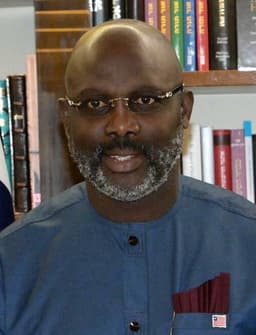
George Weah
Politician · Modern
47.0Total
Basic Information
Born
1893
1966
Died
1970
—
Era
Modern
Modern
Nationality
Pakistan
Liberia
Occupation
Politician
Politician
Civilization
Indian
Other
Score Comparison
Military (10%)
40.3
43.3
Political (20%)
68.0
30.8
Influence (20%)
51.8
56.7
Legacy (20%)
41.7
49.2
Leadership (15%)
64.0
48.4
Strategy (15%)
60.0
43.0
TOTAL
53.2
47.0
Feroz Khan Noon — Complete Timeline
1957 AD
Appointed Prime Minister of PakistanPolitical Action◆ Major
Feroz Khan Noon became Prime Minister during a period of political instability. He was a seasoned diplomat and politician. His government focused on foreign policy and economic issues, but it was short-lived due to the 1958 military coup.
Prime MinisterPolitical Instability
Impact: national
Oversaw the One Unit PolicyPolitical Action
Noon's government continued the One Unit policy, which merged the provinces of West Pakistan into a single administrative unit. The policy aimed to create parity with East Pakistan but was unpopular in smaller provinces. It was later dissolved in 1970.
Administrative ReformOne Unit
Impact: nationaldestructive
1958 AD
Dismissed by the 1958 Martial LawPolitical Action
Feroz Khan Noon's government was dismissed when President Iskander Mirza declared martial law and appointed General Ayub Khan as Chief Martial Law Administrator. The coup ended Pakistan's first parliamentary experiment. Noon was arrested but later released.
CoupMartial Law
Impact: nationaldestructive
George Weah — Complete Timeline
1995 AD
Won FIFA World Player of the YearCultural◆ Major
Weah was awarded the FIFA World Player of the Year, becoming the first and only African player to win the award. This recognized his exceptional performance for AC Milan and the Liberian national team, elevating his global profile.
FootballAwardAfrican Achievement
Impact: globalconstructive
2005 AD
Elected President of LiberiaPolitical Action
Weah was elected President of Liberia in a runoff election, defeating Ellen Johnson Sirleaf. His victory marked a transition from a football career to political leadership, though he was defeated in the 2011 election.
ElectionLiberiaPolitical Career
Impact: nationalconstructive
2011 AD
Defeated in 2011 Presidential ElectionPolitical Action◆ Major
Weah lost the presidential election to incumbent Ellen Johnson Sirleaf. The defeat ended his first bid for re-election and highlighted the challenges of transitioning from celebrity to sustained political leadership.
ElectionDefeatLiberia
Impact: national
2017 AD
Elected President of Liberia (Second Term)Political Action
Weah was elected President of Liberia in a second attempt, defeating incumbent Vice President Joseph Boakai. His victory marked a return to power after a six-year hiatus and a consolidation of his political influence.
ElectionLiberiaPolitical Comeback
Impact: nationalconstructive
Expert Analysis
Origins
Feroz Khan Noon was born in 1893 in the Punjab region of British India. His family were wealthy landowners, and he received a law degree from Oxford University. He entered politics in the 1920s, serving in various colonial legislative bodies. George Weah was born in 1966 in Monrovia, Liberia, into poverty. He left school early to play football, developing his skills on the streets. His athletic talent earned him a move to Europe, where he became a world-class striker.
Rise to Power
Noon rose through diplomatic and ministerial roles. He served as Pakistan's ambassador to several countries and as Foreign Minister. In 1957, he became Prime Minister, leading a coalition government. Weah's rise was different: he became a global football icon, winning FIFA World Player of the Year in 1995. After retiring, he entered politics, winning a Senate seat in 2011 and then the presidency in 2017, defeating Ellen Johnson Sirleaf.
Leadership & Governance
Noon's leadership was marked by political instability. He oversaw the One Unit policy, merging West Pakistan's provinces, which aimed to centralize power but faced regional opposition. His government was dismissed in 1958 by martial law. Weah's governance focused on anti-corruption and infrastructure, but his presidency faced criticism for slow economic progress and cronyism. He lacked political experience, relying on advisors. Noon scored 64.0 in leadership, while Weah scored 48.4.
Triumph & Tragedy
Noon's greatest success was becoming Prime Minister under Pakistan's first constitution, a feat of political navigation. His failure was his dismissal by martial law, ending civilian rule. Weah's triumph was winning the FIFA World Player of the Year, a historic achievement for Africa. His tragedy was losing the 2011 presidential election and facing economic stagnation during his term. Noon scored 68.0 in political acumen, Weah 30.8.
Character & Destiny
Noon was a seasoned diplomat, pragmatic but unable to prevent military intervention. His character was shaped by elite education and colonial experience. Weah was charismatic and popular, but his lack of administrative experience hindered his presidency. Historians view Noon as a transitional figure, while Weah is seen as a symbol of hope who struggled to deliver. Noon's total score of 53.2 reflects his political skill, while Weah's 47.0 shows lower overall impact.
Legacy
Noon's legacy is tied to the One Unit policy and the end of civilian rule in 1958. He is remembered as a constitutional prime minister. Weah's legacy is dual: as a football pioneer and as Liberia's president, he inspired many but leaves a mixed record. Noon's influence score of 51.8 is slightly below Weah's 56.7, but his political and leadership scores are higher.
Conclusion
Feroz Khan Noon had greater political impact, scoring higher overall (53.2 vs 47.0). His role in Pakistan's early constitutional governance, despite its flaws, was more substantial than Weah's presidency. Weah's football career is unmatched, but his political legacy is weaker. Noon's leadership and strategy scores (64.0 and 60.0) exceed Weah's (48.4 and 43.0), supporting the conclusion that Noon's influence on governance was more significant.
Rankings
🥇
Feroz Khan NoonLeader
Mil: 40.3Pol: 68.0Inf: 51.8
53.2
🥈
George Weah
Mil: 43.3Pol: 30.8Inf: 56.7
47.0
+6.2 behind
How This Comparison Works
Algorithm
Each figure is scored on 6 dimensions (0—100 scale) based on structured historical data: Military (10%), Political (20%), Influence (20%), Legacy (20%), Leadership (15%), Strategy (15%). The weighted total produces the final ranking.
Data Sources
Scores are computed from structured sub-indicators in the database. Scale factors adjust for era (Ancient ×0.85, Modern ×1.0) and civilization size (Eastern ×1.05, Other ×0.80) to account for differences in population and military scale.
Maximum 3 Figures
Comparisons are limited to 2—3 figures to ensure readability and statistical meaningfulness.
Error Margins
±5 points per dimension — Sub-scores are derived from historical records with inherent uncertainty. Two figures within 5 points on a dimension should be considered roughly equivalent in that area.
Total Score Accuracy
±3 points overall — The weighted combination of 6 dimensions produces a total score with approximately ±3 points of uncertainty. Differences of less than 3 points are not statistically significant— the figures are effectively tied.
Known Limitations
- Historical records are incomplete and uneven across civilizations
- Figures from oral-tradition societies may be underrepresented
- Occupation labels can misclassify multi-role figures
- Scores measure capability and impact, not moral character
- Quantitative scoring is a comparison tool, not absolute truth
Capability Radar
Military (10%) — Battles & Warfare
Battles
41
23
Win Rate
48
23
Expansion
51
27
Political (20%) — Governance & Reform
Reform
40
20
Diplomacy
50
25
Economy
35
15
Influence (20%) — Cultural & Global Reach
Cultural
20
60
Global
20
65
Legacy (20%) — Historical Impact
Historical
30
55
Longevity
20
40
Leadership (15%) — Power & Stability
Tenure
30
30
Stability
25
10
Strategy (15%) — Tactics & Innovation
Strategy
50
28
Tactics
56
36
Reform
57
37
Similar Comparisons
Comments & Discussion
No comments yet. Be the first to share your thoughts!