Loading...
Analysis will be generated on first visit.
Scores and timeline are available below. The page will refresh automatically when ready.
Fernando Henrique Cardoso vs Napoleon Bonaparte
Napoleon Bonaparte leads by 15.1 pts · 2 figures compared
…

Fernando Henrique Cardoso
Politician · Modern
67.3Total
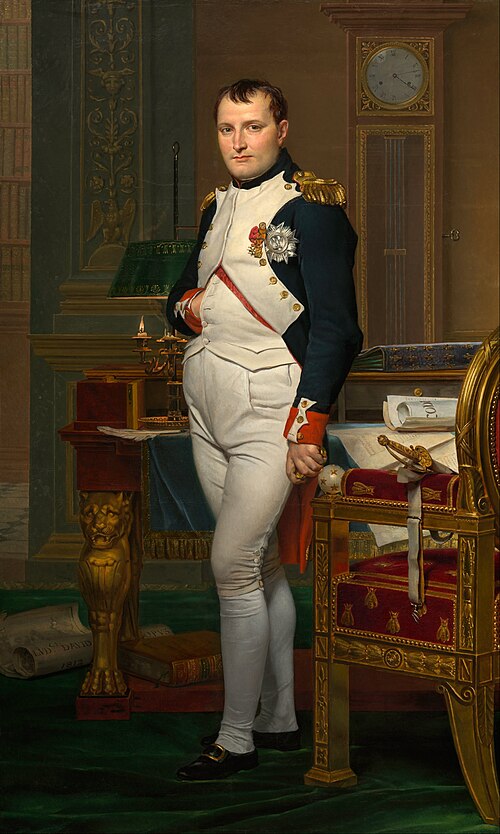
Napoleon Bonaparte
General · Modern
82.4Total
Basic Information
Born
1931
1769
Died
—
1821
Era
Modern
Modern
Nationality
Brazil
France
Occupation
Politician
General
Civilization
Western
Western
Score Comparison
Military (10%)
37.5
94.0
Political (20%)
84.9
75.0
Influence (20%)
74.4
82.0
Legacy (20%)
68.8
78.0
Leadership (15%)
84.3
80.0
Strategy (15%)
35.3
93.0
TOTAL
67.3
82.4
Rankings
🥇
Napoleon BonaparteLeader
Mil: 94.0Pol: 75.0Inf: 82.0
82.4
🥈
Fernando Henrique Cardoso
Mil: 37.5Pol: 84.9Inf: 74.4
67.3
+15.1 behind
How This Comparison Works
Algorithm
Each figure is scored on 6 dimensions (0—100 scale) based on structured historical data: Military (10%), Political (20%), Influence (20%), Legacy (20%), Leadership (15%), Strategy (15%). The weighted total produces the final ranking.
Data Sources
Scores are computed from structured sub-indicators in the database. Scale factors adjust for era (Ancient ×0.85, Modern ×1.0) and civilization size (Eastern ×1.05, Other ×0.80) to account for differences in population and military scale.
Maximum 3 Figures
Comparisons are limited to 2—3 figures to ensure readability and statistical meaningfulness.
Error Margins
±5 points per dimension — Sub-scores are derived from historical records with inherent uncertainty. Two figures within 5 points on a dimension should be considered roughly equivalent in that area.
Total Score Accuracy
±3 points overall — The weighted combination of 6 dimensions produces a total score with approximately ±3 points of uncertainty. Differences of less than 3 points are not statistically significant— the figures are effectively tied.
Known Limitations
- Historical records are incomplete and uneven across civilizations
- Figures from oral-tradition societies may be underrepresented
- Occupation labels can misclassify multi-role figures
- Scores measure capability and impact, not moral character
- Quantitative scoring is a comparison tool, not absolute truth
Capability Radar
Military (10%) — Battles & Warfare
Battles
31
95
Win Rate
30
90
Expansion
34
95
Political (20%) — Governance & Reform
Reform
85
95
Diplomacy
75
80
Economy
90
85
Influence (20%) — Cultural & Global Reach
Cultural
40
85
Global
55
90
Legacy (20%) — Historical Impact
Historical
60
95
Longevity
50
90
Leadership (15%) — Power & Stability
Tenure
65
85
Stability
70
70
Strategy (15%) — Tactics & Innovation
Strategy
38
95
Tactics
38
98
Reform
41
92
Analysis will be generated on first visit.
Scores and timeline are available below. The page will refresh automatically when ready.
Fernando Henrique Cardoso — Complete Timeline
1993 AD
Appointed Minister of FinancePolitical Action◆ Major
Fernando Henrique Cardoso was appointed Minister of Finance by President Itamar Franco in May 1993. He was tasked with stabilizing Brazil's economy, which was suffering from hyperinflation.
Finance MinistryEconomic PolicyBrazil
Impact: nationalconstructive
1994 AD
Implemented the Plano RealReform
Cardoso led the implementation of the Plano Real (Real Plan) in 1994, a comprehensive economic stabilization program. It introduced a new currency, the real, and successfully ended hyperinflation, bringing price stability to Brazil.
Economic StabilizationPlano RealBrazil
Impact: nationalconstructive
Elected President of BrazilPolitical Action◆ Major
Cardoso was elected president of Brazil in 1994 as the candidate of the Brazilian Social Democracy Party (PSDB). He assumed office on January 1, 1995, with a mandate to continue economic reforms.
PresidencyElectionBrazil
Impact: nationalconstructive
1995 AD
Privatized State-Owned EnterprisesReform◆ Major
Cardoso's government privatized several state-owned enterprises, including the mining company Vale do Rio Doce and the telecommunications system Telebr
PrivatizationEconomic ReformBrazil
Impact: national
Created the Bolsa Escola ProgramReform◆ Major
Cardoso created the Bolsa Escola (School Grant) program in 1995, a conditional cash transfer that provided payments to poor families in exchange for keeping their children in school. This program later evolved into Bolsa Fam
Social PolicyEducationBrazil
Impact: nationalprogressive
1998 AD
Re-elected President of BrazilPolitical Action◆ Major
Cardoso was re-elected president in 1998, winning in the first round. His second term focused on fiscal austerity, privatization, and social programs, though economic growth remained modest.
Re-electionEconomic ReformBrazil
Impact: nationalconstructive
Similar Comparisons
Comments & Discussion
No comments yet. Be the first to share your thoughts!