Loading...
Ferdinand Magellan vs Qin Shi Huang
Qin Shi Huang leads by 39.2 pts · 2 figures compared
…

Ferdinand Magellan
Explorer · Medieval
46.0Total
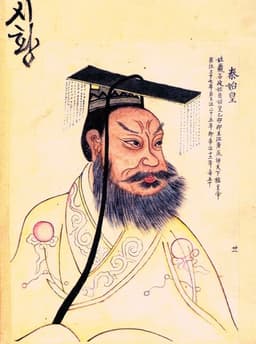
Qin Shi Huang
Emperor · Ancient
85.2Total
Basic Information
Born
1480
-259
Died
1521
-210
Era
Medieval
Ancient
Nationality
Portugal
China
Occupation
Explorer
Emperor
Civilization
Western
Eastern
Score Comparison
Military (10%)
14.9
80.0
Political (20%)
35.0
90.0
Influence (20%)
59.0
85.0
Legacy (20%)
54.0
90.0
Leadership (15%)
37.2
78.0
Strategy (15%)
54.6
82.0
TOTAL
46.0
85.2
Ferdinand Magellan — Complete Timeline
1520 AD
Discovery of the Strait of MagellanOther
Magellan's fleet discovered a navigable passage at the southern tip of South America, now named the Strait of Magellan. The passage connected the Atlantic and Pacific Oceans, enabling the first European crossing of the Pacific.
ExplorationNavigationDiscovery
Impact: global
Crossing of the Pacific OceanOther◆ Major
After entering the Pacific, Magellan's fleet sailed for 98 days without sighting land, covering over 12,000 miles. The crew suffered severe scurvy and starvation, but the crossing proved the vastness of the Pacific and the feasibility of westward navigation to Asia.
ExplorationNavigationHardship
Impact: globaltragic
1521 AD
Battle of MactanWar◆ Major
Magellan intervened in a local conflict on the island of Mactan in the Philippines. He led a small force against the warriors of Lapu-Lapu and was killed in the battle. His death ended his personal command of the circumnavigation expedition.
BattleDeathExploration
Impact: regionaltragic
1522 AD
Completion of the First CircumnavigationOther
The Victoria, commanded by Juan Sebasti
ExplorationNavigationAchievement
Impact: globalconstructive
Qin Shi Huang — Complete Timeline
246 BC
Construction of the Mausoleum and Terracotta ArmyOther◆ Major
Qin Shi Huang commissioned a vast mausoleum complex near Xi'an, guarded by thousands of life-sized terracotta soldiers, horses, and chariots. The project employed hundreds of thousands of workers and reflected his obsession with immortality and imperial power.
Impact: global
230 BC
Conquest of the Six Warring StatesWar
From 230 to 221 BCE, Ying Zheng led the Qin state in a series of campaigns that conquered the Han, Zhao, Wei, Chu, Yan, and Qi states. This unified China under a single ruler for the first time, ending the Warring States period.
Impact: global
221 BC
Standardization of Writing, Currency, and MeasurementsReform◆ Major
Qin Shi Huang ordered the standardization of Chinese script, currency, and weights and measures across the unified empire. This facilitated administration, trade, and cultural integration, laying a foundation for future dynasties.
Impact: globalconstructive
Proclamation of the Qin DynastyPolitical Action
After conquering the last independent state, Ying Zheng declared himself Shi Huangdi (First Emperor), founding the Qin Dynasty. He adopted a new title to signify his supreme authority and initiated centralized imperial rule.
Impact: global
214 BC
Initiation of the Great Wall ConstructionOther◆ Major
Qin Shi Huang ordered the connection and extension of existing northern fortifications to create a unified defensive wall against nomadic Xiongnu raids. This project involved massive conscripted labor and became the precursor to the later Great Wall.
Impact: regional
213 BC
Burning of Books and Burying of ScholarsPolitical Action◆ Major
On the advice of Li Si, Qin Shi Huang ordered the burning of historical records and philosophical texts not aligned with Legalist doctrine. He also had 460 Confucian scholars buried alive to suppress dissent and consolidate ideological control.
Impact: nationaldestructive
Expert Analysis
ferdinand-magellan-vs-qin-shi-huang
# The First Emperor and the Last Voyager: Qin Shi Huang and Ferdinand Magellan
On a spring morning in 221 BC, a thirty-eight-year-old king stood before his assembled court in Xianyang, a city that would soon become the heart of the world’s most centralized empire. He had just conquered the last of the six warring states, and now he declared himself *Shi Huangdi*—the First Emperor. Two thousand years later, on a September dawn in 1519, a Portuguese captain named Ferdinand Magellan watched the coast of Spain disappear as his five ships sailed into the Atlantic, carrying a dream of reaching the Spice Islands by a western route. One man sought to unify a continent; the other sought to circle the globe. Neither would live to see his greatest ambition fully realized, yet both reshaped the world forever. How did two such different men, born into such different worlds, come to leave such indelible marks on history?
Origins
Qin Shi Huang was born in 259 BC, into a world of chaos and opportunity. The Warring States period had torn China apart for centuries, and his father’s kingdom of Qin, perched on the western frontier, was considered a semi-barbaric state by the more cultured eastern kingdoms. His childhood was shadowed by intrigue—his father had been a hostage in the state of Zhao, and young Ying Zheng spent his early years in a foreign court, learning early the lessons of suspicion and survival. When he ascended the throne at thirteen, he inherited not just a kingdom but a ruthless legalist philosophy that taught that law, punishment, and absolute control were the only paths to order.
Magellan’s beginnings were humbler. Born around 1480 in northern Portugal, he was a minor noble’s son who grew up in the shadow of the great Age of Discovery. Portugal had already pioneered the sea route to India around Africa, and the spice trade was making kings of merchants. Young Magellan served in the Portuguese fleet in India and the East Indies, learning navigation, fighting in battles, and absorbing the geography of a world that Europeans were only beginning to map. He was a man of the sea in an age when the sea was opening the world.
Rise to Power
For Qin Shi Huang, power came through conquest. From 230 to 221 BC, he personally directed a series of campaigns that systematically swallowed the six rival states. He did not fight from the front like Alexander; he planned from the rear, using spies, bribery, and overwhelming force. The key turning point came in 227 BC, when an assassin sent by the state of Yan nearly killed him. The attempt failed, but it hardened his resolve. By 221 BC, the last independent kingdom, Qi, surrendered without a fight. Ying Zheng was now master of all China.
Magellan’s path was more treacherous. After serving Portugal with distinction, he fell out of favor with King Manuel I, who refused to fund his western expedition. In 1517, Magellan renounced his Portuguese nationality and offered his services to Spain’s young King Charles I. It was a gamble—a Portuguese captain leading a Spanish fleet into unknown waters. The Spanish court, eager to challenge Portugal’s monopoly on the spice trade, gave him five ships and 270 men. On September 20, 1519, Magellan sailed from Sanlúcar de Barrameda, carrying a commission that would either make him immortal or kill him.
Leadership & Governance
Qin Shi Huang ruled like a machine of iron and fire. He divided his empire into thirty-six commanderies, each governed by appointed officials who answered directly to the central court. He standardized the written script so that a man from the northern steppes could read the same characters as a scholar from the southern rivers. He unified currency, weights, and measures, and he ordered the construction of a network of roads and canals that bound the empire together. But his rule had a dark side—in 213 BC, on the advice of his chancellor Li Si, he ordered the burning of all historical records and philosophical texts that did not glorify his regime, and he buried alive 460 scholars who protested. He believed that the past had to be erased so that his new order could take root.
Magellan’s leadership was of a different kind—command on a ship, where mutiny was a constant threat and the line between life and death was measured in inches of hull. He was a brilliant navigator and a ruthless disciplinarian. During the terrible winter of 1520 in Patagonia, his captains mutinied. Magellan executed one, marooned another, and forced the rest into submission. He discovered the strait that now bears his name, a labyrinth of icy channels at the tip of South America, and then he did what no European had done before: he crossed the Pacific Ocean. For ninety-eight days, his fleet sailed without sighting land, surviving on worm-riddled biscuits, sawdust, and rats. Magellan held his men together through sheer will.
Triumph & Tragedy
Qin Shi Huang’s greatest triumph was his mausoleum. Beginning in 246 BC, he commissioned a vast underground city guarded by thousands of life-sized terracotta soldiers, each with a unique face, each ready to serve him in the afterlife. It was a monument to his absolute power, a statement that even death could not diminish him. His tragedy came from his own paranoia. Obsessed with immortality, he consumed mercury pills prescribed by alchemists, which slowly poisoned him. In 210 BC, during an inspection tour of his empire, he died at the age of forty-nine. Within three years, his dynasty collapsed into chaos.
Magellan’s triumph was the crossing of the Pacific, a feat of navigation that proved the Earth was round and that the oceans were connected. His tragedy came on April 27, 1521, on the island of Mactan in the Philippines. Overconfident and eager to convert a local chief, he led a small force of forty-nine men against a thousand warriors. He was struck by a poisoned arrow, then hacked to death. His body was never recovered. But his voyage continued: the *Victoria*, commanded by Juan Sebastián Elcano, returned to Spain on September 6, 1522, with eighteen survivors out of the original 270. The first circumnavigation was complete.
Character & Destiny
Qin Shi Huang was a man of absolute certainty. He believed that the world could be remade by sheer will, that chaos could be tamed by law, and that his own legacy was eternal. This certainty drove him to unify China, but it also drove him to burn books and bury scholars. He could not tolerate dissent because he could not imagine that anyone else might be right. His destiny was to create a system that would outlast his dynasty—the bureaucratic empire that would define China for two thousand years.
Magellan was a man of restless ambition. He was not a conqueror but a pathfinder, driven by the conviction that the world was larger and more connected than anyone knew. He was stubborn, secretive, and often cruel, but he possessed a kind of courage that was almost inhuman. His destiny was to die before his greatest achievement was complete, leaving others to claim the glory. But the route he opened changed the world forever.
Legacy
Qin Shi Huang’s legacy is the very shape of China. The standardized writing he imposed became the foundation of Chinese civilization. The Great Wall, though rebuilt many times, began with his command. His bureaucratic system, with its appointed officials and centralized control, became the model for every subsequent dynasty. His tomb, still unopened, remains one of the greatest archaeological mysteries in the world. He is remembered as a tyrant and a unifier, a man who crushed freedom to create order.
Magellan’s legacy is the global world we live in. His voyage proved that the Earth could be circled, that no ocean was a barrier, that every shore was reachable. The Strait of Magellan remains a testament to his discovery, and the Pacific Ocean was crossed because of his courage. He is remembered as a hero of exploration, though his methods were often brutal and his motives were profit and glory.
Conclusion
Two men, born worlds apart, driven by different dreams. Qin Shi Huang sought to contain the world within a single empire, to freeze time and create an eternal order. Magellan sought to cross the world, to dissolve boundaries and prove that all lands were connected. One built walls; the other found passages. One buried his soldiers in clay; the other lost his men to the sea. Yet both understood something essential about power: that it requires not just force, but vision. The First Emperor dreamed of a China that would never fall. The last voyager dreamed of a world that could be circled. Both were wrong in their lifetimes, and both were right in the end.
Rankings
🥇
Qin Shi HuangLeader
Mil: 80.0Pol: 90.0Inf: 85.0
85.2
🥈
Ferdinand Magellan
Mil: 14.9Pol: 35.0Inf: 59.0
46.0
+39.2 behind
How This Comparison Works
Algorithm
Each figure is scored on 6 dimensions (0—100 scale) based on structured historical data: Military (10%), Political (20%), Influence (20%), Legacy (20%), Leadership (15%), Strategy (15%). The weighted total produces the final ranking.
Data Sources
Scores are computed from structured sub-indicators in the database. Scale factors adjust for era (Ancient ×0.85, Modern ×1.0) and civilization size (Eastern ×1.05, Other ×0.80) to account for differences in population and military scale.
Maximum 3 Figures
Comparisons are limited to 2—3 figures to ensure readability and statistical meaningfulness.
Error Margins
±5 points per dimension — Sub-scores are derived from historical records with inherent uncertainty. Two figures within 5 points on a dimension should be considered roughly equivalent in that area.
Total Score Accuracy
±3 points overall — The weighted combination of 6 dimensions produces a total score with approximately ±3 points of uncertainty. Differences of less than 3 points are not statistically significant— the figures are effectively tied.
Known Limitations
- Historical records are incomplete and uneven across civilizations
- Figures from oral-tradition societies may be underrepresented
- Occupation labels can misclassify multi-role figures
- Scores measure capability and impact, not moral character
- Quantitative scoring is a comparison tool, not absolute truth
Capability Radar
Military (10%) — Battles & Warfare
Battles
25
85
Win Rate
30
90
Expansion
55
90
Political (20%) — Governance & Reform
Reform
10
95
Diplomacy
35
75
Economy
15
90
Influence (20%) — Cultural & Global Reach
Cultural
65
95
Global
70
85
Legacy (20%) — Historical Impact
Historical
75
95
Longevity
70
95
Leadership (15%) — Power & Stability
Tenure
20
70
Stability
10
65
Strategy (15%) — Tactics & Innovation
Strategy
60
85
Tactics
40
80
Reform
10
95
Similar Comparisons
Comments & Discussion
LegionaryLens6/17/2026
Comparing Magellan to Qin Shi Huang is like comparing a marathon runner to a mountain builder. Magellan’s voyage was a logistical nightmare—239 men started, only 18 returned on the *Victoria*. That’s a 92% casualty rate. Qin’s Terracotta Army, built with 700,000 laborers, shows centralized power that dwarfs any maritime exploit. Magellan died in a skirmish on Mactan; Qin died from mercury pills. One was a risk-taker, the other a micromanager of immortality. Give me the emperor who standardized a