Loading...
Ferdinand II vs George IV
Ferdinand II leads by 18.2 pts · 2 figures compared
…

Ferdinand II
Emperor · Modern
56.2Total
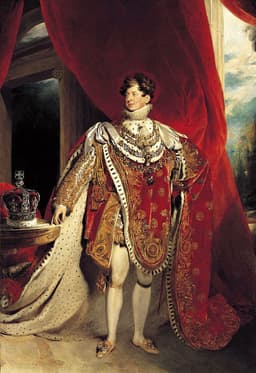
George IV
Emperor · Modern
38.0Total
Basic Information
Born
1578
1762
Died
1637
1830
Era
Modern
Modern
Nationality
Holy Roman Empire
United Kingdom
Occupation
Emperor
Emperor
Civilization
Western
Western
Score Comparison
Military (10%)
50.0
12.4
Political (20%)
39.4
27.9
Influence (20%)
60.0
50.2
Legacy (20%)
58.0
37.5
Leadership (15%)
65.0
31.2
Strategy (15%)
60.0
60.0
TOTAL
56.2
38.0
Ferdinand II — Complete Timeline
1619 AD
Election as Holy Roman EmperorPolitical Action◆ Major
Ferdinand II was elected Holy Roman Emperor in Frankfurt, succeeding his cousin Matthias. His election was contested by the Protestant Union, which supported Frederick V of the Palatinate. Ferdinand's staunch Catholicism and determination to suppress Protestantism set the stage for the Thirty Years' War.
ElectionImperial AuthorityReligious Conflict
Impact: globaldestructive
1620 AD
Battle of White MountainWar
Ferdinand II's Catholic forces, led by General Tilly, decisively defeated the Protestant Bohemian army at the Battle of White Mountain near Prague. This victory crushed the Bohemian Revolt and allowed Ferdinand to reassert Catholic control over Bohemia. The battle was a key early event in the Thirty Years' War.
Battle of White MountainThirty Years' WarBohemian Revolt
Impact: regionaldestructive
1629 AD
Edict of RestitutionPolitical Action◆ Major
Ferdinand II issued the Edict of Restitution, which ordered the return of all church lands seized by Protestants since the Peace of Augsburg (1555). This aggressive Catholic policy alienated many Protestant princes and led to the intervention of Sweden in the Thirty Years' War. The edict was a major cause of the war's escalation.
Edict of RestitutionCatholic PolicyThirty Years' War
Impact: regionaldestructive
1631 AD
Siege of MagdeburgWar◆ Major
Ferdinand II's imperial forces, under General Tilly, besieged and sacked the Protestant city of Magdeburg. The city was destroyed, and an estimated 20,000 inhabitants were killed in the massacre. The sack of Magdeburg became a symbol of the brutality of the Thirty Years' War and galvanized Protestant resistance.
Siege of MagdeburgMassacreThirty Years' War
Impact: regionaltragic
1635 AD
Peace of Prague (1635)Political Action◆ Major
Ferdinand II signed the Peace of Prague with the Protestant Elector John George I of Saxony, ending the war between the Emperor and many German Protestant states. The treaty modified the Edict of Restitution and granted amnesty to most Protestant princes. However, it did not end the broader Thirty Years' War, as Sweden and France continued fighting.
Peace of PragueThirty Years' WarReligious Compromise
Impact: regionalconstructive
George IV — Complete Timeline
1811 AD
Regency PeriodPolitical Action◆ Major
George IV became Prince Regent after his father George III was declared mentally unfit. He ruled as regent for nine years, overseeing the final years of the Napoleonic Wars and the Congress of Vienna. The Regency era was marked by cultural and architectural developments.
RegencyNapoleonic WarsCultural Era
Impact: national
1820 AD
Accession to the ThronePolitical Action◆ Major
George IV became king upon the death of his father George III. His accession was overshadowed by his attempt to divorce his wife Caroline of Brunswick, leading to a public scandal. He was crowned in a lavish ceremony at Westminster Abbey.
AccessionScandalCoronation
Impact: national
1829 AD
Catholic EmancipationPolitical Action◆ Major
George IV reluctantly gave royal assent to the Catholic Relief Act, which removed most restrictions on Catholics in the United Kingdom. This act allowed Catholics to sit in Parliament and hold public office. It was a major step toward religious equality.
Catholic EmancipationReligious ReformParliament
Impact: nationalconstructive
1830 AD
Death from Gastrointestinal IllnessOther
George IV died of gastrointestinal illness at Windsor Castle at age 67. He was buried in St George's Chapel. His death ended the Regency era and passed the throne to his brother William IV. His reign was marked by extravagance and scandal.
DeathSuccessionMonarchy
Impact: national
Expert Analysis
Origins
Ferdinand II (1578-1637) was born in Graz, Inner Austria, into the Habsburg dynasty. His parents were Archduke Charles II of Austria and Maria Anna of Bavaria. Educated by Jesuits at the University of Ingolstadt, he developed a fervent Catholic faith that would define his reign. In contrast, George IV (1762-1830) was born at St James's Palace, London, the eldest son of King George III and Queen Charlotte. His education was broad but he showed little academic interest, preferring fashion, architecture, and pleasure. While Ferdinand was shaped by Counter-Reformation zeal, George grew up in the Enlightenment era, yet his character was marked by extravagance and self-indulgence.
Rise to Power
Ferdinand's path to power began when he inherited the Duchy of Styria in 1590. He ruthlessly enforced Catholicism in his territories, suppressing Protestantism. In 1617, he was elected King of Bohemia, and in 1618, King of Hungary. His election as Holy Roman Emperor in 1619 (score 39.4 political) was contested by the Protestant Union, leading to the Bohemian Revolt, which escalated into the Thirty Years' War. George IV became Prince Regent in 1811 after his father's mental illness, a role he held until 1820. His regency oversaw the Napoleonic Wars' final years. Upon George III's death in 1820, he became king, but his reign was marred by his attempt to divorce Queen Caroline, causing public scandal. Unlike Ferdinand's rise through inheritance and religious conflict, George's ascent was marked by personal controversy.
Leadership & Governance
Ferdinand II's leadership (score 65.0) was driven by religious absolutism. He centralized authority, reduced the power of the Imperial Diet, and issued the Edict of Restitution (1629), which ordered the return of church lands seized since 1555. This alienated Protestant princes and prolonged the war. His reliance on generals like Albrecht von Wallenstein and Johann Tilly showed his military delegation. George IV's governance (score 31.2) was less hands-on; he was often absent from cabinet meetings and more interested in art and architecture. However, he played a role in the passage of the Catholic Relief Act 1829, granting Catholic emancipation, despite his personal opposition. This act was a significant political reform, contrasting with Ferdinand's repression of Protestants. George's political score (27.9) reflects his limited engagement.
Triumph & Tragedy
Ferdinand's greatest triumph was the Battle of White Mountain (1620), where his forces crushed the Bohemian rebels, securing his rule. The Peace of Prague (1635) temporarily unified German states under his terms. However, his Edict of Restitution overreached, galvanizing Protestant resistance and drawing foreign powers like Sweden into the war. The Siege of Magdeburg (1631) resulted in a massacre of 20,000 civilians, a propaganda disaster. George IV's triumph was the Catholic Emancipation, which removed political restrictions on Catholics, a milestone for religious freedom. His patronage of the arts, including the Royal Pavilion and the National Gallery, left cultural marks. His tragedy was his failed marriage and public unpopularity; he was despised for his extravagance during wartime austerity. His military score (12.4) reflects no significant military achievements.
Character & Destiny
Ferdinand was pious, stubborn, and uncompromising. His Jesuit education instilled a belief that his rule was divine, leading to policies that ignored political realities. This rigidity caused the Thirty Years' War, which devastated Central Europe. His character score (65.0 leadership) shows determination but poor judgment. George IV was charming, intelligent, but lazy and self-indulgent. His love for luxury and mistresses led to massive debts and a strained relationship with his father. He was politically passive, often deferring to ministers. His character undermined his potential; he could have shaped policy during the Regency but chose pleasure. Historians rank him among the least effective British monarchs.
Legacy
Ferdinand II's legacy is the devastation of the Thirty Years' War (1618-1648), which killed 8 million people and reshaped Europe. The war weakened the Habsburgs and led to the Peace of Westphalia, establishing modern state sovereignty. His religious policies failed; Protestantism survived. His legacy score (58.0) reflects his role as a catalyst for change. George IV's legacy includes the Regency style in architecture and fashion, and the Royal Pavilion in Brighton. Politically, Catholic Emancipation was his lasting contribution, though it was forced upon him. His excesses contributed to the reform movement that led to the Great Reform Act 1832. His legacy score (50.2) is moderate; he is remembered more for his lifestyle than governance.
Conclusion
Ferdinand II had a greater impact on history, despite his lower political score (39.4 vs. 27.9) and total score (56.2 vs. 38.0). His actions directly triggered a continent-wide war that redrew political and religious boundaries. George IV's reign was largely symbolic; his influence was limited to cultural trends and one major legislative act. While Ferdinand's policies caused immense suffering, they also accelerated the decline of religious absolutism. In the long term, the Thirty Years' War's outcomes—state sovereignty and secularization—were more transformative than George's regency. Therefore, Ferdinand II's historical significance outweighs George IV's, even if his methods were destructive.
Rankings
🥇
Ferdinand IILeader
Mil: 50.0Pol: 39.4Inf: 60.0
56.2
🥈
George IV
Mil: 12.4Pol: 27.9Inf: 50.2
38.0
+18.2 behind
How This Comparison Works
Algorithm
Each figure is scored on 6 dimensions (0—100 scale) based on structured historical data: Military (10%), Political (20%), Influence (20%), Legacy (20%), Leadership (15%), Strategy (15%). The weighted total produces the final ranking.
Data Sources
Scores are computed from structured sub-indicators in the database. Scale factors adjust for era (Ancient ×0.85, Modern ×1.0) and civilization size (Eastern ×1.05, Other ×0.80) to account for differences in population and military scale.
Maximum 3 Figures
Comparisons are limited to 2—3 figures to ensure readability and statistical meaningfulness.
Error Margins
±5 points per dimension — Sub-scores are derived from historical records with inherent uncertainty. Two figures within 5 points on a dimension should be considered roughly equivalent in that area.
Total Score Accuracy
±3 points overall — The weighted combination of 6 dimensions produces a total score with approximately ±3 points of uncertainty. Differences of less than 3 points are not statistically significant— the figures are effectively tied.
Known Limitations
- Historical records are incomplete and uneven across civilizations
- Figures from oral-tradition societies may be underrepresented
- Occupation labels can misclassify multi-role figures
- Scores measure capability and impact, not moral character
- Quantitative scoring is a comparison tool, not absolute truth
Capability Radar
Military (10%) — Battles & Warfare
Battles
55
38
Win Rate
50
38
Expansion
35
45
Political (20%) — Governance & Reform
Reform
30
5
Diplomacy
20
15
Economy
25
10
Influence (20%) — Cultural & Global Reach
Cultural
40
30
Global
60
10
Legacy (20%) — Historical Impact
Historical
70
20
Longevity
65
15
Leadership (15%) — Power & Stability
Tenure
65
10
Stability
15
5
Strategy (15%) — Tactics & Innovation
Strategy
45
48
Tactics
40
48
Reform
30
50
Similar Comparisons
Comments & Discussion
No comments yet. Be the first to share your thoughts!