Loading...
Fang Yi'ai vs Ibrahim Pasha
Ibrahim Pasha leads by 17.4 pts · 2 figures compared
…

Fang Yi'ai
Politician · Medieval
51.3Total
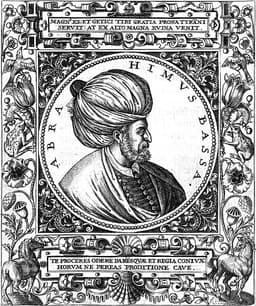
Ibrahim Pasha
Politician · Medieval
68.7Total
Basic Information
Born
615
1493
Died
653
1536
Era
Medieval
Medieval
Nationality
China
Ottoman Empire
Occupation
Politician
Politician
Civilization
Eastern
Middle Eastern
Score Comparison
Military (10%)
50.0
60.0
Political (20%)
68.0
78.0
Influence (20%)
60.0
82.0
Legacy (20%)
33.3
52.0
Leadership (15%)
58.8
80.0
Strategy (15%)
39.5
55.0
TOTAL
51.3
68.7
Fang Yi'ai — Complete Timeline
643 AD
Involved in the Failed Coup of Li ChengqianPolitical Action◆ Major
Fang Yi'ai was implicated in a failed coup plot led by Crown Prince Li Chengqian against Emperor Taizong. The plot was discovered, and Li Chengqian was deposed. Fang Yi'ai was arrested and executed for his involvement. His father, Fang Xuanling, was disgraced but not executed.
Li ChengqianFailed CoupExecution
Impact: nationaltragic
Execution for TreasonPolitical Action◆ Major
Fang Yi'ai was executed by order of Emperor Taizong for his role in the coup plot of Crown Prince Li Chengqian. His execution was part of a broader purge of those involved in the conspiracy. His family was punished, though his father Fang Xuanling was spared due to his past service.
ExecutionTreasonPolitical Purge
Impact: nationaltragic
Ibrahim Pasha — Complete Timeline
1536 AD
Execution by Suleiman the MagnificentPolitical Action◆ Major
Sultan Suleiman ordered the execution of Grand Vizier Ibrahim Pasha, his longtime friend and confidant. Ibrahim was strangled in the Topkapi Palace after being accused of overreaching his authority and possibly plotting against the sultan. His death shocked the Ottoman court.
Ottoman PoliticsExecutionSuleiman
Impact: nationaltragic
Expert Analysis
Origins
Fang Yi'ai was born in the early 7th century in Tang Dynasty China, the son of Fang Xuanling, a famed chancellor under Emperor Taizong. Growing up in a politically prominent family, he likely received a Confucian education and was expected to serve the state. However, historical records provide few details of his early life, focusing instead on his downfall.
Ibrahim Pasha (c. 1493–1536) was born a Christian in Parga, then part of the Venetian Republic. Captured as a child during an Ottoman raid, he was sold into slavery and educated at the palace school in Edirne. There, he befriended the future Sultan Suleiman, rising through the ranks to become grand vizier. His background as a devshirme recruit shaped his loyalty to the sultan and his administrative skills.
Rise to Power
Fang Yi'ai's rise was primarily through his father's influence. Fang Xuanling was a key advisor to Emperor Taizong, and his sons were given positions at court. Fang Yi'ai married a princess, becoming a member of the imperial family. His political career peaked when he was appointed to a post in the crown prince's household, but he never achieved independent power or notable accomplishments.
Ibrahim Pasha's ascent was meteoric. After Suleiman became sultan in 1520, Ibrahim was appointed grand vizier in 1523, bypassing more experienced officials. He commanded armies, negotiated treaties, and effectively governed the empire for 13 years. His military score of 60.0 reflects his role in campaigns like the Siege of Rhodes (1522) and the Battle of Mohács (1526), though his strategic score of 55.0 suggests limited independent military genius.
Leadership & Governance
Fang Yi'ai's leadership was negligible; he was a minor figure who became embroiled in a failed coup. In 643, Crown Prince Li Chengqian plotted to overthrow Emperor Taizong, and Fang Yi'ai was implicated. The coup was poorly planned and quickly suppressed. Fang's involvement suggests either disloyalty or poor judgment. His political score of 68.0 may overstate his actual influence, given his lack of administrative achievements.
Ibrahim Pasha, by contrast, was a dominant administrator. He centralized the Ottoman bureaucracy, extended the devshirme system, and conducted diplomacy with European powers. He negotiated with Charles V and Francis I, and his policies strengthened the empire's finances. However, his governance was marred by arrogance and greed, accumulating vast wealth and alienating rivals. His leadership score of 80.0 reflects his effective control, but his execution shows the limits of his power.
Triumph & Tragedy
Fang Yi'ai's only notable event was his involvement in the coup, which ended in his execution in 643. His greatest failure was his inability to assess the risks or to succeed in the plot. He left no positive legacy; his name is remembered only as a cautionary tale of political overreach. His legacy score of 33.3 is among the lowest.
Ibrahim Pasha's triumphs include his military successes and administrative reforms. He expanded the empire's borders and maintained stability. However, his tragedy was his fall from favor: in 1536, Suleiman ordered his execution, allegedly due to his growing arrogance and a dispute over the sultan's relationship with his wife, Roxelana. Ibrahim was strangled in the palace, his wealth confiscated. His influence score of 82.0 underscores his power, but his demise reveals the precariousness of even the highest officials.
Character & Destiny
Fang Yi'ai's character is poorly documented, but his actions suggest ambition without wisdom. He risked his family's reputation and his life for a doomed plot. His destiny was sealed by his association with the crown prince and the emperor's ruthless response.
Ibrahim Pasha was known for his charm, intelligence, and ambition. He was a close friend of Suleiman, but his success bred envy and overconfidence. He reportedly referred to himself as "sultan" and built a palace that rivaled the sultan's. His character flaws—pride and political blindness—led to his downfall. His total score of 68.7 reflects his substantial achievements but also his fatal miscalculation.
Legacy
Fang Yi'ai's legacy is minimal. He appears in historical records primarily as a footnote in the Tang dynasty's political struggles. His execution served as a warning against disloyalty, but he had no lasting impact on Chinese governance or culture.
Ibrahim Pasha's legacy is more complex. He is remembered as one of the most powerful Ottoman grand viziers, whose reforms shaped the empire's administration. However, his execution highlighted the sultan's absolute power and the dangers of overreach. His influence on Ottoman institutions persisted, but his personal story became a symbol of the volatility of court life. His influence score of 82.0 is second only to his leadership.
Conclusion
Ibrahim Pasha had a more significant impact than Fang Yi'ai. With a total score of 68.7 versus 51.3, Ibrahim's achievements in governance, military campaigns, and diplomacy far outweigh Fang's minor role in a failed coup. While both were executed by their rulers, Ibrahim shaped an empire, whereas Fang was a mere participant in a plot. Ibrahim's legacy, though tarnished by his fall, influenced Ottoman administration for decades. Fang Yi'ai's legacy is negligible. Therefore, Ibrahim Pasha is the more consequential historical figure.
Rankings
🥇
Ibrahim PashaLeader
Mil: 60.0Pol: 78.0Inf: 82.0
68.7
🥈
Fang Yi'ai
Mil: 50.0Pol: 68.0Inf: 60.0
51.3
+17.4 behind
How This Comparison Works
Algorithm
Each figure is scored on 6 dimensions (0—100 scale) based on structured historical data: Military (10%), Political (20%), Influence (20%), Legacy (20%), Leadership (15%), Strategy (15%). The weighted total produces the final ranking.
Data Sources
Scores are computed from structured sub-indicators in the database. Scale factors adjust for era (Ancient ×0.85, Modern ×1.0) and civilization size (Eastern ×1.05, Other ×0.80) to account for differences in population and military scale.
Maximum 3 Figures
Comparisons are limited to 2—3 figures to ensure readability and statistical meaningfulness.
Error Margins
±5 points per dimension — Sub-scores are derived from historical records with inherent uncertainty. Two figures within 5 points on a dimension should be considered roughly equivalent in that area.
Total Score Accuracy
±3 points overall — The weighted combination of 6 dimensions produces a total score with approximately ±3 points of uncertainty. Differences of less than 3 points are not statistically significant— the figures are effectively tied.
Known Limitations
- Historical records are incomplete and uneven across civilizations
- Figures from oral-tradition societies may be underrepresented
- Occupation labels can misclassify multi-role figures
- Scores measure capability and impact, not moral character
- Quantitative scoring is a comparison tool, not absolute truth
Capability Radar
Military (10%) — Battles & Warfare
Battles
37
75
Win Rate
44
80
Expansion
45
85
Political (20%) — Governance & Reform
Reform
0
80
Diplomacy
0
90
Economy
0
75
Influence (20%) — Cultural & Global Reach
Cultural
0
65
Global
0
65
Legacy (20%) — Historical Impact
Historical
5
70
Longevity
5
60
Leadership (15%) — Power & Stability
Tenure
5
85
Stability
0
70
Strategy (15%) — Tactics & Innovation
Strategy
46
82
Tactics
47
78
Reform
56
70
Similar Comparisons
Comments & Discussion
No comments yet. Be the first to share your thoughts!