Loading...
Fan Zhongyan vs Jeong Mong-ju
Jeong Mong-ju leads by 0.5 pts · 2 figures compared
…

Fan Zhongyan
Politician · Medieval
50.7Total
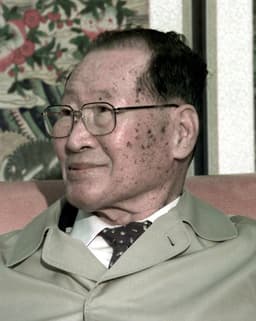
Jeong Mong-ju
Politician · Medieval
51.2Total
Basic Information
Born
989
1337
Died
1052
1392
Era
Medieval
Medieval
Nationality
China
Korea
Occupation
Politician
Politician
Civilization
Eastern
Eastern
Score Comparison
Military (10%)
33.2
50.0
Political (20%)
70.0
45.1
Influence (20%)
56.7
54.9
Legacy (20%)
40.0
50.0
Leadership (15%)
68.0
62.2
Strategy (15%)
25.0
39.1
TOTAL
50.7
51.2
Fan Zhongyan — Complete Timeline
1043 AD
Proposal of the Qingli ReformsReform◆ Major
Fan Zhongyan, as a high official, submitted a ten-point reform program to Emperor Renzong. The reforms aimed to reduce corruption, improve education, and strengthen the military, but faced opposition from conservative officials.
ReformSong DynastyGovernment
Impact: nationalprogressive
1045 AD
Failure of the Qingli ReformsPolitical Action◆ Major
Fan Zhongyan's reform program was abandoned after conservative officials accused him of forming a faction. He was demoted and sent to a provincial post, marking the defeat of his reformist agenda.
Reform FailurePolitical FallSong Dynasty
Impact: nationaltragic
1046 AD
Writing 'On the Yueyang Tower'Cultural◆ Major
Fan Zhongyan wrote the essay 'On the Yueyang Tower', which contained the famous line 'Be the first to worry about the world's troubles, and the last to enjoy its pleasures'. This work became a classic of Chinese literature and a moral exemplar.
LiteratureConfucianismMoral Philosophy
Impact: nationalconstructive
1050 AD
Establishment of charitable estatesReform
Fan Zhongyan established charitable estates to support his clan's poor members, providing education and welfare. This model of clan-based philanthropy influenced later Chinese social welfare practices.
PhilanthropyClanSocial Welfare
constructive
Jeong Mong-ju — Complete Timeline
1390 AD
Defense of Goryeo LoyalismPolitical Action◆ Major
Jeong Mong-ju remained a staunch loyalist to the Goryeo dynasty, opposing the rise of Yi Seong-gye (later King Taejo). He advocated for preserving the Goryeo monarchy and resisted the founding of Joseon.
LoyalismPolitical OppositionGoryeo Dynasty
Impact: national
1392 AD
Assassination on Seonjuk BridgePolitical Action◆ Major
Jeong Mong-ju was assassinated on Seonjuk Bridge in Gaegyeong by agents of Yi Seong-gye, who saw him as a threat to the new dynasty. His death symbolized the end of Goryeo and the beginning of Joseon.
AssassinationDynastic ChangeMartyrdom
Impact: nationaltragic
Expert Analysis
Origins
Fan Zhongyan (989–1052) was born in Suzhou, China, to a poor family. His father died when he was young, and his mother remarried, leaving him to study under harsh conditions. He later passed the imperial examinations in 1015, entering the bureaucracy as a minor official. His early life instilled a deep concern for social welfare, later expressed in his famous line: 'Be the first to worry about the world's troubles, and the last to enjoy its pleasures.'
Jeong Mong-ju (1337–1392) was born in Yeongcheon, Goryeo (modern Korea), to a scholarly family. He excelled in Confucian studies and passed the civil service examination in 1360. He served under the Goryeo dynasty, becoming a prominent Neo-Confucian scholar and official. His loyalty to the declining dynasty defined his career.
Rise to Power
Fan Zhongyan rose through meritocratic exams, gaining prominence as a vocal critic of corruption. By 1043, he became a councilor under Emperor Renzong, advocating for the Qingli Reforms. His influence peaked when he submitted a ten-point reform program in 1043, aiming to overhaul the bureaucracy, reduce nepotism, and improve education. However, his factionalism alarmed conservatives, leading to his demotion in 1045.
Jeong Mong-ju rose during Goryeo's final years, serving as a key advisor to King U and later King Chang. He opposed the rising general Yi Seong-gye, who sought to overthrow the dynasty. Jeong's steadfast loyalty earned him the enmity of Yi's faction. In 1392, Yi Seong-gye seized power, and Jeong was assassinated on Seonjuk Bridge, becoming a martyr for Goryeo loyalism.
Leadership & Governance
Fan Zhongyan's governance focused on institutional reform. He proposed measures like limiting patronage, promoting capable officials, and establishing schools. His approach was systematic but lacked political backing; his score of 68.0 in leadership reflects his principled yet ultimately ineffective governance. He also established charitable estates for his clan, a model of private welfare.
Jeong Mong-ju's leadership was defined by moral rectitude rather than administrative innovation. He advocated for Confucian principles and loyalty to the throne. His political score of 45.1 indicates limited success in influencing policy, as his opposition to Yi Seong-gye was futile. He scored 62.2 in leadership, reflecting his personal integrity rather than practical achievements.
Triumph & Tragedy
Fan Zhongyan's greatest triumph was his literary legacy: 'On the Yueyang Tower' (1046) immortalized his altruistic philosophy. The Qingli Reforms, though failed, inspired later reform movements. His tragedy was the collapse of his reforms due to factional conflict; he was exiled and died in obscurity. His score of 33.2 in military reflects his lack of martial prowess.
Jeong Mong-ju's triumph was his posthumous veneration as a symbol of loyalty. Joseon kings honored him as a scholar, and his works were studied. His tragedy was his violent death, preventing him from shaping the new dynasty. His military score of 50.0 reflects his role in defending Goryeo, but he was not a commander.
Character & Destiny
Fan Zhongyan was idealistic and persistent, but his blunt criticism and factional ties doomed his reforms. His character—a noble scholar-official—fit the Confucian mold but clashed with political realities. His destiny was to be remembered as a moral exemplar, not a successful reformer.
Jeong Mong-ju was unyieldingly loyal, refusing to compromise with Yi Seong-gye. His character—stoic and principled—led directly to his assassination. His destiny was to become a martyr, his death symbolizing the end of Goryeo. He scored 54.9 in influence, slightly above Fan's 56.7, but his impact was more symbolic than practical.
Legacy
Fan Zhongyan's legacy endures in Chinese culture: his charitable estates inspired clan philanthropy, and his essay remains a classic. He scored 40.0 in legacy, partly due to his limited direct impact on governance. However, his ideals influenced later reformers like Wang Anshi.
Jeong Mong-ju's legacy is stronger in Korea: he is revered as a paragon of loyalty, with shrines and memorials. His score of 50.0 in legacy reflects his lasting symbolic importance. Joseon rulers used his example to promote Confucian virtue, though his political goals failed.
Conclusion
Jeong Mong-ju narrowly edges Fan Zhongyan in total score (51.2 vs 50.7) due to his higher legacy and military scores. However, Fan Zhongyan's intellectual contributions and reformist vision had a broader impact on Chinese governance philosophy. Jeong's death was a dramatic end, but his influence remained confined to Korea. Thus, Fan Zhongyan had greater overall impact, as his ideas transcended his era and inspired future generations. His political score of 70.0, compared to Jeong's 45.1, underscores his more substantive governance attempts. While Jeong's loyalty is admirable, Fan's reform agenda addressed systemic issues, making him the more consequential figure.
Rankings
🥇
Jeong Mong-juLeader
Mil: 50.0Pol: 45.1Inf: 54.9
51.2
🥈
Fan Zhongyan
Mil: 33.2Pol: 70.0Inf: 56.7
50.7
+0.5 behind
How This Comparison Works
Algorithm
Each figure is scored on 6 dimensions (0—100 scale) based on structured historical data: Military (10%), Political (20%), Influence (20%), Legacy (20%), Leadership (15%), Strategy (15%). The weighted total produces the final ranking.
Data Sources
Scores are computed from structured sub-indicators in the database. Scale factors adjust for era (Ancient ×0.85, Modern ×1.0) and civilization size (Eastern ×1.05, Other ×0.80) to account for differences in population and military scale.
Maximum 3 Figures
Comparisons are limited to 2—3 figures to ensure readability and statistical meaningfulness.
Error Margins
±5 points per dimension — Sub-scores are derived from historical records with inherent uncertainty. Two figures within 5 points on a dimension should be considered roughly equivalent in that area.
Total Score Accuracy
±3 points overall — The weighted combination of 6 dimensions produces a total score with approximately ±3 points of uncertainty. Differences of less than 3 points are not statistically significant— the figures are effectively tied.
Known Limitations
- Historical records are incomplete and uneven across civilizations
- Figures from oral-tradition societies may be underrepresented
- Occupation labels can misclassify multi-role figures
- Scores measure capability and impact, not moral character
- Quantitative scoring is a comparison tool, not absolute truth
Capability Radar
Military (10%) — Battles & Warfare
Battles
20
41
Win Rate
25
43
Expansion
10
41
Political (20%) — Governance & Reform
Reform
75
35
Diplomacy
60
45
Economy
65
30
Influence (20%) — Cultural & Global Reach
Cultural
70
50
Global
55
20
Legacy (20%) — Historical Impact
Historical
75
55
Longevity
80
60
Leadership (15%) — Power & Stability
Tenure
55
40
Stability
50
20
Strategy (15%) — Tactics & Innovation
Strategy
35
49
Tactics
30
48
Reform
60
53
Similar Comparisons
Comments & Discussion
No comments yet. Be the first to share your thoughts!