Loading...
False Dmitry I vs William Ernest of Saxe-Weimar
False Dmitry I leads by 1.9 pts · 2 figures compared
…

False Dmitry I
Emperor · Modern
40.8Total
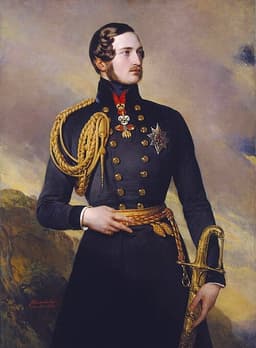
William Ernest of Saxe-Weimar
Emperor · Modern
38.9Total
Basic Information
Born
1581
1876
Died
1606
1923
Era
Modern
Modern
Nationality
Russia
Saxe-Weimar
Occupation
Emperor
Emperor
Civilization
Western
Western
Score Comparison
Military (10%)
25.9
45.6
Political (20%)
32.2
26.4
Influence (20%)
49.4
45.5
Legacy (20%)
39.2
33.3
Leadership (15%)
38.1
41.5
Strategy (15%)
54.8
45.0
TOTAL
40.8
38.9
False Dmitry I — Complete Timeline
1604 AD
Invasion of RussiaWar◆ Major
False Dmitry I, claiming to be the miraculously surviving Tsarevich Dmitry, invaded Russia from Poland with a mixed force of Polish nobles, Cossacks, and Russian exiles. He gained support from disaffected boyars and peasants.
InvasionPolandImpostor
Impact: national
1605 AD
Capture of Moscow and CoronationPolitical Action◆ Major
After Tsar Boris Godunov's sudden death, False Dmitry I entered Moscow and was crowned Tsar. He was recognized by the boyars and the populace, who believed him to be the legitimate heir.
MoscowCoronationImpostor
Impact: national
1606 AD
Marriage to Marina MniszechPolitical Action
False Dmitry I married Marina Mniszech, a Polish noblewoman, in Moscow. The wedding included Catholic ceremonies, which angered the Russian Orthodox Church and alienated many of his Russian supporters.
MarriagePolandOrthodox
Impact: national
Overthrow and AssassinationPolitical Action◆ Major
A boyar uprising led by Vasily Shuisky stormed the Kremlin. False Dmitry I was killed, his body was mutilated and burned. His brief reign ended, and Vasily Shuisky was proclaimed Tsar Vasily IV.
UprisingAssassinationShuisky
Impact: nationaltragic
William Ernest of Saxe-Weimar — Complete Timeline
1901 AD
Succeeded as Grand Duke of Saxe-Weimar-EisenachPolitical Action
William Ernest inherited the grand duchy upon his grandfather Charles Alexander's death. He ruled during the late German Empire, a period of increasing political tension and the lead-up to World War I.
SuccessionGerman Empire
Impact: national
1908 AD
Construction of the Weimar Court TheatreCultural
William Ernest oversaw the construction of a new court theatre building in Weimar, designed by architect Max Littmann. The theatre became a major cultural venue, continuing Weimar's tradition of performing arts.
TheatreWeimarArchitecture
constructive
1918 AD
Abdicated the ThronePolitical Action◆ Major
William Ernest abdicated following the German Revolution of 1918, which overthrew the monarchies of the German Empire. Saxe-Weimar-Eisenach became part of the Free State of Thuringia in the Weimar Republic, ending the dynasty's rule.
AbdicationGerman RevolutionEnd of Monarchy
Impact: nationaltragic
Expert Analysis
Origins
**False Dmitry I** (born c. 1581, died 1606) emerged from obscurity in the Polish-Lithuanian Commonwealth. He claimed to be Tsarevich Dmitry, the son of Ivan the Terrible, who had died under mysterious circumstances in 1591. The real Dmitry was likely epileptic and died from a knife wound, possibly self-inflicted or murder. The impostor's early life is unknown; he may have been a Russian monk named Grigory Otrepiev, who fled to Poland and converted to Catholicism. He received support from Polish magnates, particularly Jerzy Mniszech, who saw an opportunity to influence Russia.
**William Ernest of Saxe-Weimar** (born 1876, died 1923) was the last Grand Duke of Saxe-Weimar-Eisenach. Born into the House of Wettin, he was the grandson of Grand Duke Charles Alexander. He studied at the University of Bonn and joined the Prussian army. His upbringing was typical for German royalty: military training, classical education, and exposure to the cultural heritage of Weimar, home to Goethe and Schiller.
Rise to Power
False Dmitry I's rise began with his invasion of Russia in 1604. He gathered a mixed force of Polish nobles, Cossacks, and mercenaries, numbering about 4,000 at the start. After initial defeats, he gained momentum as Tsar Boris Godunov's popularity waned. In April 1605, Godunov died suddenly, and the Russian army defected to Dmitry. He entered Moscow in June 1605 and was crowned Tsar on July 21. His claim was accepted by the boyars and the populace, who believed he was the legitimate heir.
William Ernest succeeded his grandfather as Grand Duke in 1901, inheriting a stable but increasingly irrelevant throne within the German Empire. His rise was automatic through inheritance, not personal ambition. He ruled as a constitutional monarch, but real power lay with the imperial government in Berlin. His reign was marked by cultural patronage, notably the construction of the Weimar Court Theatre (1908).
Leadership & Governance
False Dmitry I attempted to modernize Russia through reforms influenced by Polish and Western models. He introduced religious tolerance, allowing Catholics and Protestants to practice freely, which angered the Orthodox Church. He planned to create a league against the Ottoman Empire and sought to improve relations with Poland. However, his rule was short (11 months) and his grip on power weak. He relied heavily on Polish advisors and his Catholic wife, Marina Mniszech, which alienated the boyars and commoners.
William Ernest's governance was constrained by the German imperial system. He focused on cultural projects: the new court theatre, restoration of Wartburg Castle, and support for the arts. Politically, he was conservative and supported the monarchy, but his influence was limited. He scored 26.4 in political skill, reflecting his inability to navigate the revolutionary forces that later ended his reign.
Triumph & Tragedy
False Dmitry I's greatest triumph was his successful seizure of the throne through a combination of military force and popular support. His political score of 32.2 reflects his ability to exploit the crisis of the Time of Troubles. However, his tragedy was his rapid downfall: he was overthrown and killed in a boyar uprising led by Vasily Shuisky in May 1606. His body was mutilated and burned, and his reign was later portrayed as a cautionary tale against impostors.
William Ernest's triumph was his cultural legacy: the Weimar Court Theatre became a major cultural venue, and his patronage supported the arts. His tragedy was the loss of his throne in the German Revolution of 1918. He abdicated without resistance, and Saxe-Weimar-Eisenach became part of the state of Thuringia. His political score of 26.4 indicates his failure to adapt to changing times.
Character & Destiny
False Dmitry I was charismatic and cunning, able to convince many of his identity. He was risk-tolerant but overconfident, ignoring the growing opposition. His character led him to pursue rapid reforms without securing a power base, a fatal error. Historical assessments, like that of historian Chester Dunning, note that he was a capable ruler but his legitimacy was always fragile.
William Ernest was traditional and reserved, more interested in culture than politics. He accepted his fate passively, reflecting a sense of duty but also lack of initiative. His character was shaped by the security of hereditary monarchy, unprepared for revolution. He died in 1923, five years after abdication.
Legacy
False Dmitry I's legacy is as a symbol of the Time of Troubles, a period of chaos and foreign intervention. His brief reign exposed the weaknesses of the Russian monarchy and paved the way for the Romanov dynasty. His influence score of 49.4 reflects his lasting impact on Russian historical memory. The phrase "False Dmitry" became synonymous with impostors.
William Ernest's legacy is more localized: the Weimar Court Theatre and his cultural contributions. However, his abdication marked the end of the Saxon duchies. He is remembered as the last Grand Duke, but his impact on broader history is minimal. His legacy score of 33.3 is lower than Dmitry's 39.2.
Conclusion
False Dmitry I had a greater impact on history than William Ernest. Despite his short reign, his actions contributed to the Time of Troubles, which reshaped Russian politics and led to the Romanov dynasty. His total score of 40.8 is slightly higher than William Ernest's 38.9. While both were ultimately failures—one killed, one abdicated—Dmitry's story is more historically significant. William Ernest's reign ended quietly, and his cultural contributions, while notable, do not match the drama and consequences of Dmitry's imposture. Thus, False Dmitry I takes the edge in historical importance.
Rankings
🥇
False Dmitry ILeader
Mil: 25.9Pol: 32.2Inf: 49.4
40.8
🥈
William Ernest of Saxe-Weimar
Mil: 45.6Pol: 26.4Inf: 45.5
38.9
+1.9 behind
How This Comparison Works
Algorithm
Each figure is scored on 6 dimensions (0—100 scale) based on structured historical data: Military (10%), Political (20%), Influence (20%), Legacy (20%), Leadership (15%), Strategy (15%). The weighted total produces the final ranking.
Data Sources
Scores are computed from structured sub-indicators in the database. Scale factors adjust for era (Ancient ×0.85, Modern ×1.0) and civilization size (Eastern ×1.05, Other ×0.80) to account for differences in population and military scale.
Maximum 3 Figures
Comparisons are limited to 2—3 figures to ensure readability and statistical meaningfulness.
Error Margins
±5 points per dimension — Sub-scores are derived from historical records with inherent uncertainty. Two figures within 5 points on a dimension should be considered roughly equivalent in that area.
Total Score Accuracy
±3 points overall — The weighted combination of 6 dimensions produces a total score with approximately ±3 points of uncertainty. Differences of less than 3 points are not statistically significant— the figures are effectively tied.
Known Limitations
- Historical records are incomplete and uneven across civilizations
- Figures from oral-tradition societies may be underrepresented
- Occupation labels can misclassify multi-role figures
- Scores measure capability and impact, not moral character
- Quantitative scoring is a comparison tool, not absolute truth
Capability Radar
Military (10%) — Battles & Warfare
Battles
15
23
Win Rate
20
28
Expansion
5
33
Political (20%) — Governance & Reform
Reform
15
10
Diplomacy
25
15
Economy
10
10
Influence (20%) — Cultural & Global Reach
Cultural
15
5
Global
10
5
Legacy (20%) — Historical Impact
Historical
25
5
Longevity
10
5
Leadership (15%) — Power & Stability
Tenure
20
20
Stability
5
10
Strategy (15%) — Tactics & Innovation
Strategy
10
32
Tactics
10
35
Reform
5
37
Similar Comparisons
Comments & Discussion
No comments yet. Be the first to share your thoughts!