Loading...
Analysis will be generated on first visit.
Scores and timeline are available below. The page will refresh automatically when ready.
F. W. de Klerk vs Julius Caesar
Julius Caesar leads by 16.8 pts · 2 figures compared
…

F. W. de Klerk
Politician · Modern
66.5Total
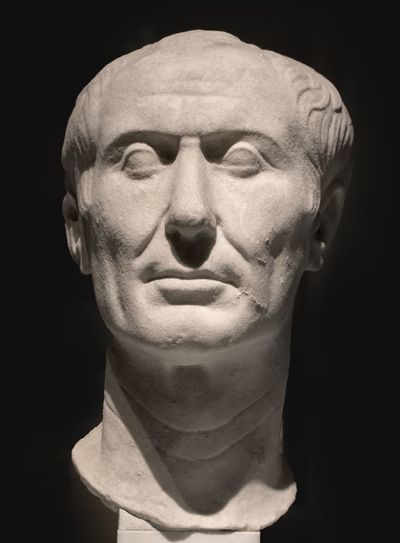
Julius Caesar
General · Ancient
83.3Total
Basic Information
Born
1936
-100
Died
—
-44
Era
Modern
Ancient
Nationality
South Africa
Roman Republic
Occupation
Politician
General
Civilization
Other
Western
Score Comparison
Military (10%)
30.2
88.0
Political (20%)
76.0
78.0
Influence (20%)
73.1
85.0
Legacy (20%)
67.6
82.0
Leadership (15%)
77.8
82.0
Strategy (15%)
56.4
88.0
TOTAL
66.5
83.3
Rankings
🥇
Julius CaesarLeader
Mil: 88.0Pol: 78.0Inf: 85.0
83.3
🥈
F. W. de Klerk
Mil: 30.2Pol: 76.0Inf: 73.1
66.5
+16.8 behind
How This Comparison Works
Algorithm
Each figure is scored on 6 dimensions (0—100 scale) based on structured historical data: Military (10%), Political (20%), Influence (20%), Legacy (20%), Leadership (15%), Strategy (15%). The weighted total produces the final ranking.
Data Sources
Scores are computed from structured sub-indicators in the database. Scale factors adjust for era (Ancient ×0.85, Modern ×1.0) and civilization size (Eastern ×1.05, Other ×0.80) to account for differences in population and military scale.
Maximum 3 Figures
Comparisons are limited to 2—3 figures to ensure readability and statistical meaningfulness.
Error Margins
±5 points per dimension — Sub-scores are derived from historical records with inherent uncertainty. Two figures within 5 points on a dimension should be considered roughly equivalent in that area.
Total Score Accuracy
±3 points overall — The weighted combination of 6 dimensions produces a total score with approximately ±3 points of uncertainty. Differences of less than 3 points are not statistically significant— the figures are effectively tied.
Known Limitations
- Historical records are incomplete and uneven across civilizations
- Figures from oral-tradition societies may be underrepresented
- Occupation labels can misclassify multi-role figures
- Scores measure capability and impact, not moral character
- Quantitative scoring is a comparison tool, not absolute truth
Capability Radar
Military (10%) — Battles & Warfare
Battles
22
95
Win Rate
22
92
Expansion
25
97
Political (20%) — Governance & Reform
Reform
85
90
Diplomacy
80
85
Economy
50
82
Influence (20%) — Cultural & Global Reach
Cultural
55
88
Global
65
94
Legacy (20%) — Historical Impact
Historical
70
95
Longevity
60
96
Leadership (15%) — Power & Stability
Tenure
60
75
Stability
30
60
Strategy (15%) — Tactics & Innovation
Strategy
32
94
Tactics
35
96
Reform
39
88
Analysis will be generated on first visit.
Scores and timeline are available below. The page will refresh automatically when ready.
F. W. de Klerk — Complete Timeline
1989 AD
Became Leader of the National PartyPolitical Action◆ Major
F. W. de Klerk was elected leader of the National Party, succeeding P. W. Botha. He became State President of South Africa later that year, inheriting a country under international sanctions and internal unrest.
LeadershipSouth AfricaApartheid
Impact: national
1990 AD
Unbanned ANC and Freed MandelaPolitical Action
De Klerk announced the unbanning of the African National Congress (ANC) and other liberation movements, and ordered the release of Nelson Mandela after 27 years in prison. This was a pivotal step towards ending apartheid.
ApartheidMandelaSouth Africa
Impact: globalconstructive
Negotiated End of ApartheidPolitical Action
De Klerk led the National Party in negotiations with the ANC and other parties to dismantle apartheid. The negotiations resulted in the 1993 Interim Constitution and the first multi-racial elections in 1994.
NegotiationsApartheidSouth Africa
Impact: globalconstructive
1993 AD
Won Nobel Peace PrizeCultural◆ Major
De Klerk shared the Nobel Peace Prize with Nelson Mandela for their roles in the peaceful transition from apartheid to democracy. The award recognized their efforts in negotiating a peaceful end to racial segregation.
Nobel PrizePeaceSouth Africa
Impact: globalconstructive
1994 AD
Served as Deputy President Under MandelaPolitical Action◆ Major
After the 1994 elections, de Klerk served as Deputy President in Nelson Mandela's Government of National Unity. He held the position until 1996, when the National Party withdrew from the coalition.
Government of National UnitySouth AfricaTransition
Impact: nationalconstructive
1996 AD
Apologized for ApartheidPolitical Action◆ Major
De Klerk publicly apologized for apartheid, stating that the policy was morally wrong and had caused immense suffering. The apology was seen as a significant gesture of reconciliation.
ApologyReconciliationSouth Africa
Impact: nationalconstructive
Similar Comparisons
Comments & Discussion
No comments yet. Be the first to share your thoughts!