Loading...
Eumenes II vs Perseus of Macedon
Eumenes II leads by 9.5 pts · 2 figures compared
…
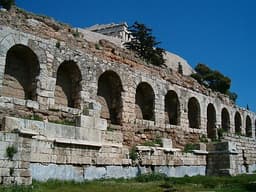
Eumenes II
Emperor · Ancient
54.4Total

Perseus of Macedon
Emperor · Ancient
44.9Total
Basic Information
Born
-220
-212
Died
-158
-166
Era
Ancient
Ancient
Nationality
Pergamon
Macedon
Occupation
Emperor
Emperor
Civilization
Western
Western
Score Comparison
Military (10%)
47.5
38.3
Political (20%)
62.7
33.6
Influence (20%)
58.0
50.2
Legacy (20%)
50.0
40.8
Leadership (15%)
53.2
48.4
Strategy (15%)
52.5
60.0
TOTAL
54.4
44.9
Eumenes II — Complete Timeline
190 BC
Battle of MagnesiaWar◆ Major
Eumenes II fought alongside the Roman army under Scipio Asiaticus against Antiochus III at the Battle of Magnesia. His cavalry charge on the Seleucid left flank contributed to the decisive Roman victory that ended the Roman-Seleucid War.
Roman-Seleucid WarBattleAlliance
Impact: regionalconstructive
188 BC
Treaty of ApameaPolitical Action
Eumenes II negotiated the Treaty of Apamea with the Roman Republic after the Roman victory over Antiochus III. The treaty granted Pergamon control over most of the former Seleucid territories in Asia Minor, making Pergamon the dominant power in the region.
Roman-Seleucid WarTerritorial ExpansionDiplomacy
Impact: regionalconstructive
186 BC
War with Prusias I of BithyniaWar
Eumenes II fought a war against Prusias I of Bithynia, who was allied with the Galatians. The conflict ended with a Roman-mediated peace that confirmed Pergamon's territorial gains but strained relations with Rome.
Bithynian WarGalatiansRoman Mediation
Impact: regional
180 BC
Construction of the Great Altar of ZeusCultural◆ Major
Eumenes II commissioned the construction of the Great Altar of Zeus in Pergamon. The altar, adorned with a monumental frieze depicting the Gigantomachy, became a masterpiece of Hellenistic art and a symbol of Pergamene power and cultural achievement.
Hellenistic ArtArchitecturePergamon
Impact: regionalconstructive
Perseus of Macedon — Complete Timeline
168 BC
Battle of PydnaWar
Perseus's Macedonian army was crushed by the Roman legions under Lucius Aemilius Paullus at Pydna. The defeat was total, leading to the capture of Perseus and the end of the Antigonid dynasty, with Macedon divided into four republics.
Third Macedonian WarRoman ConquestEnd of Macedon
Impact: regionaldestructive
167 BC
Captured and paraded in RomePolitical Action◆ Major
After his capture, Perseus was paraded in chains during Aemilius Paullus's triumph in Rome. This public humiliation symbolized the complete subjugation of Macedon and served as a warning to other Hellenistic kingdoms.
Roman TriumphHumiliationSymbolic
Impact: regionaltragic
166 BC
Died in captivityOther
Perseus died while under house arrest in Alba Fucens, Italy, after reportedly being mistreated by his Roman captors. His death marked the final end of the Macedonian monarchy.
CaptivityDeath
Impact: nationaltragic
Expert Analysis
Origins
Eumenes II (r. 197–159 BCE) was born into the Attalid dynasty of Pergamon, a small but wealthy kingdom in western Anatolia. His father, Attalus I, had established Pergamon as a major power by defeating the Galatians. Eumenes was educated in Greek culture and trained in diplomacy and warfare from a young age. His family's fortunes were tied to Roman support, and he inherited a kingdom that was a loyal ally of Rome.
Perseus of Macedon (r. 179–168 BCE) was the last king of the Antigonid dynasty, born around 212 BCE. His father, Philip V, had fought two wars against Rome. Perseus was raised in the court of Pella, steeped in Macedonian military traditions and Hellenistic kingship. He ascended the throne after his father's death, inheriting a kingdom that was still powerful but increasingly isolated and threatened by Rome.
Rise to Power
Eumenes II became king in 197 BCE after his father's death. His early reign was dominated by the conflict between Rome and the Seleucid Empire under Antiochus III. Eumenes shrewdly allied Pergamon with Rome, providing crucial cavalry support at the Battle of Magnesia in 190 BCE. His personal leadership in the battle, where his cavalry charge broke the Seleucid left wing, earned him Roman gratitude. This led directly to the Treaty of Apamea in 188 BCE, which transferred vast territories to Pergamon, including most of Asia Minor. Eumenes's rise was thus a product of his diplomatic skill and military cooperation with Rome.
Perseus rose to power after the death of Philip V in 179 BCE. He immediately sought to rebuild Macedon's strength by renewing alliances with Greek states, marrying Laodice, daughter of Seleucus IV, and even attempting to negotiate with Rome. However, his aggressive expansionism and anti-Roman rhetoric alarmed the Senate. In 171 BCE, the Third Macedonian War began. Perseus initially had some success, winning a cavalry skirmish at Callicinus, but he failed to capitalize. His indecisiveness and reluctance to commit to a full-scale battle allowed Rome to regroup. His rise was cut short by the Battle of Pydna in 168 BCE, where his phalanx was broken by Roman legions.
Leadership & Governance
Eumenes II was a master of diplomacy and cultural patronage. He governed Pergamon as a Hellenistic monarch but relied heavily on Roman support. His domestic policy focused on urban development, including the construction of the Great Altar of Zeus, a masterpiece of Hellenistic art. He also expanded the Library of Pergamon, rivaling Alexandria. His leadership style was cautious and calculating, preferring negotiation to war. He maintained stability through alliances and marriage ties, such as his marriage to Stratonice, daughter of the Cappadocian king.
Perseus governed Macedon with a traditional autocratic style, emphasizing military preparedness and Macedonian nationalism. He attempted to revive the old Macedonian phalanx and sought to rally Greek cities against Rome. However, his governance was marked by paranoia and cruelty. He executed political rivals, including his own brother Demetrius, whom he suspected of pro-Roman sympathies. His tax policies alienated many subjects, and his failure to secure a broad coalition against Rome left Macedon isolated. His leadership score of 48.4 reflects his inability to inspire loyalty or make strategic alliances.
Triumph & Tragedy
Eumenes II's greatest triumph was the Treaty of Apamea, which made Pergamon the dominant power in Asia Minor. He also successfully navigated the complex politics of the Hellenistic world, preserving his kingdom's independence and prosperity. His cultural achievements, especially the Altar of Zeus, left a lasting legacy. However, his tragedy was his growing dependency on Rome. Later in his reign, he faced rebellions and a war with Prusias I of Bithynia, which he won only with Roman intervention. His political score of 62.7 reflects his diplomatic success, but his military score of 47.5 shows his reliance on others for force.
Perseus's triumph was his initial success in the Third Macedonian War, where he defeated a Roman army at the Battle of Callicinus in 171 BCE. He also managed to unite many Greek states against Rome. However, his tragedy was total: the Battle of Pydna in 168 BCE resulted in the annihilation of his army, his capture, and his public humiliation in Rome. He died in captivity in 166 BCE, possibly by suicide. His low political score of 33.6 and military score of 38.3 reflect his failures. His legacy is that of the last Antigonid king, symbolizing the end of Macedonian independence.
Character & Destiny
Eumenes II was cautious, diplomatic, and cultured. He understood that Pergamon's survival depended on Roman favor, and he worked tirelessly to maintain that relationship. His character was pragmatic, avoiding unnecessary risks. This allowed him to expand his kingdom peacefully, but it also meant he never achieved independent military glory. His destiny was to be a client king, albeit a successful one.
Perseus was ambitious, proud, and indecisive. He dreamed of restoring Macedonian hegemony but lacked the strategic acumen to achieve it. His paranoia led him to alienate allies and make poor decisions. His character sealed his fate: he hesitated at critical moments, failed to press advantages, and ultimately lost everything. His strategy score of 60.0 is surprisingly high, perhaps reflecting his initial plans, but his execution was poor.
Legacy
Eumenes II's legacy is primarily cultural. The Great Altar of Zeus, now in Berlin, is one of the most famous monuments of the ancient world. His library and patronage of the arts made Pergamon a center of Hellenistic culture. Politically, he established a model of Roman alliance that allowed Pergamon to flourish until its bequest to Rome in 133 BCE. His influence score of 58.0 reflects his cultural impact.
Perseus's legacy is that of a failed king. He is remembered as the last ruler of an independent Macedon, whose defeat at Pydna led to the Roman annexation of Macedonia. His name is often invoked as a symbol of the end of the Hellenistic kingdoms. His legacy score of 40.8 is low, as he left no enduring institutions or monuments.
Conclusion
Eumenes II had a greater impact than Perseus of Macedon, as his total score of 54.4 versus 44.9 indicates. While Perseus's defeat was historically significant, it was a negative milestone: the end of a kingdom. Eumenes, by contrast, built something lasting: a cultural legacy that still inspires awe. His diplomatic skill allowed Pergamon to thrive in a dangerous world, and his patronage produced art that transcends his era. Perseus's failures, though dramatic, ultimately only benefited Rome. Eumenes II's positive contributions outweigh Perseus's tragic narrative. Thus, Eumenes II is the more impactful figure.
Rankings
🥇
Eumenes IILeader
Mil: 47.5Pol: 62.7Inf: 58.0
54.4
🥈
Perseus of Macedon
Mil: 38.3Pol: 33.6Inf: 50.2
44.9
+9.5 behind
How This Comparison Works
Algorithm
Each figure is scored on 6 dimensions (0—100 scale) based on structured historical data: Military (10%), Political (20%), Influence (20%), Legacy (20%), Leadership (15%), Strategy (15%). The weighted total produces the final ranking.
Data Sources
Scores are computed from structured sub-indicators in the database. Scale factors adjust for era (Ancient ×0.85, Modern ×1.0) and civilization size (Eastern ×1.05, Other ×0.80) to account for differences in population and military scale.
Maximum 3 Figures
Comparisons are limited to 2—3 figures to ensure readability and statistical meaningfulness.
Error Margins
±5 points per dimension — Sub-scores are derived from historical records with inherent uncertainty. Two figures within 5 points on a dimension should be considered roughly equivalent in that area.
Total Score Accuracy
±3 points overall — The weighted combination of 6 dimensions produces a total score with approximately ±3 points of uncertainty. Differences of less than 3 points are not statistically significant— the figures are effectively tied.
Known Limitations
- Historical records are incomplete and uneven across civilizations
- Figures from oral-tradition societies may be underrepresented
- Occupation labels can misclassify multi-role figures
- Scores measure capability and impact, not moral character
- Quantitative scoring is a comparison tool, not absolute truth
Capability Radar
Military (10%) — Battles & Warfare
Battles
45
35
Win Rate
50
30
Expansion
50
25
Political (20%) — Governance & Reform
Reform
55
25
Diplomacy
70
30
Economy
60
30
Influence (20%) — Cultural & Global Reach
Cultural
65
25
Global
45
15
Legacy (20%) — Historical Impact
Historical
60
35
Longevity
55
20
Leadership (15%) — Power & Stability
Tenure
65
40
Stability
55
20
Strategy (15%) — Tactics & Innovation
Strategy
60
35
Tactics
55
40
Reform
40
20
Similar Comparisons
Comments & Discussion
No comments yet. Be the first to share your thoughts!