Loading...
This comparison has not been analyzed yet.
One-time AI generation (~1 minute). Scores and timeline are already available below.
Essam Sharaf vs Faisal al-Fayez
Faisal al-Fayez leads by 3.0 pts · 2 figures compared
…
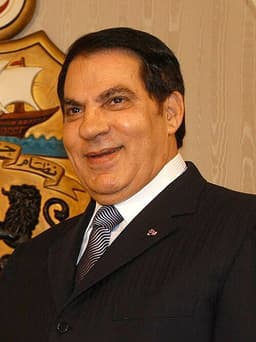
Essam Sharaf
Politician · Modern
44.0Total

Faisal al-Fayez
Politician · Modern
47.0Total
Basic Information
Born
1952
1952
Died
—
—
Era
Modern
Modern
Nationality
Egypt
Jordan
Occupation
Politician
Politician
Civilization
Middle Eastern
Middle Eastern
Score Comparison
Military (10%)
50.0
46.6
Political (20%)
39.4
42.3
Influence (20%)
51.0
49.4
Legacy (20%)
39.2
39.2
Leadership (15%)
41.5
64.0
Strategy (15%)
42.8
42.6
TOTAL
44.0
47.0
Essam Sharaf — Complete Timeline
2011 AD
Appointment as Prime Minister of EgyptPolitical Action◆ Major
Essam Sharaf was appointed Prime Minister by the Supreme Council of the Armed Forces in March 2011, following the resignation of Ahmed Shafik. His appointment came during the 2011 Egyptian revolution, and he was seen as a reformist figure.
Prime MinisterRevolutionEgypt
Impact: nationalconstructive
Resignation amid political crisisPolitical Action◆ Major
Sharaf resigned as Prime Minister in November 2011 after months of protests against the military's handling of the transition. His resignation followed violent clashes between security forces and demonstrators in Tahrir Square.
ResignationProtestsEgypt
Impact: nationaltragic
Faisal al-Fayez — Complete Timeline
2003 AD
Appointment as Prime Minister of JordanPolitical Action◆ Major
Faisal al-Fayez was appointed Prime Minister of Jordan in October 2003 by King Abdullah II. His government focused on economic reforms and improving Jordan's relations with the United States, particularly in the context of the Iraq War.
Prime MinisterGovernmentEconomic Reform
Impact: nationalconstructive
2005 AD
Resignation Amid Political CrisisPolitical Action◆ Major
Fayez resigned as Prime Minister in April 2005 after a series of political crises, including protests over fuel price hikes and allegations of corruption. His resignation was seen as a response to public pressure and a desire to restore stability.
ResignationPolitical CrisisProtests
Impact: national
2010 AD
Speaker of the House of RepresentativesPolitical Action
Fayez was elected Speaker of the Jordanian House of Representatives in November 2010. As speaker, he oversaw parliamentary sessions and played a role in legislative processes, though his tenure was marked by limited political reforms.
SpeakerParliamentLegislature
Impact: national
2011 AD
Role in the National Dialogue CommitteePolitical Action
During the Arab Spring protests in Jordan in 2011, Fayez was appointed to the National Dialogue Committee, tasked with proposing political reforms. The committee recommended constitutional changes, but many were not fully implemented.
Arab SpringPolitical ReformDialogue
Impact: nationalconstructive
This comparison has not been analyzed yet.
One-time AI generation (~1 minute). Scores and timeline are already available below.
Rankings
🥇
Faisal al-FayezLeader
Mil: 46.6Pol: 42.3Inf: 49.4
47.0
🥈
Essam Sharaf
Mil: 50.0Pol: 39.4Inf: 51.0
44.0
+3.0 behind
How This Comparison Works
Algorithm
Each figure is scored on 6 dimensions (0—100 scale) based on structured historical data: Military (10%), Political (20%), Influence (20%), Legacy (20%), Leadership (15%), Strategy (15%). The weighted total produces the final ranking.
Data Sources
Scores are computed from structured sub-indicators in the database. Scale factors adjust for era (Ancient ×0.85, Modern ×1.0) and civilization size (Eastern ×1.05, Other ×0.80) to account for differences in population and military scale.
Maximum 3 Figures
Comparisons are limited to 2—3 figures to ensure readability and statistical meaningfulness.
Error Margins
±5 points per dimension — Sub-scores are derived from historical records with inherent uncertainty. Two figures within 5 points on a dimension should be considered roughly equivalent in that area.
Total Score Accuracy
±3 points overall — The weighted combination of 6 dimensions produces a total score with approximately ±3 points of uncertainty. Differences of less than 3 points are not statistically significant— the figures are effectively tied.
Known Limitations
- Historical records are incomplete and uneven across civilizations
- Figures from oral-tradition societies may be underrepresented
- Occupation labels can misclassify multi-role figures
- Scores measure capability and impact, not moral character
- Quantitative scoring is a comparison tool, not absolute truth
Capability Radar
Military (10%) — Battles & Warfare
Battles
22
20
Win Rate
26
25
Expansion
29
29
Political (20%) — Governance & Reform
Reform
40
30
Diplomacy
35
40
Economy
15
30
Influence (20%) — Cultural & Global Reach
Cultural
15
20
Global
20
15
Legacy (20%) — Historical Impact
Historical
25
20
Longevity
10
15
Leadership (15%) — Power & Stability
Tenure
20
40
Stability
10
35
Strategy (15%) — Tactics & Innovation
Strategy
32
29
Tactics
33
33
Reform
36
34
Similar Comparisons
Comments & Discussion
No comments yet. Be the first to share your thoughts!