Loading...
This comparison has not been analyzed yet.
One-time AI generation (~1 minute). Scores and timeline are already available below.
Esen Taishi vs John of Brienne
Esen Taishi leads by 6.1 pts · 2 figures compared
…

Esen Taishi
Emperor · Medieval
56.0Total
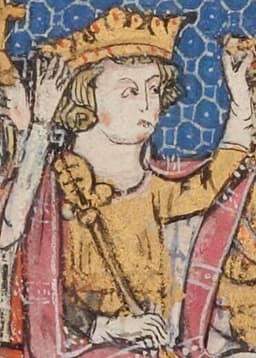
John of Brienne
Emperor · Medieval
49.9Total
Basic Information
Born
1410
1170
Died
1455
1237
Era
Medieval
Medieval
Nationality
Oirat
Jerusalem
Occupation
Emperor
Emperor
Civilization
Eastern
Western
Score Comparison
Military (10%)
80.0
50.0
Political (20%)
43.7
43.7
Influence (20%)
57.2
51.8
Legacy (20%)
50.0
44.2
Leadership (15%)
51.9
67.0
Strategy (15%)
68.1
43.3
TOTAL
56.0
49.9
Esen Taishi — Complete Timeline
1449 AD
Capture of the Ming EmperorWar
Esen Taishi led the Oirat Mongols to victory at the Battle of Tumu Fortress, capturing the Ming emperor Zhengtong. This event shocked the Ming dynasty and demonstrated Oirat military power, though Esen failed to capitalize on the victory.
Battle of TumuMing DynastyOirat
Impact: regional
1453 AD
Proclamation as KhanPolitical Action◆ Major
Esen Taishi proclaimed himself khan of the Mongols, claiming the title of Great Khan. This move alienated many Mongol nobles and led to internal conflict, weakening his position.
ProclamationMongol UnityOirat
Impact: regional
1455 AD
AssassinationPolitical Action◆ Major
Esen Taishi was assassinated by former allies, ending his rule. His death led to the decline of Oirat power and the fragmentation of the Mongol confederation.
AssassinationOiratDecline
Impact: regionaltragic
John of Brienne — Complete Timeline
1210 AD
Election as King of JerusalemPolitical Action◆ Major
John of Brienne was elected King of Jerusalem by the Haute Cour, marrying Maria of Montferrat, the heiress. He became king at a time when the kingdom was reduced to the coastal city of Acre and faced threats from the Ayyubids.
SuccessionCrusader States
Impact: regional
1218 AD
Siege of Damietta (Fifth Crusade)War◆ Major
John of Brienne led the crusader forces in the Fifth Crusade, besieging the Egyptian city of Damietta. After a long siege, the city fell in 1219, but the crusaders failed to capitalize on the victory due to internal divisions.
CrusadeEgyptFifth Crusade
Impact: regional
1219 AD
Failed negotiations with al-KamilPolitical Action◆ Major
John of Brienne negotiated with Ayyubid Sultan al-Kamil, who offered to return Jerusalem in exchange for the crusaders leaving Egypt. John refused, influenced by the papal legate Pelagius, leading to the eventual failure of the Fifth Crusade.
DiplomacyFifth CrusadeJerusalem
Impact: regionaldestructive
1229 AD
Election as Latin Emperor of ConstantinoplePolitical Action◆ Major
John of Brienne was elected Latin Emperor of Constantinople, ruling as regent for the young Baldwin II. He brought military experience to the beleaguered empire, which was threatened by the Byzantine Empire of Nicaea and the Second Bulgarian Empire.
SuccessionLatin EmpireByzantine
Impact: regional
1235 AD
Defense of Constantinople against John III VatatzesWar◆ Major
John of Brienne successfully defended Constantinople against a siege by John III Vatatzes of Nicaea and Ivan Asen II of Bulgaria. His leadership preserved the Latin Empire for another generation.
SiegeDefenseLatin Empire
Impact: regionalconstructive
This comparison has not been analyzed yet.
One-time AI generation (~1 minute). Scores and timeline are already available below.
Rankings
🥇
Esen TaishiLeader
Mil: 80.0Pol: 43.7Inf: 57.2
56.0
🥈
John of Brienne
Mil: 50.0Pol: 43.7Inf: 51.8
49.9
+6.1 behind
How This Comparison Works
Algorithm
Each figure is scored on 6 dimensions (0—100 scale) based on structured historical data: Military (10%), Political (20%), Influence (20%), Legacy (20%), Leadership (15%), Strategy (15%). The weighted total produces the final ranking.
Data Sources
Scores are computed from structured sub-indicators in the database. Scale factors adjust for era (Ancient ×0.85, Modern ×1.0) and civilization size (Eastern ×1.05, Other ×0.80) to account for differences in population and military scale.
Maximum 3 Figures
Comparisons are limited to 2—3 figures to ensure readability and statistical meaningfulness.
Error Margins
±5 points per dimension — Sub-scores are derived from historical records with inherent uncertainty. Two figures within 5 points on a dimension should be considered roughly equivalent in that area.
Total Score Accuracy
±3 points overall — The weighted combination of 6 dimensions produces a total score with approximately ±3 points of uncertainty. Differences of less than 3 points are not statistically significant— the figures are effectively tied.
Known Limitations
- Historical records are incomplete and uneven across civilizations
- Figures from oral-tradition societies may be underrepresented
- Occupation labels can misclassify multi-role figures
- Scores measure capability and impact, not moral character
- Quantitative scoring is a comparison tool, not absolute truth
Capability Radar
Military (10%) — Battles & Warfare
Battles
75
55
Win Rate
80
50
Expansion
75
35
Political (20%) — Governance & Reform
Reform
30
30
Diplomacy
55
65
Economy
35
25
Influence (20%) — Cultural & Global Reach
Cultural
40
30
Global
45
20
Legacy (20%) — Historical Impact
Historical
60
40
Longevity
40
25
Leadership (15%) — Power & Stability
Tenure
40
60
Stability
25
30
Strategy (15%) — Tactics & Innovation
Strategy
80
40
Tactics
85
45
Reform
60
20
Similar Comparisons
Comments & Discussion
No comments yet. Be the first to share your thoughts!