Loading...
Erwin Rommel vs Peng Dehuai
Peng Dehuai leads by 3.2 pts · 2 figures compared
…

Erwin Rommel
General · Modern
61.7Total
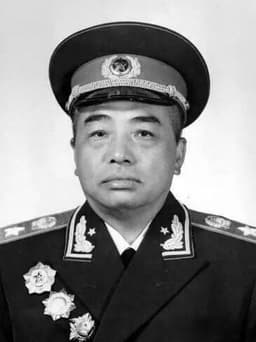
Peng Dehuai
General · Modern
64.9Total
Basic Information
Born
1891
1898
Died
1944
1974
Era
Modern
Modern
Nationality
Germany
China
Occupation
General
General
Civilization
Western
Eastern
Score Comparison
Military (10%)
74.7
80.0
Political (20%)
33.6
62.7
Influence (20%)
75.0
65.0
Legacy (20%)
72.0
55.0
Leadership (15%)
36.9
70.0
Strategy (15%)
69.1
70.0
TOTAL
61.7
64.9
Erwin Rommel — Complete Timeline
1940 AD
Battle of FranceWar◆ Major
Rommel commanded the 7th Panzer Division during the invasion of France. His division advanced rapidly, earning the nickname 'Ghost Division' for its speed and surprise attacks. The campaign resulted in the capture of French forces and the fall of France.
World War IIBlitzkriegPanzer Division
Impact: global
1941 AD
Siege of TobrukWar◆ Major
Rommel's Afrika Korps besieged the Australian and British garrison at Tobruk. Despite repeated assaults, the garrison held out for 240 days, tying down German forces and preventing Rommel from advancing into Egypt.
World War IINorth African CampaignSiege
Impact: regional
1942 AD
Battle of GazalaWar◆ Major
Rommel launched an offensive against British forces at Gazala, outflanking the British line and capturing Tobruk. The victory was Rommel's greatest, earning him promotion to Field Marshal, but it overextended his supply lines.
World War IINorth African CampaignDecisive Victory
Impact: regional
First Battle of El AlameinWar
Rommel's Afrika Korps attacked British defensive positions at El Alamein but failed to break through. The battle halted the German advance into Egypt and marked the beginning of the Axis retreat in North Africa.
World War IINorth African CampaignTurning Point
Impact: regional
1944 AD
Forced SuicidePolitical Action◆ Major
Rommel was implicated in the July 20 plot to assassinate Hitler. Given the choice between a public trial and suicide with a state funeral, Rommel chose suicide. He was forced to take cyanide, and his death was officially reported as a heart attack.
World War IINazi GermanyJuly 20 Plot
Impact: nationaltragic
Peng Dehuai — Complete Timeline
1950 AD
Commander of Chinese Forces in the Korean WarWar
Peng Dehuai was appointed commander of the Chinese People's Volunteer Army in Korea. He led Chinese forces to initial victories against UN forces, pushing them back from the Yalu River and capturing Seoul.
Korean WarMilitary Command
Impact: global
1954 AD
Minister of National Defense of the People's Republic of ChinaPolitical Action◆ Major
Peng Dehuai was appointed Minister of National Defense, overseeing the modernization of the People's Liberation Army. He advocated for professional military reforms and reduced the influence of political commissars.
GovernmentMilitary Reform
Impact: nationalconstructive
1959 AD
Criticized Mao Zedong at the Lushan ConferencePolitical Action
Peng Dehuai wrote a letter to Mao Zedong criticizing the Great Leap Forward's economic policies and their human cost. Mao responded by purging Peng, labeling him a 'right opportunist' and removing him from all posts.
Great Leap ForwardPolitical PurgeCriticism
Impact: nationaldestructive
Expert Analysis
Origins
Erwin Rommel was born on November 15, 1891, in Heidenheim, Germany, into a middle-class family. His father was a teacher and his mother a daughter of a senior civil servant. Rommel joined the German Army in 1910 as an officer cadet, serving with distinction in World War I, where he earned the Pour le Mérite for his actions in Italy. Peng Dehuai was born on October 24, 1898, in Xiangtan, Hunan, China, into a poor peasant family. He had only two years of formal education before joining the Hunan Army in 1916 to escape poverty. Peng rose through the ranks during the Chinese Civil War, becoming a key commander in the Red Army.
Rise to Power
Rommel's rise accelerated during World War II. In 1940, he commanded the 7th Panzer Division in the Battle of France, where his rapid advance earned the division the nickname 'Ghost Division' for its speed and surprise. In 1941, he was sent to North Africa to lead the Afrika Korps. His early victories, such as the capture of Tobruk in June 1942, made him a national hero in Germany. Peng Dehuai rose to prominence during the Chinese Civil War. He was a key commander in the Long March (1934-1935) and later led the Red Army against the Nationalists. In 1950, he was appointed commander of the Chinese People's Volunteer Army in the Korean War, where he led successful campaigns against UN forces, pushing them back from the Yalu River.
Leadership & Governance
Rommel was a tactical innovator, known for leading from the front and using combined arms warfare. He often bypassed orders to pursue aggressive maneuvers, which sometimes strained supply lines. His leadership style was charismatic but also risk-taking, as seen at the First Battle of El Alamein in July 1942, where his attack failed due to logistical constraints. Peng Dehuai was a disciplined and pragmatic commander. He emphasized the importance of logistics and human intelligence in the Korean War. Unlike Rommel, Peng had to contend with political oversight, particularly from Mao Zedong. His governance approach in the military was professionalizing, pushing for modernization and meritocracy.
Triumph & Tragedy
Rommel's greatest triumph was the Battle of Gazala in May-June 1942, where he outflanked British forces and captured Tobruk, taking 35,000 prisoners. His tragedy came later: after the Allied victory at El Alamein in November 1942, his forces were pushed back to Tunisia. Rommel was implicated in the July 20 plot to assassinate Hitler; forced to commit suicide in October 1944, he chose death to protect his family. Peng Dehuai's triumph was his command in the Korean War, where he led Chinese forces to initial victories in 1950-1951, including the Second Phase Offensive that recaptured Pyongyang. His tragedy was political: in 1959, he criticized Mao's Great Leap Forward at the Lushan Conference, leading to his purge and years of persecution during the Cultural Revolution. He died in 1974 from illness, and was posthumously rehabilitated in 1978.
Character & Destiny
Rommel was a tactical genius but politically naive. He focused on battlefield command and avoided Nazi ideology, yet his loyalty to Hitler was exploited. His character—bold and independent—made him a legend but also led to his downfall when he was linked to the assassination plot. Peng Dehuai was a blunt and principled commander. His willingness to speak truth to power, as seen in his letter to Mao, reflected his integrity but cost him his career. Both men's fates were shaped by their integrity: Rommel's forced suicide and Peng's political purge.
Legacy
Rommel is remembered as the 'Desert Fox,' a symbol of military skill and chivalry, though his association with the Nazi regime complicates his legacy. His tactics influenced armored warfare doctrines. Peng Dehuai's legacy is more controversial: in China, he is honored as a military hero who defended the nation in Korea, but his criticism of Mao made him a symbol of resistance to political extremism. His rehabilitation restores his place in Chinese history. In terms of scores, Peng Dehuai has a higher total score of 64.9 compared to Rommel's 61.7, driven by higher military (80.0 vs 74.7) and political (62.7 vs 33.6) scores.
Conclusion
While Rommel's tactical brilliance in North Africa made him a legend, Peng Dehuai's impact on a larger stage—commanding millions in the Korean War and challenging Mao's policies—arguably had greater historical significance. Peng's military score of 80.0 exceeds Rommel's 74.7, and his political influence, though costly, shaped Chinese military modernization. Therefore, Peng Dehuai had a greater overall impact.
Rankings
🥇
Peng DehuaiLeader
Mil: 80.0Pol: 62.7Inf: 65.0
64.9
🥈
Erwin Rommel
Mil: 74.7Pol: 33.6Inf: 75.0
61.7
+3.2 behind
How This Comparison Works
Algorithm
Each figure is scored on 6 dimensions (0—100 scale) based on structured historical data: Military (10%), Political (20%), Influence (20%), Legacy (20%), Leadership (15%), Strategy (15%). The weighted total produces the final ranking.
Data Sources
Scores are computed from structured sub-indicators in the database. Scale factors adjust for era (Ancient ×0.85, Modern ×1.0) and civilization size (Eastern ×1.05, Other ×0.80) to account for differences in population and military scale.
Maximum 3 Figures
Comparisons are limited to 2—3 figures to ensure readability and statistical meaningfulness.
Error Margins
±5 points per dimension — Sub-scores are derived from historical records with inherent uncertainty. Two figures within 5 points on a dimension should be considered roughly equivalent in that area.
Total Score Accuracy
±3 points overall — The weighted combination of 6 dimensions produces a total score with approximately ±3 points of uncertainty. Differences of less than 3 points are not statistically significant— the figures are effectively tied.
Known Limitations
- Historical records are incomplete and uneven across civilizations
- Figures from oral-tradition societies may be underrepresented
- Occupation labels can misclassify multi-role figures
- Scores measure capability and impact, not moral character
- Quantitative scoring is a comparison tool, not absolute truth
Capability Radar
Military (10%) — Battles & Warfare
Battles
75
85
Win Rate
70
75
Expansion
65
60
Political (20%) — Governance & Reform
Reform
10
55
Diplomacy
30
60
Economy
15
40
Influence (20%) — Cultural & Global Reach
Cultural
65
55
Global
65
65
Legacy (20%) — Historical Impact
Historical
70
70
Longevity
60
60
Leadership (15%) — Power & Stability
Tenure
20
65
Stability
10
50
Strategy (15%) — Tactics & Innovation
Strategy
78
85
Tactics
92
80
Reform
60
70
Similar Comparisons
Comments & Discussion
No comments yet. Be the first to share your thoughts!