Loading...
This comparison has not been analyzed yet.
One-time AI generation (~1 minute). Scores and timeline are already available below.
Eriba-Adad I vs Minos of Knossos
Minos of Knossos leads by 10.1 pts · 2 figures compared
…
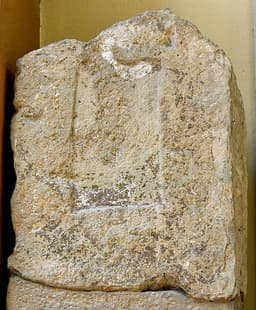
Eriba-Adad I
Emperor · Ancient
45.4Total

Minos of Knossos
Emperor · Ancient
55.5Total
Basic Information
Born
-1380
-1700
Died
-1353
-1650
Era
Ancient
Ancient
Nationality
Assyria
Minoan Crete
Occupation
Emperor
Emperor
Civilization
Middle Eastern
Western
Score Comparison
Military (10%)
50.0
25.9
Political (20%)
39.4
68.0
Influence (20%)
47.9
58.0
Legacy (20%)
41.7
55.0
Leadership (15%)
51.9
72.0
Strategy (15%)
43.3
36.8
TOTAL
45.4
55.5
Eriba-Adad I — Complete Timeline
1375 BC
Break from Mitanni DominationWar
Eriba-Adad I led a successful rebellion against Mitanni suzerainty, exploiting internal conflicts within the Mitanni kingdom. This victory restored Assyrian independence and initiated a period of Assyrian revival and expansion.
IndependenceRebellionAssyrian Revival
Impact: regionalconstructive
1365 BC
Consolidation of Assyrian ControlPolitical Action◆ Major
Eriba-Adad I reasserted Assyrian authority over the region around Ashur, reestablishing trade networks and tribute systems. His reign laid the foundation for the Middle Assyrian Empire's later expansion.
State ConsolidationEconomic Recovery
Impact: regionalconstructive
Minos of Knossos — Complete Timeline
1700 BC
Received the laws of Crete from ZeusReform◆ Major
According to tradition, Minos received the laws of Crete directly from Zeus on Mount Ida. These laws became the foundation of Minoan civilization and were later admired by Greek lawmakers such as Lycurgus.
LawMythologyCrete
Impact: regionalconstructive
Commissioned the construction of the LabyrinthCultural◆ Major
Minos ordered the architect Daedalus to build the Labyrinth at Knossos to contain the Minotaur, a half-man, half-bull monster born from his wife Pasiphae's union with a sacred bull.
ArchitectureMythologyMonster
Impact: regional
Demanded tribute of Athenian youths for the MinotaurPolitical Action◆ Major
After his son Androgeus was killed in Athens, Minos waged war and forced Athens to send seven youths and seven maidens every nine years to be fed to the Minotaur in the Labyrinth.
TributeWarAthens
Impact: regionaldestructive
This comparison has not been analyzed yet.
One-time AI generation (~1 minute). Scores and timeline are already available below.
Rankings
🥇
Minos of KnossosLeader
Mil: 25.9Pol: 68.0Inf: 58.0
55.5
🥈
Eriba-Adad I
Mil: 50.0Pol: 39.4Inf: 47.9
45.4
+10.1 behind
How This Comparison Works
Algorithm
Each figure is scored on 6 dimensions (0—100 scale) based on structured historical data: Military (10%), Political (20%), Influence (20%), Legacy (20%), Leadership (15%), Strategy (15%). The weighted total produces the final ranking.
Data Sources
Scores are computed from structured sub-indicators in the database. Scale factors adjust for era (Ancient ×0.85, Modern ×1.0) and civilization size (Eastern ×1.05, Other ×0.80) to account for differences in population and military scale.
Maximum 3 Figures
Comparisons are limited to 2—3 figures to ensure readability and statistical meaningfulness.
Error Margins
±5 points per dimension — Sub-scores are derived from historical records with inherent uncertainty. Two figures within 5 points on a dimension should be considered roughly equivalent in that area.
Total Score Accuracy
±3 points overall — The weighted combination of 6 dimensions produces a total score with approximately ±3 points of uncertainty. Differences of less than 3 points are not statistically significant— the figures are effectively tied.
Known Limitations
- Historical records are incomplete and uneven across civilizations
- Figures from oral-tradition societies may be underrepresented
- Occupation labels can misclassify multi-role figures
- Scores measure capability and impact, not moral character
- Quantitative scoring is a comparison tool, not absolute truth
Capability Radar
Military (10%) — Battles & Warfare
Battles
40
10
Win Rate
45
10
Expansion
45
10
Political (20%) — Governance & Reform
Reform
35
70
Diplomacy
40
50
Economy
30
60
Influence (20%) — Cultural & Global Reach
Cultural
25
60
Global
20
50
Legacy (20%) — Historical Impact
Historical
40
70
Longevity
30
80
Leadership (15%) — Power & Stability
Tenure
30
60
Stability
35
70
Strategy (15%) — Tactics & Innovation
Strategy
40
10
Tactics
35
10
Reform
30
10
Similar Comparisons
Comments & Discussion
No comments yet. Be the first to share your thoughts!