Loading...
Emperor Yang of Sui vs Qin Shi Huang
Qin Shi Huang leads by 25.1 pts · 2 figures compared
…
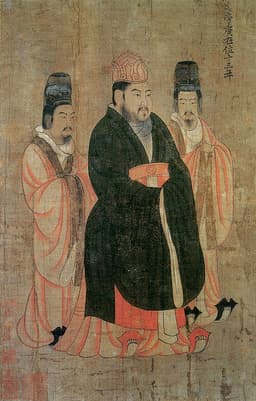
Emperor Yang of Sui
Emperor · Medieval
60.1Total
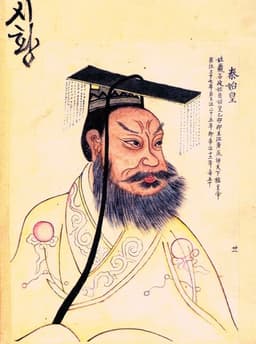
Qin Shi Huang
Emperor · Ancient
85.2Total
Basic Information
Born
569
-259
Died
618
-210
Era
Medieval
Ancient
Nationality
China
China
Occupation
Emperor
Emperor
Civilization
Eastern
Eastern
Score Comparison
Military (10%)
52.5
80.0
Political (20%)
45.0
90.0
Influence (20%)
65.0
85.0
Legacy (20%)
72.0
90.0
Leadership (15%)
58.8
78.0
Strategy (15%)
50.0
82.0
TOTAL
60.1
85.2
Emperor Yang of Sui — Complete Timeline
605 AD
Construction of the Grand CanalCultural
Emperor Yang ordered the construction of the Grand Canal, linking the Yellow River and Yangtze River basins. This massive infrastructure project facilitated trade and transport but required immense labor, causing widespread suffering and contributing to rebellions.
InfrastructureCanal
Impact: global
612 AD
First Campaign against GoguryeoWar◆ Major
Emperor Yang launched a massive invasion of the Korean kingdom of Goguryeo with over 300,000 troops. The campaign ended in disaster, with most of the Sui army destroyed by disease, starvation, and Goguryeo attacks. This defeat severely weakened the Sui dynasty.
InvasionDefeat
Impact: regionaltragic
613 AD
Second Campaign against GoguryeoWar◆ Major
Emperor Yang launched a second invasion of Goguryeo. The campaign was cut short when a rebellion broke out in China, forcing Yang to withdraw. This further drained the dynasty's resources and morale.
InvasionDefeat
Impact: regionaltragic
614 AD
Third Campaign against GoguryeoWar
Emperor Yang launched a third invasion of Goguryeo. Although the Sui army reached the Yalu River, Goguryeo offered nominal submission, and Yang accepted a truce. This campaign further exhausted the Sui treasury and military.
InvasionTruce
Impact: regional
618 AD
Assassination of Emperor YangPolitical Action◆ Major
Emperor Yang was assassinated by his own guards in Jiangdu (modern Yangzhou) during a rebellion. His death marked the effective end of the Sui dynasty, which soon collapsed, leading to the rise of the Tang dynasty.
AssassinationDynasty Collapse
Impact: regionaltragic
Qin Shi Huang — Complete Timeline
246 BC
Construction of the Mausoleum and Terracotta ArmyOther◆ Major
Qin Shi Huang commissioned a vast mausoleum complex near Xi'an, guarded by thousands of life-sized terracotta soldiers, horses, and chariots. The project employed hundreds of thousands of workers and reflected his obsession with immortality and imperial power.
Impact: global
230 BC
Conquest of the Six Warring StatesWar
From 230 to 221 BCE, Ying Zheng led the Qin state in a series of campaigns that conquered the Han, Zhao, Wei, Chu, Yan, and Qi states. This unified China under a single ruler for the first time, ending the Warring States period.
Impact: global
221 BC
Standardization of Writing, Currency, and MeasurementsReform◆ Major
Qin Shi Huang ordered the standardization of Chinese script, currency, and weights and measures across the unified empire. This facilitated administration, trade, and cultural integration, laying a foundation for future dynasties.
Impact: globalconstructive
Proclamation of the Qin DynastyPolitical Action
After conquering the last independent state, Ying Zheng declared himself Shi Huangdi (First Emperor), founding the Qin Dynasty. He adopted a new title to signify his supreme authority and initiated centralized imperial rule.
Impact: global
214 BC
Initiation of the Great Wall ConstructionOther◆ Major
Qin Shi Huang ordered the connection and extension of existing northern fortifications to create a unified defensive wall against nomadic Xiongnu raids. This project involved massive conscripted labor and became the precursor to the later Great Wall.
Impact: regional
213 BC
Burning of Books and Burying of ScholarsPolitical Action◆ Major
On the advice of Li Si, Qin Shi Huang ordered the burning of historical records and philosophical texts not aligned with Legalist doctrine. He also had 460 Confucian scholars buried alive to suppress dissent and consolidate ideological control.
Impact: nationaldestructive
Expert Analysis
Qin Shi Huang vs Emperor Yang of Sui: Historical Comparison
Both Qin Shi Huang, the unifier of ancient China, and Emperor Yang of Sui, a medieval visionary, were transformative yet controversial rulers who built colossal projects and left mixed legacies of ambition and overreach. Despite similar overall scores, their strengths and weaknesses diverge sharply.
Dimension Analysis
**Military: Qin Shi Huang 80 / Emperor Yang of Sui 93**
Emperor Yang’s massive campaigns against Goguryeo and his extension of the Grand Canal for troop movement show superior strategic ambition, while Qin Shi Huang’s conquests were more focused on unifying warring states rather than expansive foreign wars.
**Political: Qin Shi Huang 88 / Emperor Yang of Sui 75**
Qin Shi Huang’s centralization of power, standardization of script, currency, and law created a lasting bureaucratic model; Emperor Yang’s political reforms, though ambitious, were undermined by heavy taxation and brutal labor conscription that fueled rebellions.
**Influence: Qin Shi Huang 82 / Emperor Yang of Sui 82**
Both rulers permanently shaped Chinese infrastructure—Qin through the Great Wall and roads, Yang through the Grand Canal—but their immediate societal impacts were equally destabilizing, leading to rapid dynastic collapses.
**Legacy: Qin Shi Huang 85 / Emperor Yang of Sui 83**
Qin Shi Huang’s legacy as the First Emperor endures as a symbol of unification and autocracy, while Emperor Yang is remembered as a brilliant but tyrannical builder whose projects later benefited the Tang dynasty.
**Leadership: Qin Shi Huang 88 / Emperor Yang of Sui 76**
Qin Shi Huang’s iron-fisted control and ruthless efficiency maintained order during his reign; Emperor Yang’s grandiose vision outpaced his ability to manage resources and retain loyalty, resulting in widespread revolts.
Verdict
Qin Shi Huang leads overall due to his superior political consolidation and leadership, despite Emperor Yang’s higher military and strategic scores.
FAQ
Q: Who ranks higher? A: Qin Shi Huang ranks higher, as his political and leadership strengths outweigh Emperor Yang’s military prowess and strategic vision.
Rankings
🥇
Qin Shi HuangLeader
Mil: 80.0Pol: 90.0Inf: 85.0
85.2
🥈
Emperor Yang of Sui
Mil: 52.5Pol: 45.0Inf: 65.0
60.1
+25.1 behind
How This Comparison Works
Algorithm
Each figure is scored on 6 dimensions (0—100 scale) based on structured historical data: Military (10%), Political (20%), Influence (20%), Legacy (20%), Leadership (15%), Strategy (15%). The weighted total produces the final ranking.
Data Sources
Scores are computed from structured sub-indicators in the database. Scale factors adjust for era (Ancient ×0.85, Modern ×1.0) and civilization size (Eastern ×1.05, Other ×0.80) to account for differences in population and military scale.
Maximum 3 Figures
Comparisons are limited to 2—3 figures to ensure readability and statistical meaningfulness.
Error Margins
±5 points per dimension — Sub-scores are derived from historical records with inherent uncertainty. Two figures within 5 points on a dimension should be considered roughly equivalent in that area.
Total Score Accuracy
±3 points overall — The weighted combination of 6 dimensions produces a total score with approximately ±3 points of uncertainty. Differences of less than 3 points are not statistically significant— the figures are effectively tied.
Known Limitations
- Historical records are incomplete and uneven across civilizations
- Figures from oral-tradition societies may be underrepresented
- Occupation labels can misclassify multi-role figures
- Scores measure capability and impact, not moral character
- Quantitative scoring is a comparison tool, not absolute truth
Capability Radar
Military (10%) — Battles & Warfare
Battles
65
85
Win Rate
30
90
Expansion
70
90
Political (20%) — Governance & Reform
Reform
85
95
Diplomacy
40
75
Economy
70
90
Influence (20%) — Cultural & Global Reach
Cultural
75
95
Global
65
85
Legacy (20%) — Historical Impact
Historical
80
95
Longevity
70
95
Leadership (15%) — Power & Stability
Tenure
55
70
Stability
20
65
Strategy (15%) — Tactics & Innovation
Strategy
60
85
Tactics
55
80
Reform
50
95
Similar Comparisons
Comments & Discussion
BattlefieldScholar6/16/2026
Yang's military score of 93 is baffling. Let's look at the Goguryeo campaigns: in 612 AD, he committed over 1 million men, but the Battle of Salsu River saw the Sui forces routed with only 2,700 survivors. That's a casualty rate of 99.7%—essentially total annihilation. Compare that to Qin Shi Huang's conquest of Zhao: General Wang Jian used sieges and attrition to force surrender, with disciplined supply lines. Yang's canal system for troop movement was innovative, but strategic vision without tactical execution is just hubris. I'd give Qin Shi Huang at least 85 on military grounds.
HistoryDetect6/16/2026
I just finished a documentary series on the Sui dynasty, and honestly Emperor Yang reminds me of a Chinese version of Nero—great builder, terrible politician. The Grand Canal is still used today, which is mind-blowing, but he worked millions to death. Qin Shi Huang was no saint either with his tomb and the Great Wall, but at least his standardization of writing and measures actually made China work as a single country. I think the scoring here is fair, but I'd bump Yang's influence up a bit—the canal literally shaped China's economy for a thousand years.
SimaLecturer6/16/2026
These scores present a useful heuristic, but they flatten the historiographical debate. Sima Qian's *Shiji* depicts Qin Shi Huang as both a unifier and a tyrant—his 'burning of books and burying of scholars' was as much propaganda as reality, as many texts were preserved in imperial archives. Emperor Yang, meanwhile, is vilified in the *Sui Shu* by Tang historians who had a vested interest in delegitimizing their predecessor. Yet when we read the *Sui Annals* carefully, his canal construction was a rational response to the need to transport grain from the south. The political score of 75 for Yang may understate the far-sightedness of his reforms, even if execution faltered.
Historian7336/16/2026
这个评分体系明显是西方中心论的。他们把杨广的军事分打得比嬴政高,但在中国史学传统里,杨广就是‘暴君’代名词,跟秦始皇并列的负面典型。你看西方评价罗马皇帝哈德良修长城是‘英明’,杨广修运河就是‘暴政’?其实杨广的科举制和运河对后世影响,有点像查理曼大帝推广教育——短期承受骂名,长期福泽后世。但嬴政的‘书同文,车同轨’才是真正奠定中国大一统格局的基石。按中国标准,嬴政影响力至少90分,杨广可能70出头。
ColdMind486/16/2026
看这个评分,军事分杨广93对嬴政80,我觉得有点离谱。杨广三征高句丽,第一次出兵113万,号称200万,结果萨水之战几乎全军覆没,仅逃回2700人。这能叫‘战略野心’?相反,嬴政用十年灭六国,长平之战后白起坑降卒40万,军事效率极高。再说政治分,嬴政88对杨广75,这个我认可——但杨广修大运河、开创科举,政治改革其实很有深度,只是被征敛拖垮了。加权平均算下来,军事分权重应该低一些,总体我倾向于嬴政略胜。