Loading...
Emperor Wu of Han vs Napoleon Bonaparte
Emperor Wu of Han leads by 0.4 pts · 2 figures compared
…
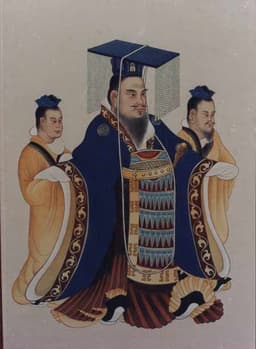
Emperor Wu of Han
Emperor · Ancient
71.3Total

Napoleon Bonaparte
General · Modern
70.9Total
Basic Information
Born
-156
1769
Died
-87
1821
Era
Ancient
Modern
Nationality
China
France
Occupation
Emperor
General
Civilization
Eastern
Western
Score Comparison
Military (10%)
78.5
94.0
Political (20%)
72.0
72.0
Influence (20%)
65.0
40.0
Legacy (20%)
70.0
80.0
Leadership (15%)
80.0
78.0
Strategy (15%)
69.1
90.0
TOTAL
71.3
70.9
Emperor Wu of Han — Complete Timeline
138 BC
Establishment of the Silk RoadPolitical Action
Emperor Wu dispatched Zhang Qian on a diplomatic mission to the Western Regions, initiating direct contact between China and Central Asian states. This led to the establishment of the Silk Road trade network, facilitating cultural and economic exchange.
Silk RoadDiplomacyTrade
Impact: globalconstructive
136 BC
Promotion of Confucianism as State DoctrineCultural
Emperor Wu established the Imperial Academy and made Confucian texts the basis for civil service examinations. This elevated Confucianism to the official state ideology, shaping Chinese governance and education for two millennia.
ConfucianismEducationBureaucracy
Impact: globalconstructive
133 BC
Campaigns against the XiongnuWar◆ Major
Emperor Wu launched a series of large-scale military campaigns against the Xiongnu confederation, pushing them north of the Gobi Desert. These wars secured the Hexi Corridor and opened the way for trade with Central Asia.
XiongnuExpansionSilk Road
Impact: regional
117 BC
Salt and Iron MonopoliesReform◆ Major
Emperor Wu nationalized the salt and iron industries, placing them under state control to generate revenue for his military campaigns. This policy increased central government power and became a model for later dynasties.
Economic ReformMonopolyRevenue
Impact: national
111 BC
Annexation of the Nanyue KingdomWar◆ Major
Emperor Wu's forces conquered the Nanyue kingdom in modern-day southern China and northern Vietnam. This expanded Han territory to the South China Sea and incorporated the region into the empire.
ExpansionNanyueVietnam
Impact: regional
Napoleon Bonaparte — Complete Timeline
1799 AD
Coup of 18 BrumaireOther◆ Major
Napoleon Bonaparte, with support from his brother Lucien and key political figures, overthrew the Directory in a bloodless coup. He established the Consulate with himself as First Consul, effectively becoming the ruler of France. This event ended the French Revolution's most unstable period.
French RevolutionCoupRise to Power
Impact: regional
1804 AD
Promulgation of the Napoleonic CodeOther◆ Major
Napoleon enacted the Civil Code of the French, known as the Napoleonic Code, a comprehensive set of laws that replaced the fragmented feudal legal systems. The code established legal equality, protected property rights, and secularized law. It became the basis for legal systems in many European and world countries.
Legal ReformNapoleonic CodeCivil Law
Impact: globalconstructive
1805 AD
Battle of AusterlitzWar◆ Major
Napoleon's Grande Arm
Napoleonic WarsBattleDecisive Victory
Impact: global
1812 AD
Invasion of RussiaWar◆ Major
Napoleon led the Grande Arm
Napoleonic WarsInvasionDisaster
Impact: globaldestructive
1815 AD
Battle of WaterlooWar◆ Major
Napoleon's French army was defeated by the combined forces of the Duke of Wellington's Anglo-Allied army and Gebhard Leberecht von Bl
Napoleonic WarsBattleFinal Defeat
Impact: globaldestructive
Expert Analysis
emperor-wu-of-han-vs-napoleon-bonaparte
# The Emperor and the General: Ambition, Empire, and the Price of Glory
In the winter of 1812, Napoleon Bonaparte watched his Grand Army dissolve into the Russian snow, tens of thousands of men freezing to death along a road that had once led to Moscow. Nearly two thousand years earlier, on the steppes of Central Asia, Emperor Wu of Han faced a different kind of reckoning: his endless campaigns against the Xiongnu had drained the imperial treasury, leaving his people exhausted and his successors burdened with a hollowed-out state. Two men, separated by millennia and continents, yet bound by the same relentless hunger for conquest. Why did one forge an empire that reshaped the world, while the other built a legacy that collapsed within a generation? The answer lies not in their victories, but in the soil from which they grew.
Origins
Emperor Wu was born into a dynasty that had already survived two centuries of consolidation. The Han Empire, founded in 202 BCE, was a civilization that prized order, hierarchy, and the wisdom of the ancients. Liu Che—his birth name—was the tenth son of Emperor Jing, and he ascended the throne at the age of fifteen. His China was a world of bureaucratic councils, ancestral rituals, and a deep suspicion of foreign entanglements. The Xiongnu, a nomadic confederation from the Mongolian steppe, had raided Han borders for decades, but earlier emperors had preferred appeasement—offering princesses and silk to buy peace. Young Wu inherited a throne that was stable but humiliated.
Napoleon Bonaparte, by contrast, was born into chaos. Corsica in 1769 was a place of jagged mountains and fierce independence, recently sold to France by Genoa. His family were minor nobility, but their world was about to be swept away by the French Revolution. Napoleon grew up speaking Italian-accented French, a outsider in a country that would soon tear itself apart. Where Wu was groomed for rule, Napoleon was forged in revolution—a world where a brilliant artillery officer could rise to command armies while kings lost their heads. His era was one of collapse and opportunity; Wu’s was one of tradition and consolidation.
Rise to Power
Emperor Wu’s path was predetermined by blood. He became crown prince through palace intrigue and his mother’s influence, not through battlefield glory. When he took the throne in 141 BCE at age fifteen, his grandmother, the Grand Empress Dowager Dou, held real power for the first six years. She was a devout follower of Daoist philosophy, which preached non-action and minimal government. Young Wu chafed under her restraint, but he learned patience—a lesson that would serve him well. When she died in 135 BCE, he was ready. He did not seize power; he inherited it, then transformed it.
Napoleon’s rise was a story of will over birth. In 1793, at age twenty-four, he was an obscure captain when he recaptured the port of Toulon from British and royalist forces. The feat made him a brigadier general overnight. By 1796, he was commanding the Army of Italy, where his lightning campaigns forced Austria to sue for peace. He was not a prince; he was a self-made emperor. In 1799, he overthrew the Directory in a coup d’état, naming himself First Consul. Five years later, he crowned himself Emperor of the French in Notre-Dame, snatching the crown from the Pope’s hands and placing it on his own head. Wu inherited a throne; Napoleon built one from the rubble of a revolution.
Leadership & Governance
Emperor Wu ruled through institutions. In 136 BCE, he established the Imperial Academy and made Confucian texts the basis for civil service examinations. This was a masterstroke: it created a loyal, educated bureaucracy that could administer a vast empire without relying on hereditary nobles. Confucianism emphasized obedience, hierarchy, and moral rectitude—perfect tools for centralizing power. Wu also nationalized the salt and iron industries in 117 BCE, turning basic necessities into state revenue to fund his endless wars. His military campaigns were not personal adventures but state projects: he dispatched Zhang Qian to the Western Regions in 138 BCE, opening the Silk Road, and sent armies to conquer the Nanyue kingdom in 111 BCE, adding modern southern China and northern Vietnam to the empire. Wu was a builder of systems.
Napoleon was a builder of codes. His Napoleonic Code of 1804 standardized French law, abolishing feudal privileges and establishing equality before the law—a revolutionary ideal that spread across Europe. He reformed education, created the Bank of France, and built roads and canals. But his governance was inseparable from his personality. He ruled through charisma and fear, appointing marshals who owed their positions to his favor, not to birth. Where Wu delegated to bureaucrats, Napoleon micromanaged armies. His political wisdom was tactical: he knew how to inspire loyalty in the moment but failed to create institutions that could survive his fall. Wu built a machine; Napoleon built a monument to himself.
Triumph & Tragedy
Emperor Wu’s greatest triumph was the defeat of the Xiongnu. Between 133 and 119 BCE, his campaigns pushed the nomads north of the Gobi Desert, securing China’s borders for generations. The Silk Road he opened connected China to Rome, transforming global trade. But the cost was staggering. By the end of his reign, the population had declined, the treasury was bankrupt, and rebellions simmered in the provinces. In 89 BCE, facing a failed campaign, Wu issued a public “Edict of Repentance,” acknowledging his excesses and calling for a return to frugality. It was a rare moment of humility from a man who had spent fifty-four years on the throne.
Napoleon’s triumph was the conquest of Europe. By 1810, he controlled a territory from Spain to Poland, and his empire seemed invincible. The Battle of Austerlitz in 1805 was his masterpiece—a crushing defeat of Austria and Russia that cemented his reputation as history’s greatest general. But his tragedy was hubris. The invasion of Russia in 1812 cost him over 400,000 men. He refused to compromise, refused to delegate, refused to learn from his mistakes. Exiled to Elba in 1814, he escaped and returned for the Hundred Days, only to meet final defeat at Waterloo in 1815. He died in exile on Saint Helena, a prisoner of the British, still insisting he had been right.
Character & Destiny
Emperor Wu was a man of discipline and calculation. He was ruthless—he executed his own heir and his favorite concubine to prevent future power struggles—but he was also capable of self-reflection. His Edict of Repentance shows a leader who understood limits, even if he learned them late. His Confucian training gave him a framework for rule that outlasted his own reign. He was not a genius; he was a relentless builder.
Napoleon was a man of boundless ambition and brittle pride. He once said, “Power is my mistress,” and he meant it. He could not share power, could not admit error, could not stop. His military genius was real—his strategy scores are among history’s highest—but it was paired with a political blindness that doomed him. He conquered Europe but could not govern it. He defeated kings but could not win their loyalty. His character was his destiny: a flame that burned bright and fast, consuming everything around it.
Legacy
Emperor Wu’s legacy is the Han Empire itself. The Silk Road, Confucian bureaucracy, and territorial expansion he championed defined China for two millennia. His total legacy score of 88.2 reflects a civilization-altering impact. Even his mistakes were absorbed: later dynasties learned from his excesses, tempering expansion with caution.
Napoleon’s legacy is more ambiguous. His military campaigns reshaped Europe, but his empire collapsed within a decade. The Napoleonic Code survived, influencing legal systems from France to Japan. But he is remembered as much for his fall as for his rise—a cautionary tale about the limits of ambition. His total score of 78.0 reflects this duality: a genius who could not escape himself.
Conclusion
The difference between Emperor Wu and Napoleon is not one of skill or ambition. Both were brilliant, both were ruthless, both built empires. But Wu built on a foundation of institutions that could outlast him, while Napoleon built on the shifting sands of his own will. Wu’s China absorbed his conquests; Napoleon’s Europe rejected his. In the end, the emperor who repented outlived his mistakes, while the general who never apologized was consumed by them. The lesson is as old as history: power is not enough. What endures is what you leave behind—not the glory of the moment, but the structure of the ages.
Rankings
🥇
Emperor Wu of HanLeader
Mil: 78.5Pol: 72.0Inf: 65.0
71.3
🥈
Napoleon Bonaparte
Mil: 94.0Pol: 72.0Inf: 40.0
70.9
+0.4 behind
How This Comparison Works
Algorithm
Each figure is scored on 6 dimensions (0—100 scale) based on structured historical data: Military (10%), Political (20%), Influence (20%), Legacy (20%), Leadership (15%), Strategy (15%). The weighted total produces the final ranking.
Data Sources
Scores are computed from structured sub-indicators in the database. Scale factors adjust for era (Ancient ×0.85, Modern ×1.0) and civilization size (Eastern ×1.05, Other ×0.80) to account for differences in population and military scale.
Maximum 3 Figures
Comparisons are limited to 2—3 figures to ensure readability and statistical meaningfulness.
Error Margins
±5 points per dimension — Sub-scores are derived from historical records with inherent uncertainty. Two figures within 5 points on a dimension should be considered roughly equivalent in that area.
Total Score Accuracy
±3 points overall — The weighted combination of 6 dimensions produces a total score with approximately ±3 points of uncertainty. Differences of less than 3 points are not statistically significant— the figures are effectively tied.
Known Limitations
- Historical records are incomplete and uneven across civilizations
- Figures from oral-tradition societies may be underrepresented
- Occupation labels can misclassify multi-role figures
- Scores measure capability and impact, not moral character
- Quantitative scoring is a comparison tool, not absolute truth
Capability Radar
Military (10%) — Battles & Warfare
Battles
85
95
Win Rate
80
90
Expansion
90
95
Political (20%) — Governance & Reform
Reform
80
95
Diplomacy
85
80
Economy
75
85
Influence (20%) — Cultural & Global Reach
Cultural
90
85
Global
85
90
Legacy (20%) — Historical Impact
Historical
95
95
Longevity
95
90
Leadership (15%) — Power & Stability
Tenure
85
85
Stability
70
70
Strategy (15%) — Tactics & Innovation
Strategy
85
95
Tactics
75
98
Reform
70
92
Similar Comparisons
Comments & Discussion
No comments yet. Be the first to share your thoughts!