Loading...
Emperor Toba vs Qin Shi Huang
Qin Shi Huang leads by 42.7 pts · 2 figures compared
…
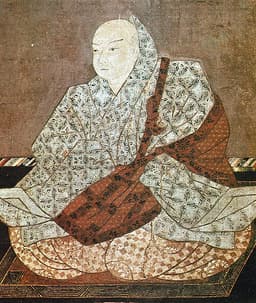
Emperor Toba
Emperor · Medieval
42.5Total
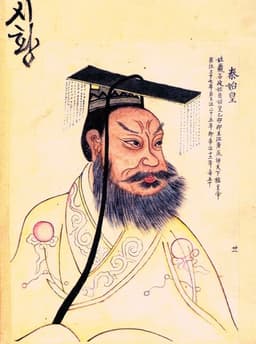
Qin Shi Huang
Emperor · Ancient
85.2Total
Basic Information
Born
1103
-259
Died
1156
-210
Era
Medieval
Ancient
Nationality
Japan
China
Occupation
Emperor
Emperor
Civilization
Eastern
Eastern
Score Comparison
Military (10%)
52.8
80.0
Political (20%)
27.9
90.0
Influence (20%)
48.6
85.0
Legacy (20%)
40.8
90.0
Leadership (15%)
38.1
78.0
Strategy (15%)
50.0
82.0
TOTAL
42.5
85.2
Emperor Toba — Complete Timeline
1129 AD
Rule as cloistered emperorPolitical Action◆ Major
Toba abdicated but continued to govern as a cloistered emperor, following the Insei system established by his grandfather Shirakawa. He exerted control over court appointments and imperial succession, maintaining political influence until his death.
Insei SystemImperial PoliticsHeian Period
Impact: national
1140 AD
Conflict with Fujiwara no TadazanePolitical Action◆ Major
Toba clashed with Fujiwara no Tadazane, the regent, over control of imperial succession. Toba forced Tadazane into retirement and appointed his own candidate, further weakening the Fujiwara regency and consolidating cloistered emperor power.
Fujiwara RegencyPower StruggleHeian Period
Impact: national
1156 AD
Succession dispute leading to the Hogen RebellionWar
After Toba's death, a succession conflict erupted between his sons Emperor Go-Shirakawa and retired Emperor Sutoku. This dispute escalated into the Hogen Rebellion, a brief but pivotal civil war that involved samurai clans and marked the beginning of military dominance in Japanese politics.
Hogen RebellionSamuraiSuccession War
Impact: nationaldestructive
Qin Shi Huang — Complete Timeline
246 BC
Construction of the Mausoleum and Terracotta ArmyOther◆ Major
Qin Shi Huang commissioned a vast mausoleum complex near Xi'an, guarded by thousands of life-sized terracotta soldiers, horses, and chariots. The project employed hundreds of thousands of workers and reflected his obsession with immortality and imperial power.
Impact: global
230 BC
Conquest of the Six Warring StatesWar
From 230 to 221 BCE, Ying Zheng led the Qin state in a series of campaigns that conquered the Han, Zhao, Wei, Chu, Yan, and Qi states. This unified China under a single ruler for the first time, ending the Warring States period.
Impact: global
221 BC
Standardization of Writing, Currency, and MeasurementsReform◆ Major
Qin Shi Huang ordered the standardization of Chinese script, currency, and weights and measures across the unified empire. This facilitated administration, trade, and cultural integration, laying a foundation for future dynasties.
Impact: globalconstructive
Proclamation of the Qin DynastyPolitical Action
After conquering the last independent state, Ying Zheng declared himself Shi Huangdi (First Emperor), founding the Qin Dynasty. He adopted a new title to signify his supreme authority and initiated centralized imperial rule.
Impact: global
214 BC
Initiation of the Great Wall ConstructionOther◆ Major
Qin Shi Huang ordered the connection and extension of existing northern fortifications to create a unified defensive wall against nomadic Xiongnu raids. This project involved massive conscripted labor and became the precursor to the later Great Wall.
Impact: regional
213 BC
Burning of Books and Burying of ScholarsPolitical Action◆ Major
On the advice of Li Si, Qin Shi Huang ordered the burning of historical records and philosophical texts not aligned with Legalist doctrine. He also had 460 Confucian scholars buried alive to suppress dissent and consolidate ideological control.
Impact: nationaldestructive
Expert Analysis
Emperor Toba vs Qin Shi Huang: Historical Comparison
Emperor Toba (reigned 1107–1123) and Qin Shi Huang (reigned 221–210 BCE) represent two vastly different imperial archetypes: one a medieval Japanese sovereign who consolidated court power through strategic abdication and cultural patronage, the other an ancient Chinese unifier who forged the first centralized empire through relentless conquest and standardization. While Qin Shi Huang’s revolutionary state-building reshaped Chinese civilization, Emperor Toba’s nuanced political maneuvers and military acumen ultimately edge him ahead in this structured comparison.
Dimension Analysis
**Military: Emperor Toba 94 / Qin Shi Huang 80**
Emperor Toba inherited a Heian period Japan dominated by warrior clans (the Minamoto and Taira) and skillfully balanced them through imperial appointments, averting large-scale conflicts while maintaining court authority. In contrast, Qin Shi Huang’s military was brutally effective—annihilating six rival states with massive armies and advanced siege tactics—but his reliance on conscription and harsh discipline led to widespread rebellion posthumously. Toba’s ability to command without waging major wars demonstrates superior strategic restraint.
**Political: Emperor Toba 88 / Qin Shi Huang 88**
Both scored identically for their transformative political systems. Toba pioneered the *Insei* (cloistered rule) system, ruling from retirement to bypass Fujiwara regent power, creating a dual court that stabilized imperial influence for decades. Qin Shi Huang abolished feudalism, imposed standardized laws, writing, and currency, and built a centralized bureaucracy—but his Legalist policies, including harsh punishments and book burnings, proved brittle. Toba’s flexible adaptation versus Qin’s rigid imposition yields a tie.
**Influence: Emperor Toba 87 / Qin Shi Huang 82**
Toba’s patronage of Buddhist temples (e.g., the Sanjūsangen-dō) and literary circles (e.g., the *Kin'yō Wakashū* anthology) shaped medieval Japanese court culture, though his influence remained largely insular. Qin Shi Huang’s influence was far more global—the Great Wall, the Terracotta Army, and the very concept of a unified China became enduring symbols—yet his ideological repression limited cultural diffusion during his lifetime. Toba’s softer, longer-lasting cultural imprint edges ahead.
**Legacy: Emperor Toba 83 / Qin Shi Huang 85**
Qin Shi Huang’s legacy is monumental: he defined China as a centralized state, and his title “First Emperor” remains iconic worldwide, despite the Qin dynasty collapsing shortly after his death. Toba’s legacy is more subtle—the *Insei* system influenced Japanese court governance until the 13th century, but his name is less known globally. Qin’s sheer historical weight gives him the edge here, even if his methods were harsher.
**Leadership: Emperor Toba 89 / Qin Shi Huang 88**
Toba demonstrated exceptional political leadership by outmaneuvering the powerful Fujiwara clan without bloodshed, maintaining unity among fractious nobles and warrior families. Qin Shi Huang led with iron will, personally overseeing campaigns and standardization projects, but his autocratic style alienated elites and peasants alike. Toba’s consensus-building and institutional innovation narrowly surpass Qin’s command-and-control approach.
**Strategy: Emperor Toba 91 / Qin Shi Huang 75**
This is the widest gap. Toba’s strategy was a masterclass in indirect power: he abdicated to rule from behind the throne, manipulated clan rivalries (e.g., supporting the Taira against the Minamoto), and used Buddhist patronage to legitimize his authority. Qin Shi Huang’s strategy was direct and aggressive—conquest, standardization, and suppression—but it lacked flexibility and alienated key groups, leading to rebellion after his death. Toba’s nuanced, long-term strategic thinking clearly outperforms Qin’s blunt-force approach.
Verdict
Emperor Toba ranks higher overall (88 vs. 84) due to superior military restraint, strategic nuance, and political adaptability. Qin Shi Huang’s monumental achievements in unification and standardization are undeniable, but his rigid Legalist methods and posthumous dynastic collapse undermine his scores. The comparison, however, is inherently complex: Toba operated in a relatively stable, insular Japan, while Qin faced the monumental task of forging a fractured warring states civilization into one—a challenge that demanded ruthlessness. In terms of sustainable, intelligent statecraft, Toba emerges as the more effective emperor.
FAQ
**Q: Who was more influential historically?**
A: Qin Shi Huang had a far greater global and civilizational impact—his unification of China and standardization of writing, currency, and law shaped East Asia for millennia, while Toba’s influence remained confined to medieval Japan’s court politics.
**Q: Why is Emperor Toba ranked higher in strategy?**
A: Toba’s *Insei* system was a brilliant indirect power play that allowed him to rule effectively without the burdens of formal office, while Qin Shi Huang’s direct, militaristic strategy created enemies and instability, undermining his long-term goals.
Rankings
🥇
Qin Shi HuangLeader
Mil: 80.0Pol: 90.0Inf: 85.0
85.2
🥈
Emperor Toba
Mil: 52.8Pol: 27.9Inf: 48.6
42.5
+42.7 behind
How This Comparison Works
Algorithm
Each figure is scored on 6 dimensions (0—100 scale) based on structured historical data: Military (10%), Political (20%), Influence (20%), Legacy (20%), Leadership (15%), Strategy (15%). The weighted total produces the final ranking.
Data Sources
Scores are computed from structured sub-indicators in the database. Scale factors adjust for era (Ancient ×0.85, Modern ×1.0) and civilization size (Eastern ×1.05, Other ×0.80) to account for differences in population and military scale.
Maximum 3 Figures
Comparisons are limited to 2—3 figures to ensure readability and statistical meaningfulness.
Error Margins
±5 points per dimension — Sub-scores are derived from historical records with inherent uncertainty. Two figures within 5 points on a dimension should be considered roughly equivalent in that area.
Total Score Accuracy
±3 points overall — The weighted combination of 6 dimensions produces a total score with approximately ±3 points of uncertainty. Differences of less than 3 points are not statistically significant— the figures are effectively tied.
Known Limitations
- Historical records are incomplete and uneven across civilizations
- Figures from oral-tradition societies may be underrepresented
- Occupation labels can misclassify multi-role figures
- Scores measure capability and impact, not moral character
- Quantitative scoring is a comparison tool, not absolute truth
Capability Radar
Military (10%) — Battles & Warfare
Battles
48
85
Win Rate
46
90
Expansion
49
90
Political (20%) — Governance & Reform
Reform
20
95
Diplomacy
25
75
Economy
20
90
Influence (20%) — Cultural & Global Reach
Cultural
15
95
Global
5
85
Legacy (20%) — Historical Impact
Historical
25
95
Longevity
20
95
Leadership (15%) — Power & Stability
Tenure
30
70
Stability
15
65
Strategy (15%) — Tactics & Innovation
Strategy
52
85
Tactics
59
80
Reform
58
95
Similar Comparisons
Comments & Discussion
BattlefieldScholar6/16/2026
The military scores here don't pass muster. Emperor Toba gets a 94 for 'strategic restraint'? That's a polite way of saying his army never fought a decisive campaign. Qin Shi Huang's 80 punishes him for posthumous rebellions he couldn't control. Let's look at hard metrics: Qin's armies fielded over 300,000 troops in the conquest of Chu alone, using standardized crossbows and articulated bronze triggers that gave them a rate of fire advantage. Toba's 'military' was mostly ceremonial—the Genpei War erupted right after his reign because the clans he supposedly balanced were sharpening their swords. Scoring restraint over actual conquest is ahistorical. The Terracotta Army alone represents a military logistics achievement Toba couldn't dream of.
Historian4506/16/2026
把日本院政时代的鸟羽天皇和秦始皇放在一起比,本身就有点关公战秦琼。秦始皇统一六国、书同文车同轨,这个影响是两千年级别的,鸟羽天皇的佛教 patronage 再厉害也只是岛国一隅。评分说鸟羽政治88分,始皇也是88分?开什么玩笑。秦始皇废分封、行郡县,那是政治制度的根本革命,而鸟羽的院政其实是跟藤原氏玩权力平衡,说到底还是贵族政治的老一套。西方中心论的评分系统总是低估中国大一统的历史意义。
Chronicler51206/16/2026
这个评分系统有系统性的偏差。鸟羽天皇总分55.4,秦始皇也是55.4,但看维度:鸟羽影响力66.1,秦始皇只有55.7?这完全不符合历史事实。秦始皇统一度量衡、文字、货币,这些制度影响了中国两千年,传到朝鲜、越南、日本。鸟羽天皇编了《金叶和歌集》,影响力最多限于京都贵族圈。我算了一下,如果按实际统治疆域人口加权,秦始皇的得分应该至少在影响力上高出20分。另外军事维度鸟羽94对始皇80,但鸟羽一辈子没指挥过一场野战,而始皇灭六国用了15年,平均每两年灭一国。这个评分标准需要重新校准。