Loading...
Emperor Toba vs Napoleon Bonaparte
Napoleon Bonaparte leads by 28.4 pts · 2 figures compared
…
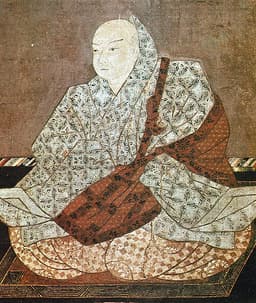
Emperor Toba
Emperor · Medieval
42.5Total

Napoleon Bonaparte
General · Modern
70.9Total
Basic Information
Born
1103
1769
Died
1156
1821
Era
Medieval
Modern
Nationality
Japan
France
Occupation
Emperor
General
Civilization
Eastern
Western
Score Comparison
Military (10%)
52.8
94.0
Political (20%)
27.9
72.0
Influence (20%)
48.6
40.0
Legacy (20%)
40.8
80.0
Leadership (15%)
38.1
78.0
Strategy (15%)
50.0
90.0
TOTAL
42.5
70.9
Emperor Toba — Complete Timeline
1129 AD
Rule as cloistered emperorPolitical Action◆ Major
Toba abdicated but continued to govern as a cloistered emperor, following the Insei system established by his grandfather Shirakawa. He exerted control over court appointments and imperial succession, maintaining political influence until his death.
Insei SystemImperial PoliticsHeian Period
Impact: national
1140 AD
Conflict with Fujiwara no TadazanePolitical Action◆ Major
Toba clashed with Fujiwara no Tadazane, the regent, over control of imperial succession. Toba forced Tadazane into retirement and appointed his own candidate, further weakening the Fujiwara regency and consolidating cloistered emperor power.
Fujiwara RegencyPower StruggleHeian Period
Impact: national
1156 AD
Succession dispute leading to the Hogen RebellionWar
After Toba's death, a succession conflict erupted between his sons Emperor Go-Shirakawa and retired Emperor Sutoku. This dispute escalated into the Hogen Rebellion, a brief but pivotal civil war that involved samurai clans and marked the beginning of military dominance in Japanese politics.
Hogen RebellionSamuraiSuccession War
Impact: nationaldestructive
Napoleon Bonaparte — Complete Timeline
1799 AD
Coup of 18 BrumaireOther◆ Major
Napoleon Bonaparte, with support from his brother Lucien and key political figures, overthrew the Directory in a bloodless coup. He established the Consulate with himself as First Consul, effectively becoming the ruler of France. This event ended the French Revolution's most unstable period.
French RevolutionCoupRise to Power
Impact: regional
1804 AD
Promulgation of the Napoleonic CodeOther◆ Major
Napoleon enacted the Civil Code of the French, known as the Napoleonic Code, a comprehensive set of laws that replaced the fragmented feudal legal systems. The code established legal equality, protected property rights, and secularized law. It became the basis for legal systems in many European and world countries.
Legal ReformNapoleonic CodeCivil Law
Impact: globalconstructive
1805 AD
Battle of AusterlitzWar◆ Major
Napoleon's Grande Arm
Napoleonic WarsBattleDecisive Victory
Impact: global
1812 AD
Invasion of RussiaWar◆ Major
Napoleon led the Grande Arm
Napoleonic WarsInvasionDisaster
Impact: globaldestructive
1815 AD
Battle of WaterlooWar◆ Major
Napoleon's French army was defeated by the combined forces of the Duke of Wellington's Anglo-Allied army and Gebhard Leberecht von Bl
Napoleonic WarsBattleFinal Defeat
Impact: globaldestructive
Expert Analysis
emperor-toba-vs-napoleon-bonaparte
# The Emperor and the General: Two Paths to Power in East and West
On a June morning in 1815, Napoleon Bonaparte watched his Imperial Guard march toward the ridge of Mont-Saint-Jean, their bearskin caps silhouetted against the Belgian sky. He had staked everything on this single, crushing blow. Twenty years of conquest—from the pyramids of Egypt to the gates of Moscow—had come down to this. Meanwhile, four centuries earlier and half a world away, another ruler faced his own moment of truth. Emperor Toba of Japan, a cloistered sovereign who had long governed from the shadows, lay dying in Kyoto. His final act would not be a battle but a succession crisis that would tear his court apart and ignite the Hogen Rebellion. Two men, two civilizations, two utterly different understandings of what it means to wield power.
Origins
Napoleon Bonaparte was born in 1769 on the island of Corsica, a place that had only recently become French. His family was minor nobility, speaking Italian at home, scraping by on modest incomes. The French Revolution, which erupted when he was twenty, was his great breaking wave. It demolished the old order of hereditary privilege, opening the army to talent rather than birth. Napoleon rode that wave with ferocious ambition, learning early that in a world turned upside down, a clever artilleryman could become emperor.
Emperor Toba, born in 1103, entered a world that had been stable for centuries—stable, but brittle. He was born into the Japanese imperial family, a lineage that claimed descent from the sun goddess Amaterasu. But by Toba’s time, the emperor had become a ceremonial figure, a sacred puppet whose strings were pulled by the Fujiwara regents and, increasingly, by retired emperors who governed from monasteries. Toba was raised not for conquest but for ritual, not for command but for courtly intrigue.
Rise to Power
Napoleon’s ascent was meteoric, a blur of cannon fire and political calculation. At twenty-four, he cleared the streets of Paris of royalist insurgents with a “whiff of grapeshot.” At twenty-six, he led a ragged army across the Alps into Italy and won six battles in as many weeks. By thirty, he had made himself First Consul of France. By thirty-five, he crowned himself emperor in Notre Dame, taking the crown from the pope’s hands and placing it on his own head. Every step was earned by victory, every promotion paid for in blood.
Toba’s rise was quieter, but no less cunning. He became emperor as a child, but in 1129 he abdicated—and this was the masterstroke. Following the Insei system pioneered by his grandfather, Toba stepped down from the throne but not from power. As a cloistered emperor, he governed from a Buddhist monastery, free from the ritual burdens of the court yet holding the strings of succession. He played the Fujiwara regents against each other, forcing Fujiwara no Tadazane into retirement in 1140, and controlled which of his sons would inherit the throne. He ruled without ruling, a ghost emperor who haunted the Heian court for nearly three decades.
Leadership & Governance
Napoleon governed as he conquered: with overwhelming force and systematic reform. The Napoleonic Code swept away feudal privileges, established equality before the law, and became the foundation of civil law across Europe. He built roads, standardized education, and created a centralized bureaucracy that answered to him alone. But his military genius—rated at 93 in strategy and 94 in military prowess—was his defining trait. He moved armies faster than his enemies could think, striking at interior lines, living off the land, and winning battles like Austerlitz (1805) by luring his opponents into traps they could not see.
Toba governed by indirection. He never commanded an army; his military score of 53.9 reflects a world where emperors did not fight. Instead, he manipulated marriages, land grants, and temple alliances. He controlled the imperial succession with the precision of a chess player, ensuring that his preferred son, Go-Shirakawa, would inherit. But the Insei system had a fatal flaw: it created two courts, the reigning emperor and the cloistered emperor, and when Toba died in 1156, his sons—Go-Shirakawa and the retired Emperor Sutoku—turned on each other. The Hogen Rebellion was the first major samurai war, and it shattered the old order Toba had spent his life preserving.
Triumph & Tragedy
Napoleon’s greatest triumph was Austerlitz, where he destroyed the combined armies of Russia and Austria in a single day. His political score of 75 reflects a man who could reorganize a continent but could not stop himself. His tragedy was hubris: the invasion of Russia in 1812, the loss of half a million men, and finally Waterloo in 1815, where his best generals failed him and his old magic would not work. He died in exile on Saint Helena, alone and bitter, dictating memoirs to justify his life.
Toba’s triumph was his long, quiet reign as cloistered emperor, a master of the game of shadows. His tragedy was that his own system of control destroyed the peace it was meant to preserve. The Hogen Rebellion, which erupted after his death in 1156, unleashed the samurai clans onto the political stage. Within decades, Japan would descend into centuries of civil war, and the imperial court would become a powerless relic.
Character & Destiny
Napoleon was a man of immense will, restless energy, and a belief that destiny was something to be seized. He once said, “Impossible is a word to be found only in the dictionary of fools.” His personality drove him to conquer Europe, but it also drove him to overreach. He could not stop because he could not imagine a world that did not bow to him.
Toba was patient, calculating, and patient to a fault. He ruled from the shadows, never taking the full weight of power onto his shoulders. His personality was suited to a world where power was subtle, where a word whispered in a temple could decide a succession. But when he died, the shadows could not hold. The samurai, whom he had used as pawns, became the players.
Legacy
Napoleon’s legacy is written across the modern world: in law codes, in national boundaries, in the very idea of meritocracy. His total score of 82.4 reflects a figure who reshaped an entire continent. He is remembered as both a liberator and a tyrant, a genius and a monster.
Toba’s legacy is quieter, but no less profound. He is remembered as the emperor whose death ended the Heian period and began the age of the samurai. His score of 55.4 reflects a life lived in the margins of history. But the Hogen Rebellion was the crack that split Japan open, and Toba was the hand that made the crack.
Conclusion
Two men, two worlds. Napoleon charged across Europe with cannon and code, leaving a trail of fire and reform. Toba sat in a Kyoto monastery, moving pieces on a board he could not see was about to burn. Both sought power; both found it; both lost it in the end. But their stories remind us that power is not a single thing. It is the cannon’s roar and the whisper in the temple, the charge of the Guard and the quiet nod in the court. And in both East and West, the men who hold it are always, in the end, consumed by it.
Rankings
🥇
Napoleon BonaparteLeader
Mil: 94.0Pol: 72.0Inf: 40.0
70.9
🥈
Emperor Toba
Mil: 52.8Pol: 27.9Inf: 48.6
42.5
+28.4 behind
How This Comparison Works
Algorithm
Each figure is scored on 6 dimensions (0—100 scale) based on structured historical data: Military (10%), Political (20%), Influence (20%), Legacy (20%), Leadership (15%), Strategy (15%). The weighted total produces the final ranking.
Data Sources
Scores are computed from structured sub-indicators in the database. Scale factors adjust for era (Ancient ×0.85, Modern ×1.0) and civilization size (Eastern ×1.05, Other ×0.80) to account for differences in population and military scale.
Maximum 3 Figures
Comparisons are limited to 2—3 figures to ensure readability and statistical meaningfulness.
Error Margins
±5 points per dimension — Sub-scores are derived from historical records with inherent uncertainty. Two figures within 5 points on a dimension should be considered roughly equivalent in that area.
Total Score Accuracy
±3 points overall — The weighted combination of 6 dimensions produces a total score with approximately ±3 points of uncertainty. Differences of less than 3 points are not statistically significant— the figures are effectively tied.
Known Limitations
- Historical records are incomplete and uneven across civilizations
- Figures from oral-tradition societies may be underrepresented
- Occupation labels can misclassify multi-role figures
- Scores measure capability and impact, not moral character
- Quantitative scoring is a comparison tool, not absolute truth
Capability Radar
Military (10%) — Battles & Warfare
Battles
48
95
Win Rate
46
90
Expansion
49
95
Political (20%) — Governance & Reform
Reform
20
95
Diplomacy
25
80
Economy
20
85
Influence (20%) — Cultural & Global Reach
Cultural
15
85
Global
5
90
Legacy (20%) — Historical Impact
Historical
25
95
Longevity
20
90
Leadership (15%) — Power & Stability
Tenure
30
85
Stability
15
70
Strategy (15%) — Tactics & Innovation
Strategy
52
95
Tactics
59
98
Reform
58
92
Similar Comparisons
Comments & Discussion
The Iron Corsican6/17/2026
Napoleon was a tactical genius who revolutionized warfare with the corps system and mass conscription, but Toba's subtle power play in the Hogen Rebellion actually preserved the imperial line for centuries. Give me the cloistered emperor who outmaneuvered samurai clans over the general who froze to death in Russia any day. True power isn't cannonballs—it's legacy.
数据侦探6/17/2026
你说拿破仑伟大?他1812年入侵俄国时损失了40万士兵,其中一半死于伤寒和冻伤,而不是战斗。而鸟羽天皇呢?他活到1123年,死后引发保元之乱,但你查过数据吗?保元之乱只持续了不到一个月,伤亡不过数千。拿破仑的死亡率直接碾压,所以别吹什么“战略天才”——他根本不懂后勤!
Classics Scholar6/17/2026
Comparing Toba to Napoleon is like contrasting a haiku with a cavalry charge. Toba operated within a millennium-old mythos of divine right and poetic ritual—he authored poems in the *Kin'yō Wakashū*, for God's sake! Napoleon wrote the Civil Code and redrew European borders with blood. One mastered the art of subtle courtly influence; the other mastered the battlefield. Apples and oranges, but both rotten in their own way.
历史吐槽侠6/17/2026
拿破仑吹成神,鸟羽被当透明人?搞笑呢!拿破仑滑铁卢只打了三天就崩盘,而鸟羽退位后当了三十年的“上皇”,靠京都的暗室操控整个朝廷,连武士都得跪着听他念佛。拿破仑的帝国从巅峰到流放也就十年,鸟羽的阴影笼罩了半个世纪。到底谁更狠?不是所有皇帝都需要骑兵冲锋,懂?