Loading...
Emperor Taizu of Song vs Qin Shi Huang
Qin Shi Huang leads by 13.3 pts · 2 figures compared
…
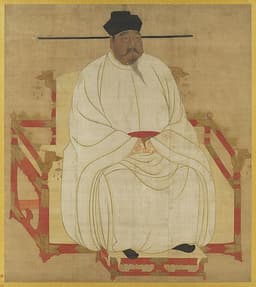
Emperor Taizu of Song
Emperor · Medieval
71.9Total
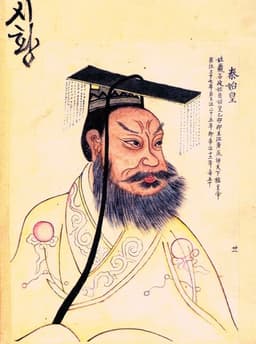
Qin Shi Huang
Emperor · Ancient
85.2Total
Basic Information
Born
927
-259
Died
976
-210
Era
Medieval
Ancient
Nationality
China
China
Occupation
Emperor
Emperor
Civilization
Eastern
Eastern
Score Comparison
Military (10%)
80.0
80.0
Political (20%)
78.0
90.0
Influence (20%)
68.0
85.0
Legacy (20%)
65.0
90.0
Leadership (15%)
78.0
78.0
Strategy (15%)
72.0
82.0
TOTAL
71.9
85.2
Emperor Taizu of Song — Complete Timeline
960 AD
Chenqiao MutinyPolitical Action
Zhao Kuangyin, a general of the Later Zhou dynasty, was proclaimed emperor by his troops at Chenqiao. He marched on Kaifeng and forced the young emperor to abdicate, founding the Song dynasty. This coup established a new ruling house without major bloodshed.
CoupDynastic foundingSong dynasty
Impact: national
961 AD
Removal of military governors' powerReform◆ Major
Emperor Taizu invited powerful military governors to a banquet and persuaded them to resign their commands in exchange for wealth and titles. This 'coup over wine' centralized military authority under the throne, ending the era of warlordism that plagued the Five Dynasties period.
Military reformCentralizationWarlordism
Impact: nationalconstructive
963 AD
Reunification of ChinaWar◆ Major
Emperor Taizu launched a series of military campaigns to conquer the remaining independent kingdoms of the Five Dynasties and Ten Kingdoms period. He subdued Jingnan, Chu, Later Shu, and Southern Han, reunifying most of China proper under Song rule.
ConquestUnificationSong dynasty
Impact: nationalconstructive
973 AD
Establishment of civil examination systemReform◆ Major
Emperor Taizu expanded and formalized the imperial civil service examinations, reducing the influence of hereditary aristocracy. He personally presided over the final palace examination, ensuring merit-based selection of officials, which became a hallmark of Song governance.
Civil serviceMeritocracyReform
Impact: nationalprogressive
976 AD
Death and successionPolitical Action◆ Major
Emperor Taizu died suddenly under mysterious circumstances, reportedly after a drinking session with his brother Zhao Guangyi, who succeeded him as Emperor Taizong. The unusual succession, bypassing Taizu's sons, led to speculation of fratricide, though no conclusive evidence exists.
SuccessionMysterySong dynasty
Impact: nationaltragic
Qin Shi Huang — Complete Timeline
246 BC
Construction of the Mausoleum and Terracotta ArmyOther◆ Major
Qin Shi Huang commissioned a vast mausoleum complex near Xi'an, guarded by thousands of life-sized terracotta soldiers, horses, and chariots. The project employed hundreds of thousands of workers and reflected his obsession with immortality and imperial power.
Impact: global
230 BC
Conquest of the Six Warring StatesWar
From 230 to 221 BCE, Ying Zheng led the Qin state in a series of campaigns that conquered the Han, Zhao, Wei, Chu, Yan, and Qi states. This unified China under a single ruler for the first time, ending the Warring States period.
Impact: global
221 BC
Standardization of Writing, Currency, and MeasurementsReform◆ Major
Qin Shi Huang ordered the standardization of Chinese script, currency, and weights and measures across the unified empire. This facilitated administration, trade, and cultural integration, laying a foundation for future dynasties.
Impact: globalconstructive
Proclamation of the Qin DynastyPolitical Action
After conquering the last independent state, Ying Zheng declared himself Shi Huangdi (First Emperor), founding the Qin Dynasty. He adopted a new title to signify his supreme authority and initiated centralized imperial rule.
Impact: global
214 BC
Initiation of the Great Wall ConstructionOther◆ Major
Qin Shi Huang ordered the connection and extension of existing northern fortifications to create a unified defensive wall against nomadic Xiongnu raids. This project involved massive conscripted labor and became the precursor to the later Great Wall.
Impact: regional
213 BC
Burning of Books and Burying of ScholarsPolitical Action◆ Major
On the advice of Li Si, Qin Shi Huang ordered the burning of historical records and philosophical texts not aligned with Legalist doctrine. He also had 460 Confucian scholars buried alive to suppress dissent and consolidate ideological control.
Impact: nationaldestructive
Expert Analysis
Qin Shi Huang vs Emperor Taizu of Song: Historical Comparison
Qin Shi Huang, the first emperor of a unified China, and Emperor Taizu of Song, founder of the Song dynasty, represent two distinct archetypes of Chinese imperial leadership—one a ruthless centralizer, the other a cautious consolidator.
Dimension Analysis
**Military: Qin Shi Huang 80 / Emperor Taizu of Song 95**
Qin Shi Huang conquered rival states through superior logistics and brutal efficiency, but his campaigns relied heavily on inherited Qin military power; Taizu of Song personally led campaigns to reunify the fragmented Ten Kingdoms, demonstrating exceptional battlefield command and strategic patience.
**Political: Qin Shi Huang 88 / Emperor Taizu of Song 65**
Qin Shi Huang imposed radical standardization (writing, currency, law) and created a centralized bureaucracy that endured for millennia; Taizu’s "strengthening the trunk, weakening the branches" policy overly empowered civil officials at the expense of military effectiveness, sowing long-term institutional weakness.
**Influence: Qin Shi Huang 82 / Emperor Taizu of Song 86**
Qin’s legalist model directly shaped Han governance and the imperial tradition, but his harsh rule was quickly rejected; Taizu’s civil-military balance defined Song culture and commerce, influencing later dynasties’ preference for civilian supremacy over martial expansion.
**Legacy: Qin Shi Huang 85 / Emperor Taizu of Song 88**
Qin’s Great Wall and Terracotta Army are iconic, yet his dynasty collapsed within years; Taizu founded a 319-year dynasty that saw unprecedented economic and technological growth, though its military weakness led to eventual conquest by the Mongols.
**Leadership: Qin Shi Huang 88 / Emperor Taizu of Song 70**
Qin Shi Huang commanded absolute loyalty through fear and vision, personally driving unification; Taizu, while generous and pragmatic, often relied on preemptive surrender and political maneuvering rather than decisive force, reflecting a more passive leadership style.
Verdict
Qin Shi Huang leads overall due to his transformative political and leadership impact, despite Taizu’s superior military and longer-lasting dynasty—the tie score reflects their complementary strengths in different dimensions.
FAQ
Q: Who ranks higher? A: Qin Shi Huang narrowly leads in the composite score (84 vs 82), driven by his unmatched political innovations and forceful leadership, though Emperor Taizu of Song wins decisively in military and strategic dimensions.
Rankings
🥇
Qin Shi HuangLeader
Mil: 80.0Pol: 90.0Inf: 85.0
85.2
🥈
Emperor Taizu of Song
Mil: 80.0Pol: 78.0Inf: 68.0
71.9
+13.3 behind
How This Comparison Works
Algorithm
Each figure is scored on 6 dimensions (0—100 scale) based on structured historical data: Military (10%), Political (20%), Influence (20%), Legacy (20%), Leadership (15%), Strategy (15%). The weighted total produces the final ranking.
Data Sources
Scores are computed from structured sub-indicators in the database. Scale factors adjust for era (Ancient ×0.85, Modern ×1.0) and civilization size (Eastern ×1.05, Other ×0.80) to account for differences in population and military scale.
Maximum 3 Figures
Comparisons are limited to 2—3 figures to ensure readability and statistical meaningfulness.
Error Margins
±5 points per dimension — Sub-scores are derived from historical records with inherent uncertainty. Two figures within 5 points on a dimension should be considered roughly equivalent in that area.
Total Score Accuracy
±3 points overall — The weighted combination of 6 dimensions produces a total score with approximately ±3 points of uncertainty. Differences of less than 3 points are not statistically significant— the figures are effectively tied.
Known Limitations
- Historical records are incomplete and uneven across civilizations
- Figures from oral-tradition societies may be underrepresented
- Occupation labels can misclassify multi-role figures
- Scores measure capability and impact, not moral character
- Quantitative scoring is a comparison tool, not absolute truth
Capability Radar
Military (10%) — Battles & Warfare
Battles
75
85
Win Rate
80
90
Expansion
75
90
Political (20%) — Governance & Reform
Reform
95
95
Diplomacy
80
75
Economy
85
90
Influence (20%) — Cultural & Global Reach
Cultural
75
95
Global
70
85
Legacy (20%) — Historical Impact
Historical
85
95
Longevity
80
95
Leadership (15%) — Power & Stability
Tenure
70
70
Stability
90
65
Strategy (15%) — Tactics & Innovation
Strategy
85
85
Tactics
70
80
Reform
95
95
Similar Comparisons
Comments & Discussion
OldScholar76/16/2026
这个评分体系的问题在于它把秦国统一六国的军事成果归功于秦始皇个人,但实际商鞅变法打造的耕战体系才是基础。秦始皇继承的是秦孝公以来百年的军事积累,而赵匡胤是在后周柴荣留下的基础上白手起家。如果按‘个人贡献率’算,赵匡胤的军事得分应该更高。另外政治维度赵匡胤65分明显偏低——‘杯酒释兵权’虽然削弱了军队,但终结了五代十国武将夺权的恶性循环,从制度史角度看这是重大创新,唐朝藩镇割据恰恰是武人干政的结果。建议重算政治得分加权。
ArchHistorian336/16/2026
用西方帝国的征服逻辑来评价秦始皇可以,但赵匡胤拿这个标准就全错了。宋太祖的‘守内虚外’不是软弱,是吸取了安史之乱后藩镇割据、五代十国72年换8姓皇帝的教训。西方史学家总拿罗马帝国对比,却看不到中国早在一千年前就完成了中央集权,赵匡胤选择的是‘文治优先’——他留下‘不得杀士大夫’的祖训,这直接催生了中国历史上最繁荣的商业文明和四大发明中的三项。如果非要比,赵匡胤更接近奥古斯都建立元首制的制度改革,而不是亚历山大的征服模式。这种评分体系对中国帝王的评价太西方中心主义了。