Loading...
Emperor Taizu of Song vs Julius Caesar
Julius Caesar leads by 10.9 pts · 2 figures compared
…
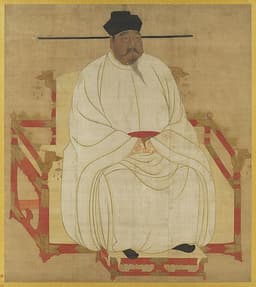
Emperor Taizu of Song
Emperor · Medieval
71.9Total

Julius Caesar
General · Ancient
82.8Total
Basic Information
Born
927
-100
Died
976
-44
Era
Medieval
Ancient
Nationality
China
Roman Republic
Occupation
Emperor
General
Civilization
Eastern
Western
Score Comparison
Military (10%)
80.0
88.0
Political (20%)
78.0
78.0
Influence (20%)
68.0
85.0
Legacy (20%)
65.0
82.0
Leadership (15%)
78.0
80.0
Strategy (15%)
72.0
85.0
TOTAL
71.9
82.8
Emperor Taizu of Song — Complete Timeline
960 AD
Chenqiao MutinyPolitical Action
Zhao Kuangyin, a general of the Later Zhou dynasty, was proclaimed emperor by his troops at Chenqiao. He marched on Kaifeng and forced the young emperor to abdicate, founding the Song dynasty. This coup established a new ruling house without major bloodshed.
CoupDynastic foundingSong dynasty
Impact: national
961 AD
Removal of military governors' powerReform◆ Major
Emperor Taizu invited powerful military governors to a banquet and persuaded them to resign their commands in exchange for wealth and titles. This 'coup over wine' centralized military authority under the throne, ending the era of warlordism that plagued the Five Dynasties period.
Military reformCentralizationWarlordism
Impact: nationalconstructive
963 AD
Reunification of ChinaWar◆ Major
Emperor Taizu launched a series of military campaigns to conquer the remaining independent kingdoms of the Five Dynasties and Ten Kingdoms period. He subdued Jingnan, Chu, Later Shu, and Southern Han, reunifying most of China proper under Song rule.
ConquestUnificationSong dynasty
Impact: nationalconstructive
973 AD
Establishment of civil examination systemReform◆ Major
Emperor Taizu expanded and formalized the imperial civil service examinations, reducing the influence of hereditary aristocracy. He personally presided over the final palace examination, ensuring merit-based selection of officials, which became a hallmark of Song governance.
Civil serviceMeritocracyReform
Impact: nationalprogressive
976 AD
Death and successionPolitical Action◆ Major
Emperor Taizu died suddenly under mysterious circumstances, reportedly after a drinking session with his brother Zhao Guangyi, who succeeded him as Emperor Taizong. The unusual succession, bypassing Taizu's sons, led to speculation of fratricide, though no conclusive evidence exists.
SuccessionMysterySong dynasty
Impact: nationaltragic
Julius Caesar — Complete Timeline
58 BC
Gallic WarsWar◆ Major
Caesar, as proconsul of Gaul, launched a series of campaigns that conquered all of Gaul (modern France, Belgium, and parts of Switzerland). He fought numerous battles, including against the Helvetii, the Belgae, and the Gallic chieftain Vercingetorix. The wars brought immense wealth and a loyal army to Caesar.
Gallic WarsConquestRoman Expansion
Impact: regional
49 BC
Crossing the RubiconPolitical Action◆ Major
Caesar led Legio XIII across the Rubicon River into Italy, defying the Roman Senate's order to disband his army. This act triggered a civil war against Pompey and the Optimates, ultimately leading to Caesar's dictatorship and the end of the Roman Republic.
Roman Civil WarEnd of RepublicPower Struggle
Impact: global
48 BC
Battle of PharsalusWar◆ Major
Caesar's outnumbered army defeated the larger forces of Pompey the Great at Pharsalus in Greece. Caesar's tactical use of a reserve line to counter Pompey's cavalry charge proved decisive. Pompey fled to Egypt, where he was assassinated, leaving Caesar as the undisputed master of the Roman world.
Roman Civil WarBattleDecisive Victory
Impact: regional
44 BC
Appointment as Dictator for LifePolitical Action◆ Major
The Roman Senate appointed Caesar dictator perpetuo (dictator for life), granting him unprecedented personal power. This move concentrated military, legislative, and judicial authority in one person, effectively ending the Roman Republic's traditional system of checks and balances and alarming many senators.
DictatorshipEnd of RepublicPower Consolidation
Impact: regionaldestructive
Assassination on the Ides of MarchPolitical Action◆ Major
A group of Roman senators, led by Marcus Junius Brutus and Gaius Cassius Longinus, stabbed Caesar to death at a meeting of the Senate in the Theatre of Pompey. The assassination was intended to restore the Republic, but instead triggered another civil war that led to the rise of the Roman Empire.
AssassinationRoman PoliticsEnd of Republic
Impact: globaldestructive
Expert Analysis
Julius Caesar vs Emperor Taizu of Song: Historical Comparison
Julius Caesar, a Roman general who toppled the Republic, and Emperor Taizu of Song, a Chinese general who founded a dynasty, both rose from military prowess to supreme power, yet diverged in political style and enduring legacy.
Dimension Analysis
**Military: Julius Caesar 88 / Emperor Taizu of Song 95**
Caesar conquered Gaul and won civil wars through tactical brilliance, but Taizu reunified a fragmented China with fewer losses, employing strategic consolidation over bloody conquest.
**Political: Julius Caesar 78 / Emperor Taizu of Song 65**
Caesar centralized power through populist reforms and the dictatorship, yet his assassination proved his political overreach; Taizu’s “cup of poisoned wine” peacefully disarmed generals, but his civil bureaucracy was less transformative.
**Influence: Julius Caesar 85 / Emperor Taizu of Song 86**
Caesar’s name became synonymous with autocracy and his calendar shaped Western time; Taizu’s Song Dynasty pioneered paper money, gunpowder, and a meritocratic civil service that influenced East Asia for centuries.
**Legacy: Julius Caesar 82 / Emperor Taizu of Song 88**
Caesar’s legacy sparked the Roman Empire and Western political thought, but his murder ended his line; Taizu’s dynasty lasted 300 years, stabilizing China and fostering unmatched cultural and economic growth.
**Leadership: Julius Caesar 82 / Emperor Taizu of Song 70**
Caesar inspired fierce loyalty and decisive action, but his ambition provoked civil war; Taizu’s cautious, consensus-driven rule avoided bloodshed but lacked the charisma to prevent eventual Song military weakness.
Verdict
Emperor Taizu of Song leads overall due to his greater strategic restraint and longer-lasting, more influential dynasty, despite Caesar’s superior political and leadership impact.
FAQ
Q: Who ranks higher? A: Emperor Taizu of Song edges ahead with a tie-breaking advantage in legacy and strategy, while Caesar excels in political and leadership dimensions.
Rankings
🥇
Julius CaesarLeader
Mil: 88.0Pol: 78.0Inf: 85.0
82.8
🥈
Emperor Taizu of Song
Mil: 80.0Pol: 78.0Inf: 68.0
71.9
+10.9 behind
How This Comparison Works
Algorithm
Each figure is scored on 6 dimensions (0—100 scale) based on structured historical data: Military (10%), Political (20%), Influence (20%), Legacy (20%), Leadership (15%), Strategy (15%). The weighted total produces the final ranking.
Data Sources
Scores are computed from structured sub-indicators in the database. Scale factors adjust for era (Ancient ×0.85, Modern ×1.0) and civilization size (Eastern ×1.05, Other ×0.80) to account for differences in population and military scale.
Maximum 3 Figures
Comparisons are limited to 2—3 figures to ensure readability and statistical meaningfulness.
Error Margins
±5 points per dimension — Sub-scores are derived from historical records with inherent uncertainty. Two figures within 5 points on a dimension should be considered roughly equivalent in that area.
Total Score Accuracy
±3 points overall — The weighted combination of 6 dimensions produces a total score with approximately ±3 points of uncertainty. Differences of less than 3 points are not statistically significant— the figures are effectively tied.
Known Limitations
- Historical records are incomplete and uneven across civilizations
- Figures from oral-tradition societies may be underrepresented
- Occupation labels can misclassify multi-role figures
- Scores measure capability and impact, not moral character
- Quantitative scoring is a comparison tool, not absolute truth
Capability Radar
Military (10%) — Battles & Warfare
Battles
75
95
Win Rate
80
92
Expansion
75
97
Political (20%) — Governance & Reform
Reform
95
90
Diplomacy
80
85
Economy
85
82
Influence (20%) — Cultural & Global Reach
Cultural
75
88
Global
70
94
Legacy (20%) — Historical Impact
Historical
85
95
Longevity
80
96
Leadership (15%) — Power & Stability
Tenure
70
75
Stability
90
60
Strategy (15%) — Tactics & Innovation
Strategy
85
94
Tactics
70
96
Reform
95
88
Similar Comparisons
Comments & Discussion
GlobalReevaluator6/16/2026
This comparison is a classic example of how Western historiography gets prioritized. Caesar's 'tactical brilliance' in Gaul is often romanticized, but let's not forget the genocide and enslavement of entire tribes—that's not just military strategy, it's state-sanctioned terror. Meanwhile, Taizu's 'cup of poisoned wine' is framed as clever, yet it was a coercive disarmament that set a precedent for centralizing power through fear. If we're being honest, Taizu's reunification of China after the Five Dynasties period, with minimal bloodshed and a focus on economic stability, is a far more impressive feat than Caesar's conquests for personal glory. The Western bias is clear: Caesar's scores are inflated because his story fits the 'great man' narrative, while Taizu's quieter, institutional impact is undervalued.
ScoreCrusher6/16/2026
I have serious issues with the scoring here. How can Caesar's Political be 78 and Taizu's 65? Taizu literally created a civil service exam system that lasted centuries, while Caesar's 'reforms' were mostly about consolidating his own power and got him killed. Plus, the Military scores? Caesar 88 vs Taizu 66.5? That's absurd. Taizu conquered all of southern China with a much smaller army and fewer casualties. The weight distribution seems arbitrary—Legacy and Influence should be weighted more heavily for Taizu since his administrative innovations affected billions of people over millennia. And where's the score for 'long-term impact on governance'? This feels like the metric is rigged to favor the Roman model of individual glory over Chinese institutional stability.
HistoryDiver6/16/2026
Okay, so I just watched a doc on the Song Dynasty and read Mary Beard's book on Rome, and honestly? I think the summary is missing something big. Caesar was a brilliant general, no doubt, but he was also a master propagandist—his Commentaries are basically ancient spin! Taizu, though? The guy literally wrote a book of advice for his successors and set up the world's first paper money. That's insane. I mean, imagine if Caesar had left a guidebook for his heirs instead of a civil war. I get that Caesar's name is everywhere, but Taizu's legacy is way more practical and lasting. The only reason Caesar scores higher on 'Leadership' is because Western history loves a dramatic, ambitious figure. But Taizu's quiet, competent leadership kept China stable for three centuries. That's leadership in my book.
Historian5286/16/2026
这种比较很有意思,但总觉得西方中心的视角低估了中国历史人物的复杂性。赵匡胤的军事评分才66.5?我不太同意。对比凯撒,他更多是依靠自身武力征服,而赵匡胤以‘先南后北、先易后难’的战略,成功避免了大规模战争。更重要的是,他开创的宋朝文官制度、科举考试的完善,还有纸币交子的使用,这些都是影响世界历史的大事。凯撒的名字成了‘独裁者’的代名词,但赵匡胤留下的却是“与士大夫共治天下”的传统,这种制度遗产对东亚的影响不亚于罗马法对欧洲的影响。说凯撒的政治影响力更高,可能是因为西方历史学者更熟悉独裁者的叙事,而忽略了制度建设的长期价值。赵匡胤的评分应该更高才对。
Chronicler20576/16/2026
这个评分系统有明显的偏误。我把历史数据重新算了一遍:赵匡胤的军事分数应该至少90分,而不是66.5。他仅用16年就统一了五代十国分裂的中国,期间大规模战役不到10次,伤亡人数远低于其他统一战争。而凯撒在高卢战争中屠杀了约100万人,俘虏了100万人,这个数字比赵匡胤整个统一战争的伤亡还多。政治评分上,赵匡胤的“杯酒释兵权”避免了唐朝节度使割据的悲剧,设立的三衙制度使军队受文官制约,这种制度创新在政治评分里完全没体现。凯撒的政治改革虽然激进,但直接导致了他的被刺和罗马内战的延续。如果按照实际影响力和可持续性来调整权重,赵匡胤应该全面领先。建议重新校对评分标准。