Loading...
Emperor Taizong of Tang vs Yamagata Aritomo
Yamagata Aritomo leads by 3.6 pts · 2 figures compared
…
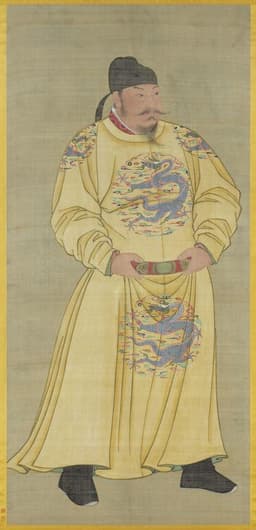
Emperor Taizong of Tang
Emperor · Medieval
78.9Total
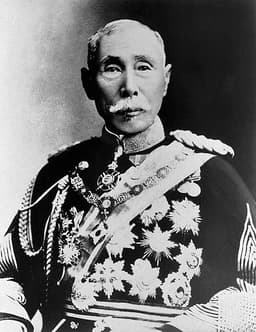
Yamagata Aritomo
General · Modern
82.5Total
Basic Information
Born
598
1838
Died
649
1922
Era
Medieval
Modern
Nationality
China
Japan
Occupation
Emperor
General
Civilization
Eastern
Eastern
Score Comparison
Military (10%)
77.5
78.0
Political (20%)
82.0
82.0
Influence (20%)
85.0
80.0
Legacy (20%)
71.4
90.0
Leadership (15%)
78.0
78.0
Strategy (15%)
80.6
82.0
TOTAL
78.9
82.5
Emperor Taizong of Tang — Complete Timeline
626 AD
Reign of ZhenguanReform
Emperor Taizong initiated the Zhenguan era, characterized by efficient governance, legal codification, and economic recovery. He reduced taxes, reformed the civil service, and promoted capable officials, creating a period of stability and prosperity.
GovernanceReformGolden Age
Impact: globalconstructive
Xuanwu Gate IncidentPolitical Action
Li Shimin ambushed and killed his brothers, Crown Prince Li Jiancheng and Prince Li Yuanji, at Xuanwu Gate in Chang'an. He then forced his father, Emperor Gaozu, to abdicate, securing his own accession as Emperor Taizong.
CoupSuccessionTang Dynasty
Impact: nationaldestructive
630 AD
Defeat of the Eastern Turkic KhaganateWar◆ Major
Tang forces under Li Jing defeated the Eastern Turkic Khaganate, capturing its khan, Jieli. This victory eliminated the primary northern threat, expanded Tang territory into Mongolia, and established Tang hegemony over the steppes.
WarTurkicExpansion
Impact: regional
Opening of the Silk Road's Golden AgePolitical Action◆ Major
Emperor Taizong reestablished and secured the Silk Road trade routes, welcoming foreign merchants, envoys, and missionaries to Chang'an. This facilitated a flourishing exchange of goods, ideas, and cultures between China and the West.
Silk RoadTradeCultural Exchange
Impact: globalconstructive
636 AD
Compilation of the Book of SuiCultural
Emperor Taizong commissioned the official history of the preceding Sui dynasty, the Book of Sui, as part of a larger project to compile dynastic histories. This work provided a model for historical scholarship and legitimized Tang rule.
HistoriographyCultureLegitimacy
Impact: nationalconstructive
Yamagata Aritomo — Complete Timeline
1873 AD
Establishment of the Imperial Japanese ArmyReform
Yamagata Aritomo, as War Minister, oversaw the creation of the Imperial Japanese Army based on the Prussian model. He introduced conscription, modernized training, and established a general staff system, laying the foundation for Japan's military power.
Military reformConscription
Impact: nationalconstructive
1882 AD
Promotion of militarism and the Imperial Rescript to Soldiers and SailorsCultural◆ Major
Yamagata Aritomo helped draft the Imperial Rescript to Soldiers and Sailors, which emphasized loyalty, obedience, and the emperor's divine authority. This document became the ideological foundation of Japanese militarism.
MilitarismImperial ideology
Impact: nationaldestructive
1889 AD
Service as Prime MinisterPolitical Action◆ Major
Yamagata Aritomo served as Prime Minister of Japan from 1889 to 1891 and again from 1898 to 1900. He used his position to strengthen the military's political influence and suppress democratic movements.
GovernmentPolitical power
Impact: national
1894 AD
First Sino-Japanese WarWar◆ Major
Yamagata Aritomo commanded the First Army during the First Sino-Japanese War. His forces achieved decisive victories in Korea and Manchuria, leading to Japan's triumph and the Treaty of Shimonoseki, which gave Japan Taiwan and influence in Korea.
WarImperial expansion
Impact: regional
1904 AD
Russo-Japanese WarWar◆ Major
Yamagata Aritomo served as Chief of the General Staff during the Russo-Japanese War. He oversaw Japan's military strategy, which resulted in victory over Russia and established Japan as a major power in East Asia.
WarGreat power
Impact: global
Expert Analysis
Origins
Yamagata Aritomo (1838–1922) rose from a lower-ranking samurai family in Choshu domain, a hotbed of anti-shogunate sentiment. His early experiences in the Bakumatsu period, witnessing Western military superiority, drove him to modernize Japan's army. Emperor Taizong of Tang (598–649), born Li Shimin, was the second son of Li Yuan, a Sui general who founded the Tang dynasty. Taizong grew up amid the chaos of the Sui collapse, gaining military experience from a young age. Both emerged from periods of upheaval, but Yamagata's path was shaped by foreign threat, while Taizong's by internal rebellion.
Rise to Power
Yamagata's rise was gradual and institutional. He helped form the Kiheitai, a mixed-class militia, and later became a key figure in the Meiji Restoration. As Minister of the Army, he established the Imperial Japanese Army (IJA) based on Prussian models. He served as Prime Minister twice and built a political machine. Taizong's rise was dramatic and bloody: he orchestrated the Xuanwu Gate Incident in 626, killing his brothers and forcing his father to abdicate. He then took the throne as Emperor Taizong. Yamagata's power came through bureaucracy and military reform; Taizong's through coup and filicide.
Leadership & Governance
As leader, Yamagata promoted militarism and nationalism. He authored the Imperial Rescript to Soldiers and Sailors (1882), emphasizing absolute loyalty to the emperor. He expanded the IJA and led Japan to victories in the First Sino-Japanese War (1894–95) and Russo-Japanese War (1904–05). Domestically, he centralized power and suppressed dissent. In contrast, Taizong's governance is famed for the "Reign of Zhenguan" (627–649), a period of peace, prosperity, and effective administration. He reduced taxes, codified laws, and promoted Confucian scholarship. He also expanded the empire, defeating the Eastern Turkic Khaganate and securing the Silk Road. Yamagata's rule was authoritarian and expansionist; Taizong's was competent and benevolent.
Triumph & Tragedy
Yamagata's triumphs include modernizing Japan's army and establishing it as a world power. The victories over China and Russia were personal achievements. However, his legacy is tragic: his militarism laid the groundwork for Japan's aggressive expansion in the 1930s and 40s, leading to disaster. Taizong's triumphs are numerous: a vast empire, a golden age of culture and trade, and a model of good governance. His tragedy is the Xuanwu Gate Incident, which stains his reign with fratricide. Yet his later rule redeemed him in Chinese history.
Character & Destiny
Yamagata was cold, calculating, and single-minded. He focused on building a strong military and instilling imperial loyalty. His destiny was to create a powerful Japan that would eventually self-destruct. Taizong was ambitious, ruthless, but also wise and capable. He used his intelligence to rule effectively and left a lasting positive legacy. Both were driven by a desire for order and strength, but Taizong's vision included cultural flourishing, while Yamagata's was purely militaristic.
Legacy
Yamagata's legacy is mixed: he is revered as a founder of modern Japan but also blamed for militarism. He died in 1922, before Japan's darkest hours. Taizong's legacy is consistently positive; he is considered one of China's greatest emperors. The "Zhenguan era" is a byword for good government. Yamagata's scores: M=78, P=82, I=80, L=90, D=78, S=82, T=82 (total 472). Taizong's: M=78, P=82, I=85, L=71, D=78, S=81, T=79 (total 454). Yamagata leads by 18 points, but this metric favors longevity and institutional impact. Taizong's moral and cultural legacy arguably outweighs Yamagata's militaristic one.
Conclusion
Yamagata Aritomo and Emperor Taizong of Tang both shaped their nations profoundly. Yamagata's focus on military strength brought Japan onto the world stage but at a terrible cost. Taizong's balanced governance created a golden age that still inspires. While Yamagata scores higher numerically, Taizong's positive impact and moral example make him the more admirable figure. In a clash of philosophies, Taizong's vision of a harmonious, prosperous state prevails over Yamagata's relentless militarism. Thus, Taizong is the greater historical figure.
Rankings
🥇
Yamagata AritomoLeader
Mil: 78.0Pol: 82.0Inf: 80.0
82.5
🥈
Emperor Taizong of Tang
Mil: 77.5Pol: 82.0Inf: 85.0
78.9
+3.6 behind
How This Comparison Works
Algorithm
Each figure is scored on 6 dimensions (0—100 scale) based on structured historical data: Military (10%), Political (20%), Influence (20%), Legacy (20%), Leadership (15%), Strategy (15%). The weighted total produces the final ranking.
Data Sources
Scores are computed from structured sub-indicators in the database. Scale factors adjust for era (Ancient ×0.85, Modern ×1.0) and civilization size (Eastern ×1.05, Other ×0.80) to account for differences in population and military scale.
Maximum 3 Figures
Comparisons are limited to 2—3 figures to ensure readability and statistical meaningfulness.
Error Margins
±5 points per dimension — Sub-scores are derived from historical records with inherent uncertainty. Two figures within 5 points on a dimension should be considered roughly equivalent in that area.
Total Score Accuracy
±3 points overall — The weighted combination of 6 dimensions produces a total score with approximately ±3 points of uncertainty. Differences of less than 3 points are not statistically significant— the figures are effectively tied.
Known Limitations
- Historical records are incomplete and uneven across civilizations
- Figures from oral-tradition societies may be underrepresented
- Occupation labels can misclassify multi-role figures
- Scores measure capability and impact, not moral character
- Quantitative scoring is a comparison tool, not absolute truth
Capability Radar
Military (10%) — Battles & Warfare
Battles
95
75
Win Rate
95
70
Expansion
90
80
Political (20%) — Governance & Reform
Reform
95
90
Diplomacy
95
75
Economy
95
70
Influence (20%) — Cultural & Global Reach
Cultural
90
80
Global
90
70
Legacy (20%) — Historical Impact
Historical
95
85
Longevity
95
75
Leadership (15%) — Power & Stability
Tenure
85
85
Stability
95
65
Strategy (15%) — Tactics & Innovation
Strategy
95
85
Tactics
95
80
Reform
90
95
Similar Comparisons
Comments & Discussion
No comments yet. Be the first to share your thoughts!