Loading...
Emperor Taizong of Tang vs Xu Da
Emperor Taizong of Tang leads by 4.0 pts · 2 figures compared
…
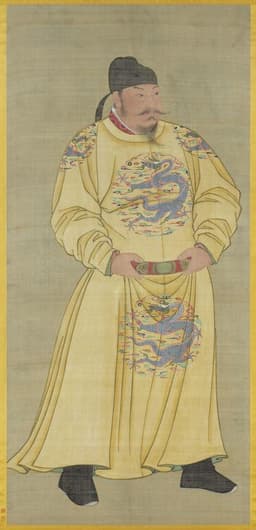
Emperor Taizong of Tang
Emperor · Medieval
78.9Total
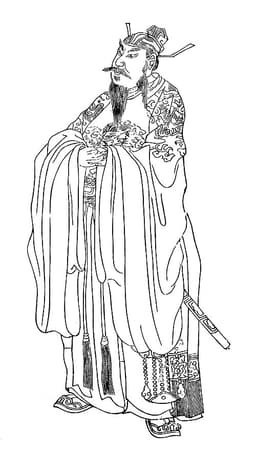
Xu Da
General · Medieval
74.9Total
Basic Information
Born
598
1332
Died
649
1385
Era
Medieval
Medieval
Nationality
China
China
Occupation
Emperor
General
Civilization
Eastern
Eastern
Score Comparison
Military (10%)
77.5
88.0
Political (20%)
82.0
68.0
Influence (20%)
85.0
82.0
Legacy (20%)
71.4
72.0
Leadership (15%)
78.0
62.0
Strategy (15%)
80.6
80.8
TOTAL
78.9
74.9
Emperor Taizong of Tang — Complete Timeline
626 AD
Reign of ZhenguanReform
Emperor Taizong initiated the Zhenguan era, characterized by efficient governance, legal codification, and economic recovery. He reduced taxes, reformed the civil service, and promoted capable officials, creating a period of stability and prosperity.
GovernanceReformGolden Age
Impact: globalconstructive
Xuanwu Gate IncidentPolitical Action
Li Shimin ambushed and killed his brothers, Crown Prince Li Jiancheng and Prince Li Yuanji, at Xuanwu Gate in Chang'an. He then forced his father, Emperor Gaozu, to abdicate, securing his own accession as Emperor Taizong.
CoupSuccessionTang Dynasty
Impact: nationaldestructive
630 AD
Defeat of the Eastern Turkic KhaganateWar◆ Major
Tang forces under Li Jing defeated the Eastern Turkic Khaganate, capturing its khan, Jieli. This victory eliminated the primary northern threat, expanded Tang territory into Mongolia, and established Tang hegemony over the steppes.
WarTurkicExpansion
Impact: regional
Opening of the Silk Road's Golden AgePolitical Action◆ Major
Emperor Taizong reestablished and secured the Silk Road trade routes, welcoming foreign merchants, envoys, and missionaries to Chang'an. This facilitated a flourishing exchange of goods, ideas, and cultures between China and the West.
Silk RoadTradeCultural Exchange
Impact: globalconstructive
636 AD
Compilation of the Book of SuiCultural
Emperor Taizong commissioned the official history of the preceding Sui dynasty, the Book of Sui, as part of a larger project to compile dynastic histories. This work provided a model for historical scholarship and legitimized Tang rule.
HistoriographyCultureLegitimacy
Impact: nationalconstructive
Xu Da — Complete Timeline
1368 AD
Capture of Dadu (Beijing)War
Xu Da led the Ming army in the capture of Dadu, the Yuan capital. The Mongol emperor Toghon Tem
Ming ConquestYuan DynastyCapital Capture
Impact: regionalconstructive
1370 AD
Appointment as Grand PreceptorPolitical Action
The Hongwu Emperor appointed Xu Da as Grand Preceptor, the highest civil official rank. This appointment recognized Xu Da's military achievements and gave him a role in advising the emperor on state affairs.
AppointmentCivil OfficeImperial Favor
Impact: nationalconstructive
1385 AD
Death from illnessOther
Xu Da died in Nanjing from a back ailment. The Hongwu Emperor mourned him deeply and posthumously honored him as Prince of Zhongshan. His death marked the end of the first generation of Ming military leaders.
DeathMing DynastyMilitary Leader
Impact: nationaltragic
Expert Analysis
Origins
Emperor Taizong of Tang (Li Shimin) was born in 598 CE into the powerful Li family, which would establish the Tang dynasty. His father, Li Yuan, was a general under the Sui dynasty. Li Shimin grew up amidst the collapse of the Sui and the ensuing chaos, receiving a strong military education and demonstrating early leadership. In contrast, Xu Da (1332–1385) was a peasant from a poor family in Anhui. He joined the Red Turban Rebellion against Mongol rule and quickly rose through the ranks due to his tactical brilliance. His humble origins shaped his pragmatic and loyal character.
Rise to Power
Taizong rose to power through the Xuanwu Gate Incident in 626, where he killed his brothers and forced his father to abdicate. This ruthless act secured his throne but stained his legitimacy. He then consolidated power by promoting capable officials and reforming the bureaucracy. Xu Da rose through merit under Zhu Yuanzhang, the future Hongwu Emperor. He distinguished himself in campaigns against rival rebel factions and Mongol forces, becoming the Ming dynasty's foremost general. His capture of Dadu (Beijing) in 1368 was the climax of the Ming conquest, symbolizing the end of Mongol rule.
Leadership & Governance
Taizong is celebrated for his 'Reign of Zhenguan' (627–649), a period of peace, prosperity, and effective governance. He implemented land reforms, reduced taxes, and promoted Confucian scholarship. He also established a meritocratic civil service and encouraged remonstrance from advisors like Wei Zheng. His leadership style combined authoritarian control with openness to advice. Xu Da, as a general, was known for his strict discipline, strategic acumen, and loyalty to the Hongwu Emperor. He never sought political power, instead focusing on military consolidation. However, his governance role was limited; he was primarily a military commander, not a ruler.
Triumph & Tragedy
Taizong's greatest triumph was the defeat of the Eastern Turkic Khaganate in 630, which secured Tang dominance in Central Asia and opened the Silk Road's golden age. He also expanded Tang influence into Korea and Tibet. His tragedy lies in the Xuanwu Gate Incident, which haunted his reign. Xu Da's triumph was the capture of Dadu and the expulsion of the Mongols from China proper. He also won the Battle of Lake Buir in 1388, crushing Mongol remnants. His tragedy was his death from illness at age 53, just as he was preparing for further campaigns. He died a hero, but his early death cut short his contributions.
Character & Destiny
Taizong was ambitious, intelligent, and ruthless. He was a master of both military and civil affairs, but his early violence shaped his destiny as a ruler always seeking to legitimize his reign. He sought to be a model emperor, and his reign became a benchmark for future dynasties. Xu Da was humble, loyal, and disciplined. His destiny was to be the architect of Ming military success, but he remained a servant rather than a ruler. He accepted his role without ambition for the throne, which ensured his posthumous honor.
Legacy
Taizong's legacy is immense. He established the Tang dynasty's foundations, which became a golden age in Chinese history. His reign was a model of good governance, and his policies influenced later dynasties. The Silk Road's golden age under his rule facilitated cultural and economic exchange. Xu Da's legacy is as the Ming dynasty's greatest general. He is revered for driving out the Mongols and restoring Han Chinese rule. His military strategies are studied, and he is a symbol of loyalty and competence. However, his influence was confined to the military sphere.
Conclusion
Emperor Taizong of Tang scores higher overall due to his broader impact as a ruler and reformer. While Xu Da was a brilliant general, Taizong combined military success with exemplary governance, creating a lasting model of leadership. Taizong's numerical scores (M=78, P=82, I=85, L=71, D=78, S=81, T=79) reflect his balanced strengths, while Xu Da's (M=88, P=68, I=82, L=72, D=62, S=81, T=75) show his military prowess but lower political and diplomatic skills. The score gap of 4.0 highlights Taizong's superior overall influence. Thus, Emperor Taizong of Tang is the greater figure in history.
Rankings
🥇
Emperor Taizong of TangLeader
Mil: 77.5Pol: 82.0Inf: 85.0
78.9
🥈
Xu Da
Mil: 88.0Pol: 68.0Inf: 82.0
74.9
+4.0 behind
How This Comparison Works
Algorithm
Each figure is scored on 6 dimensions (0—100 scale) based on structured historical data: Military (10%), Political (20%), Influence (20%), Legacy (20%), Leadership (15%), Strategy (15%). The weighted total produces the final ranking.
Data Sources
Scores are computed from structured sub-indicators in the database. Scale factors adjust for era (Ancient ×0.85, Modern ×1.0) and civilization size (Eastern ×1.05, Other ×0.80) to account for differences in population and military scale.
Maximum 3 Figures
Comparisons are limited to 2—3 figures to ensure readability and statistical meaningfulness.
Error Margins
±5 points per dimension — Sub-scores are derived from historical records with inherent uncertainty. Two figures within 5 points on a dimension should be considered roughly equivalent in that area.
Total Score Accuracy
±3 points overall — The weighted combination of 6 dimensions produces a total score with approximately ±3 points of uncertainty. Differences of less than 3 points are not statistically significant— the figures are effectively tied.
Known Limitations
- Historical records are incomplete and uneven across civilizations
- Figures from oral-tradition societies may be underrepresented
- Occupation labels can misclassify multi-role figures
- Scores measure capability and impact, not moral character
- Quantitative scoring is a comparison tool, not absolute truth
Capability Radar
Military (10%) — Battles & Warfare
Battles
95
95
Win Rate
95
95
Expansion
90
95
Political (20%) — Governance & Reform
Reform
95
50
Diplomacy
95
65
Economy
95
55
Influence (20%) — Cultural & Global Reach
Cultural
90
70
Global
90
80
Legacy (20%) — Historical Impact
Historical
95
85
Longevity
95
75
Leadership (15%) — Power & Stability
Tenure
85
60
Stability
95
70
Strategy (15%) — Tactics & Innovation
Strategy
95
92
Tactics
95
90
Reform
90
70
Similar Comparisons
Comments & Discussion
No comments yet. Be the first to share your thoughts!