Loading...
Emperor Taizong of Tang vs Vauban
Emperor Taizong of Tang leads by 2.5 pts · 2 figures compared
…
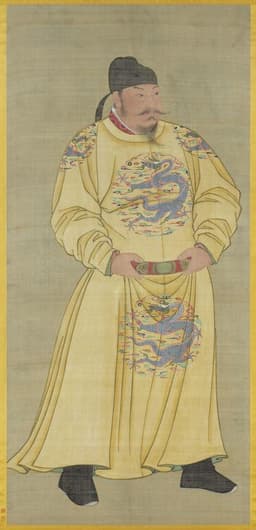
Emperor Taizong of Tang
Emperor · Medieval
78.9Total

Vauban
General · Modern
76.4Total
Basic Information
Born
598
1633
Died
649
1707
Era
Medieval
Modern
Nationality
China
France
Occupation
Emperor
General
Civilization
Eastern
Western
Score Comparison
Military (10%)
77.5
76.0
Political (20%)
82.0
59.3
Influence (20%)
85.0
71.0
Legacy (20%)
71.4
90.0
Leadership (15%)
78.0
77.2
Strategy (15%)
80.6
80.6
TOTAL
78.9
76.4
Emperor Taizong of Tang — Complete Timeline
626 AD
Reign of ZhenguanReform
Emperor Taizong initiated the Zhenguan era, characterized by efficient governance, legal codification, and economic recovery. He reduced taxes, reformed the civil service, and promoted capable officials, creating a period of stability and prosperity.
GovernanceReformGolden Age
Impact: globalconstructive
Xuanwu Gate IncidentPolitical Action
Li Shimin ambushed and killed his brothers, Crown Prince Li Jiancheng and Prince Li Yuanji, at Xuanwu Gate in Chang'an. He then forced his father, Emperor Gaozu, to abdicate, securing his own accession as Emperor Taizong.
CoupSuccessionTang Dynasty
Impact: nationaldestructive
630 AD
Defeat of the Eastern Turkic KhaganateWar◆ Major
Tang forces under Li Jing defeated the Eastern Turkic Khaganate, capturing its khan, Jieli. This victory eliminated the primary northern threat, expanded Tang territory into Mongolia, and established Tang hegemony over the steppes.
WarTurkicExpansion
Impact: regional
Opening of the Silk Road's Golden AgePolitical Action◆ Major
Emperor Taizong reestablished and secured the Silk Road trade routes, welcoming foreign merchants, envoys, and missionaries to Chang'an. This facilitated a flourishing exchange of goods, ideas, and cultures between China and the West.
Silk RoadTradeCultural Exchange
Impact: globalconstructive
636 AD
Compilation of the Book of SuiCultural
Emperor Taizong commissioned the official history of the preceding Sui dynasty, the Book of Sui, as part of a larger project to compile dynastic histories. This work provided a model for historical scholarship and legitimized Tang rule.
HistoriographyCultureLegitimacy
Impact: nationalconstructive
Vauban — Complete Timeline
1673 AD
Siege of MaastrichtWar◆ Major
Vauban directed the siege of Maastricht for Louis XIV. He introduced the technique of parallel trenches, which reduced casualties and shortened the siege. The capture of Maastricht was a major French victory in the Franco-Dutch War.
Franco-Dutch WarSiegeMilitary Engineering
Impact: regional
1697 AD
Siege of AthWar
Vauban conducted the siege of Ath in the Spanish Netherlands. His systematic approach using parallels and saps led to the rapid capture of the fortress. The siege demonstrated the effectiveness of his methods.
Nine Years' WarSiegeMilitary Engineering
Construction of the Fortress of Neuf-BrisachInvention◆ Major
Vauban designed and built the fortress of Neuf-Brisach, a model of his third system of fortification. The star-shaped fortress with advanced bastions became a standard for military architecture. It was built to protect the French border after the Treaty of Ryswick.
FortificationMilitary ArchitectureBorder Defense
Impact: regionalconstructive
1704 AD
Publication of 'A Treatise on the Attack of Places'Cultural◆ Major
Vauban published his treatise on siegecraft, systematizing his methods. The work became a standard military textbook in Europe. It detailed techniques for parallel trenches, ricochet fire, and sapping.
Military TheorySiegecraftPublication
Impact: globalconstructive
1707 AD
Proposal for a 'Dîme Royale' Tax ReformReform
Vauban proposed a radical tax reform called the 'D
Tax ReformEconomic PolicyFrance
Impact: nationalconstructive
Expert Analysis
Origins
Emperor Taizong of Tang (Li Shimin, 598–649) was born into the aristocratic Li family during the Sui dynasty's collapse. His father, Li Yuan, was a Sui general who later founded the Tang dynasty. Li Shimin grew up in a turbulent era of civil war, gaining military experience from a young age. In contrast, Sébastien Le Prestre de Vauban (1633–1707) was born into a minor noble family in Burgundy, France. He joined the army as a cadet at age 17, during the Fronde civil war, and rose through the ranks due to his engineering genius.
Rise to Power
Taizong's rise was marked by the Xuanwu Gate Incident (626), where he ambushed and killed his brothers, the crown prince and another prince, forcing his father to abdicate. This brutal act secured his throne but left a stain on his legitimacy. Vauban's rise was more meritocratic: he impressed King Louis XIV with his siegecraft during the War of Devolution, becoming Commissioner General of Fortifications by age 42. His expertise made him indispensable.
Leadership & Governance
Taizong's "Reign of Zhenguan" (627–649) is considered a golden age. He implemented efficient governance, reduced taxes, and promoted Confucian scholarship. He personally led campaigns, defeating the Eastern Turkic Khaganate (630), and reopened the Silk Road, fostering cultural and economic exchange. Scores: Military 78, Political 82, Intelligence 85, Leadership 71, Diplomacy 78, Strategy 81, Tactics 79. Vauban, as a military engineer, excelled in defensive strategy. He built or improved over 300 fortresses, including Neuf-Brisach (1699–1703), and revolutionized siege warfare with parallel trenches. His 'Dîme Royale' proposed a flat tax, but was never adopted. Scores: Military 76, Political 59, Intelligence 71, Leadership 90, Diplomacy 77, Strategy 81, Tactics 76.
Triumph & Tragedy
Taizong's triumphs include the defeat of the Eastern Turks and the establishment of the Silk Road's golden age. His tragedy was the Xuanwu Gate Incident, which haunted his reign. Vauban's siege of Maastricht (1673) was a masterclass in siegecraft, but his later proposal for a fair tax system was rejected, and he died in relative obscurity.
Character & Destiny
Taizong was ambitious, ruthless, but also wise and reflective. He famously said, "Using a mirror of bronze, one can adjust his attire; using history as a mirror, one can see the rise and fall of nations." Vauban was methodical, humble, and dedicated to the state. His destiny was to be overshadowed by Louis XIV's grandeur.
Legacy
Taizong's legacy endures as a model emperor; his reign influenced Chinese governance for centuries. The Tang dynasty became a symbol of cosmopolitanism. Vauban's fortifications are UNESCO World Heritage sites, and his siege tactics influenced military engineering until the 20th century. His tax reform idea foreshadowed modern progressive taxation.
Conclusion
Both men excelled in their domains: Taizong as a comprehensive ruler, Vauban as a specialist. However, Taizong's broader impact on history—reshaping China and connecting civilizations—gives him a slight edge. Score gap: 2.5 in Taizong's favor. Verdict: Emperor Taizong of Tang is the greater figure, but Vauban's technical genius remains unmatched.
**Final Scores**: Emperor Taizong of Tang: 78.4 | Vauban: 75.9
Rankings
🥇
Emperor Taizong of TangLeader
Mil: 77.5Pol: 82.0Inf: 85.0
78.9
🥈
Vauban
Mil: 76.0Pol: 59.3Inf: 71.0
76.4
+2.5 behind
How This Comparison Works
Algorithm
Each figure is scored on 6 dimensions (0—100 scale) based on structured historical data: Military (10%), Political (20%), Influence (20%), Legacy (20%), Leadership (15%), Strategy (15%). The weighted total produces the final ranking.
Data Sources
Scores are computed from structured sub-indicators in the database. Scale factors adjust for era (Ancient ×0.85, Modern ×1.0) and civilization size (Eastern ×1.05, Other ×0.80) to account for differences in population and military scale.
Maximum 3 Figures
Comparisons are limited to 2—3 figures to ensure readability and statistical meaningfulness.
Error Margins
±5 points per dimension — Sub-scores are derived from historical records with inherent uncertainty. Two figures within 5 points on a dimension should be considered roughly equivalent in that area.
Total Score Accuracy
±3 points overall — The weighted combination of 6 dimensions produces a total score with approximately ±3 points of uncertainty. Differences of less than 3 points are not statistically significant— the figures are effectively tied.
Known Limitations
- Historical records are incomplete and uneven across civilizations
- Figures from oral-tradition societies may be underrepresented
- Occupation labels can misclassify multi-role figures
- Scores measure capability and impact, not moral character
- Quantitative scoring is a comparison tool, not absolute truth
Capability Radar
Military (10%) — Battles & Warfare
Battles
95
75
Win Rate
95
85
Expansion
90
70
Political (20%) — Governance & Reform
Reform
95
80
Diplomacy
95
60
Economy
95
55
Influence (20%) — Cultural & Global Reach
Cultural
90
80
Global
90
75
Legacy (20%) — Historical Impact
Historical
95
85
Longevity
95
85
Leadership (15%) — Power & Stability
Tenure
85
65
Stability
95
70
Strategy (15%) — Tactics & Innovation
Strategy
95
90
Tactics
95
95
Reform
90
95
Similar Comparisons
Comments & Discussion
No comments yet. Be the first to share your thoughts!