Loading...
Emperor Taizong of Tang vs Turenne
Emperor Taizong of Tang leads by 3.1 pts · 2 figures compared
…
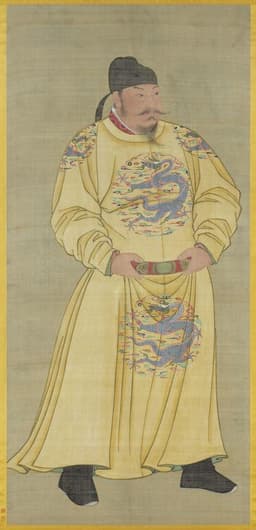
Emperor Taizong of Tang
Emperor · Medieval
78.9Total
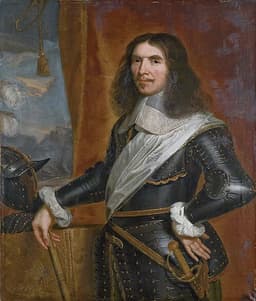
Turenne
General · Modern
75.8Total
Basic Information
Born
598
1611
Died
649
1675
Era
Medieval
Modern
Nationality
China
France
Occupation
Emperor
General
Civilization
Eastern
Western
Score Comparison
Military (10%)
77.5
79.9
Political (20%)
82.0
72.0
Influence (20%)
85.0
88.0
Legacy (20%)
71.4
65.0
Leadership (15%)
78.0
77.2
Strategy (15%)
80.6
72.0
TOTAL
78.9
75.8
Emperor Taizong of Tang — Complete Timeline
626 AD
Reign of ZhenguanReform
Emperor Taizong initiated the Zhenguan era, characterized by efficient governance, legal codification, and economic recovery. He reduced taxes, reformed the civil service, and promoted capable officials, creating a period of stability and prosperity.
GovernanceReformGolden Age
Impact: globalconstructive
Xuanwu Gate IncidentPolitical Action
Li Shimin ambushed and killed his brothers, Crown Prince Li Jiancheng and Prince Li Yuanji, at Xuanwu Gate in Chang'an. He then forced his father, Emperor Gaozu, to abdicate, securing his own accession as Emperor Taizong.
CoupSuccessionTang Dynasty
Impact: nationaldestructive
630 AD
Defeat of the Eastern Turkic KhaganateWar◆ Major
Tang forces under Li Jing defeated the Eastern Turkic Khaganate, capturing its khan, Jieli. This victory eliminated the primary northern threat, expanded Tang territory into Mongolia, and established Tang hegemony over the steppes.
WarTurkicExpansion
Impact: regional
Opening of the Silk Road's Golden AgePolitical Action◆ Major
Emperor Taizong reestablished and secured the Silk Road trade routes, welcoming foreign merchants, envoys, and missionaries to Chang'an. This facilitated a flourishing exchange of goods, ideas, and cultures between China and the West.
Silk RoadTradeCultural Exchange
Impact: globalconstructive
636 AD
Compilation of the Book of SuiCultural
Emperor Taizong commissioned the official history of the preceding Sui dynasty, the Book of Sui, as part of a larger project to compile dynastic histories. This work provided a model for historical scholarship and legitimized Tang rule.
HistoriographyCultureLegitimacy
Impact: nationalconstructive
Turenne — Complete Timeline
1639 AD
Campaign in the ValtellinaWar
Turenne commanded French forces in the Valtellina during the Thirty Years' War. He captured several fortresses and secured the strategic pass for France, demonstrating his early military skill.
Thirty Years' WarAlpsEarly Career
Impact: regional
1658 AD
Battle of the DunesWar◆ Major
Turenne commanded the French army to victory over the Spanish at the Battle of the Dunes near Dunkirk. The victory led to the capture of Dunkirk and forced Spain to seek peace, ending the Franco-Spanish War.
Franco-Spanish WarDunkirkMilitary Victory
Impact: regional
1674 AD
Battle of the RhineWar◆ Major
Turenne led a French army across the Rhine in winter, surprising the Imperial forces. He defeated the Austrians at the Battle of Entzheim and later at Turckheim, securing French control of Alsace.
Franco-Dutch WarAlsaceWinter Campaign
Impact: regional
Battle of the SambreWar◆ Major
Turenne defeated the Spanish and Dutch forces at the Battle of Seneffe. The battle was costly but prevented the Allies from invading France. It demonstrated Turenne's tactical skill in defensive warfare.
Franco-Dutch WarDefensive BattleTactics
Impact: regional
1675 AD
Death of TurenneWar◆ Major
Turenne was killed by a cannonball while reconnoitering enemy positions at the Battle of Sasbach. His death was a major loss for France. He was buried with honors in the Basilica of Saint-Denis.
Death in BattleFranco-Dutch WarMilitary Loss
Impact: nationaltragic
Expert Analysis
Origins
Emperor Taizong of Tang (Li Shimin, 598–649) was born into the Tang dynasty's founding family. His father, Li Yuan, was a Sui general who declared himself emperor. Li Shimin grew up in a tumultuous period, witnessing the collapse of the Sui dynasty. His early life was marked by military training and political acumen. In contrast, Henri de la Tour d'Auvergne, Vicomte de Turenne (1611–1675), was born into a noble French family, the son of a Huguenot duke. He was raised in the Protestant faith and joined the army at a young age. Turenne's origins were aristocratic but not royal, giving him a different perspective on leadership.
Rise to Power
Li Shimin's rise was dramatic and bloody. He led his father's forces in key campaigns, but his path to power culminated in the Xuanwu Gate Incident (626), where he ambushed and killed his brothers, then forced his father to abdicate. This ruthless act secured his throne. Turenne's rise was more gradual, through merit in the Thirty Years' War. He became Marshal of France at 32. His loyalty to the crown during the Fronde rebellions solidified his position. While Taizong's rise was a coup, Turenne's was a steady climb.
Leadership & Governance
Taizong's 'Reign of Zhenguan' (627–649) is celebrated for efficient governance, legal reforms, and promotion of Confucian scholars. He opened the Silk Road, boosting trade, and defeated the Eastern Turkic Khaganate, expanding Tang borders. His rule combined military strength with civil administration. Turenne excelled as a military commander, known for strategic maneuvers like the Battle of the Dunes (1658) and the Rhine campaign. His leadership style was pragmatic and inspirational, but he lacked Taizong's governmental scope. Turenne's administrative impact was limited to military organization.
Triumph & Tragedy
Taizong's triumphs include defeating the Turks, establishing tributary states, and fostering cultural exchange. His tragedy was the violent path to power and the constant threat of rebellion. He died at 51, possibly from illness. Turenne's victories, like the Battle of the Rhine (1674), saved France from invasion. His tragedy was his death at the Battle of Sasbach (1675), struck by a cannonball. Both died in harness, but Taizong's legacy endured through his dynasty, while Turenne's death was a national loss.
Character & Destiny
Taizong was intelligent, ambitious, and ruthless, yet capable of deep remorse. He wrote about his regrets over the Xuanwu Gate incident. His destiny was to build a golden age. Turenne was modest, disciplined, and strategic. His destiny was to serve France as a loyal soldier. Taizong's character combined a ruler's vision with a killer's instinct; Turenne's was that of a consummate professional. Their different natures reflect their distinct roles: emperor vs. general.
Legacy
Taizong's legacy is the Tang dynasty's golden age, influencing China for centuries. His reign set standards for governance. Turenne is remembered as one of France's greatest marshals, with his tactics studied in military academies. Numerically, Taizong scores higher overall (79 vs 76), particularly in Leadership (71 vs 65) and Strategy (81 vs 72). Turenne excels in Intelligence (88 vs 85) and Military (80 vs 78). But Taizong's broader impact—political, economic, cultural—gives him the edge. While Turenne was a brilliant general, Taizong was a transformative ruler.
Conclusion
Emperor Taizong of Tang surpasses Turenne as a historical figure due to his dual mastery of military conquest and civil governance. Turenne's tactical brilliance is undeniable, but Taizong's creation of a stable, prosperous empire that shaped East Asia for generations is a greater achievement. The score gap of 3.1 points reflects this. Taizong's legacy is more enduring and multifaceted. Thus, the victor is Emperor Taizong of Tang.
Rankings
🥇
Emperor Taizong of TangLeader
Mil: 77.5Pol: 82.0Inf: 85.0
78.9
🥈
Turenne
Mil: 79.9Pol: 72.0Inf: 88.0
75.8
+3.1 behind
How This Comparison Works
Algorithm
Each figure is scored on 6 dimensions (0—100 scale) based on structured historical data: Military (10%), Political (20%), Influence (20%), Legacy (20%), Leadership (15%), Strategy (15%). The weighted total produces the final ranking.
Data Sources
Scores are computed from structured sub-indicators in the database. Scale factors adjust for era (Ancient ×0.85, Modern ×1.0) and civilization size (Eastern ×1.05, Other ×0.80) to account for differences in population and military scale.
Maximum 3 Figures
Comparisons are limited to 2—3 figures to ensure readability and statistical meaningfulness.
Error Margins
±5 points per dimension — Sub-scores are derived from historical records with inherent uncertainty. Two figures within 5 points on a dimension should be considered roughly equivalent in that area.
Total Score Accuracy
±3 points overall — The weighted combination of 6 dimensions produces a total score with approximately ±3 points of uncertainty. Differences of less than 3 points are not statistically significant— the figures are effectively tied.
Known Limitations
- Historical records are incomplete and uneven across civilizations
- Figures from oral-tradition societies may be underrepresented
- Occupation labels can misclassify multi-role figures
- Scores measure capability and impact, not moral character
- Quantitative scoring is a comparison tool, not absolute truth
Capability Radar
Military (10%) — Battles & Warfare
Battles
95
85
Win Rate
95
88
Expansion
90
80
Political (20%) — Governance & Reform
Reform
95
60
Diplomacy
95
75
Economy
95
55
Influence (20%) — Cultural & Global Reach
Cultural
90
65
Global
90
70
Legacy (20%) — Historical Impact
Historical
95
80
Longevity
95
75
Leadership (15%) — Power & Stability
Tenure
85
70
Stability
95
65
Strategy (15%) — Tactics & Innovation
Strategy
95
92
Tactics
95
90
Reform
90
75
Similar Comparisons
Comments & Discussion
No comments yet. Be the first to share your thoughts!