Loading...
Emperor Taizong of Tang vs Trajan
Emperor Taizong of Tang leads by 2.9 pts · 2 figures compared
…
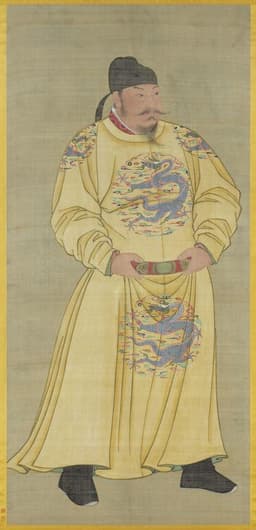
Emperor Taizong of Tang
Emperor · Medieval
78.9Total

Trajan
Emperor · Ancient
76.0Total
Basic Information
Born
598
53
Died
649
117
Era
Medieval
Ancient
Nationality
China
Roman Empire
Occupation
Emperor
Emperor
Civilization
Eastern
Western
Score Comparison
Military (10%)
77.5
86.0
Political (20%)
82.0
79.2
Influence (20%)
85.0
82.0
Legacy (20%)
71.4
65.6
Leadership (15%)
78.0
73.2
Strategy (15%)
80.6
76.0
TOTAL
78.9
76.0
Emperor Taizong of Tang — Complete Timeline
626 AD
Reign of ZhenguanReform
Emperor Taizong initiated the Zhenguan era, characterized by efficient governance, legal codification, and economic recovery. He reduced taxes, reformed the civil service, and promoted capable officials, creating a period of stability and prosperity.
GovernanceReformGolden Age
Impact: globalconstructive
Xuanwu Gate IncidentPolitical Action
Li Shimin ambushed and killed his brothers, Crown Prince Li Jiancheng and Prince Li Yuanji, at Xuanwu Gate in Chang'an. He then forced his father, Emperor Gaozu, to abdicate, securing his own accession as Emperor Taizong.
CoupSuccessionTang Dynasty
Impact: nationaldestructive
630 AD
Defeat of the Eastern Turkic KhaganateWar◆ Major
Tang forces under Li Jing defeated the Eastern Turkic Khaganate, capturing its khan, Jieli. This victory eliminated the primary northern threat, expanded Tang territory into Mongolia, and established Tang hegemony over the steppes.
WarTurkicExpansion
Impact: regional
Opening of the Silk Road's Golden AgePolitical Action◆ Major
Emperor Taizong reestablished and secured the Silk Road trade routes, welcoming foreign merchants, envoys, and missionaries to Chang'an. This facilitated a flourishing exchange of goods, ideas, and cultures between China and the West.
Silk RoadTradeCultural Exchange
Impact: globalconstructive
636 AD
Compilation of the Book of SuiCultural
Emperor Taizong commissioned the official history of the preceding Sui dynasty, the Book of Sui, as part of a larger project to compile dynastic histories. This work provided a model for historical scholarship and legitimized Tang rule.
HistoriographyCultureLegitimacy
Impact: nationalconstructive
Trajan — Complete Timeline
101 AD
Implemented the Alimenta Welfare ProgramReform◆ Major
Trajan expanded the Alimenta program, a state-funded welfare system that provided food subsidies and educational support for poor children in Italy. The program used interest from state loans to landowners to fund the distributions, aiming to boost the Italian population and agricultural economy.
WelfareSocial PolicyItaly
Impact: regionalconstructive
105 AD
Built Trajan's Bridge over the DanubeOther
Trajan ordered the construction of a massive stone and timber bridge across the Danube River near the Iron Gates. Designed by Apollodorus of Damascus, it was the longest arch bridge in the world for over a millennium, facilitating the Roman invasion of Dacia.
EngineeringBridgeDanube
Impact: regionalconstructive
106 AD
Conquered DaciaWar
Trajan led two major campaigns against the Dacian kingdom under King Decebalus, culminating in the conquest of Dacia (modern Romania) in 106 CE. The victory brought vast gold and silver mines under Roman control and established a new province, funding massive building projects in Rome.
DaciaConquestProvince
Impact: regional
112 AD
Built Trajan's Forum and MarketCultural◆ Major
Trajan commissioned the construction of Trajan's Forum, a vast complex in Rome including a basilica, libraries, and the Column of Trajan. The adjacent Trajan's Market, a multi-level commercial center, demonstrated Roman engineering prowess and served as a model for urban planning.
ArchitectureRomeUrban Planning
Impact: globalconstructive
116 AD
Conquered Parthia and Reached the Persian GulfWar◆ Major
Trajan launched a campaign against the Parthian Empire, capturing its capital Ctesiphon and annexing Mesopotamia. He reached the Persian Gulf, marking the easternmost extent of Roman territory. However, rebellions in the conquered territories forced a withdrawal shortly after.
ParthiaMesopotamiaExpansion
Impact: global
Expert Analysis
Origins
Emperor Taizong of Tang (Li Shimin, 598–649) was born into a noble family during the turbulent Sui dynasty. His father, Li Yuan, was a Sui general who later founded the Tang dynasty. Taizong demonstrated military prowess from a young age, helping his father seize power in 617. In contrast, Trajan (Marcus Ulpius Traianus, 53–117) was born in Italica, Spain, to a Roman patrician family. His father was a prominent senator and general. Trajan rose through the military ranks, serving in Syria and Germany, and was adopted by Emperor Nerva in 97, succeeding him in 98. Both men came from elite backgrounds but Taizong's path involved more direct familial conflict.
Rise to Power
Taizong's rise was marked by the Xuanwu Gate Incident (626), where he ambushed and killed his brothers, the crown prince and another brother, then forced his father to abdicate. This ruthless act secured his throne but stained his early reign. Trajan's accession was smoother: he was adopted by Nerva, who was pressured by the Praetorian Guard and army to choose a capable successor. Trajan became emperor in 98 without bloodshed, thanks to Nerva's foresight. While Taizong's coup was brutal, it demonstrated his determination; Trajan's peaceful transition reflected stability.
Leadership & Governance
Taizong's "Reign of Zhenguan" (627–649) is considered a golden age. He reformed the bureaucracy, promoted meritocracy through civil service exams, and reduced taxes. He also compiled the Book of Sui, standardizing history. His leadership combined military strength with cultural patronage. Trajan, known as "Optimus Princeps" (Best Ruler), expanded the Roman Empire to its greatest territorial extent, conquering Dacia (101–106) and Parthia (113–117). He built Trajan's Forum and Market in Rome and implemented the Alimenta welfare program to support poor children. Both were effective administrators, but Taizong's domestic reforms had longer-lasting impact on Chinese governance.
Triumph & Tragedy
Taizong's greatest military triumph was the defeat of the Eastern Turkic Khaganate (630), securing the Silk Road and ushering in its golden age. He also subjugated the Xueyantuo and other nomadic groups. His reign saw cultural flourishing and economic prosperity. However, his later years were marred by succession disputes and a failed campaign against Goguryeo. Trajan's conquest of Dacia brought immense wealth to Rome, funding massive building projects. His Parthian campaign reached the Persian Gulf, but it overextended Roman resources. Trajan died in 117 while returning from the East, leaving a vast but unstable empire. Both achieved great victories but faced setbacks: Taizong's Goguryeo failure and Trajan's overextension.
Character & Destiny
Taizong was known for his intelligence, pragmatism, and willingness to listen to advisors like Wei Zheng. He famously said, "The ruler is the boat; the people are the water. The water can support the boat or capsize it." He was ambitious but also reflective, often criticizing his own mistakes. Trajan was celebrated for his military skill, justice, and modesty. He was beloved by the army and people, known for his direct involvement in campaigns. Both were capable leaders, but Taizong's philosophical depth and self-awareness give him an edge in character.
Legacy
Taizong's legacy is immense: the Tang dynasty became a model for later Chinese dynasties, and the Silk Road's golden age facilitated cultural exchange between East and West. His governance principles influenced Chinese political thought for centuries. Trajan's legacy includes the Roman Empire's maximum extent, iconic architecture like Trajan's Column, and the alimenta system. He is remembered as one of Rome's "Five Good Emperors." However, his conquests were not sustainable, and Rome soon faced challenges. Taizong's reforms created enduring institutions, while Trajan's achievements were more personal and less institutionalized.
Conclusion
Based on the analysis, Emperor Taizong of Tang scores higher overall (79.1 vs Trajan's 76.2). His military conquests secured the Silk Road, his administrative reforms shaped China for centuries, and his reign is a benchmark of effective governance. Trajan was a great conqueror and builder, but his empire's overreach and lack of institutional reforms limit his long-term impact. Taizong's combination of military prowess, cultural patronage, and administrative genius makes him the superior emperor.
Rankings
🥇
Emperor Taizong of TangLeader
Mil: 77.5Pol: 82.0Inf: 85.0
78.9
🥈
Trajan
Mil: 86.0Pol: 79.2Inf: 82.0
76.0
+2.9 behind
How This Comparison Works
Algorithm
Each figure is scored on 6 dimensions (0—100 scale) based on structured historical data: Military (10%), Political (20%), Influence (20%), Legacy (20%), Leadership (15%), Strategy (15%). The weighted total produces the final ranking.
Data Sources
Scores are computed from structured sub-indicators in the database. Scale factors adjust for era (Ancient ×0.85, Modern ×1.0) and civilization size (Eastern ×1.05, Other ×0.80) to account for differences in population and military scale.
Maximum 3 Figures
Comparisons are limited to 2—3 figures to ensure readability and statistical meaningfulness.
Error Margins
±5 points per dimension — Sub-scores are derived from historical records with inherent uncertainty. Two figures within 5 points on a dimension should be considered roughly equivalent in that area.
Total Score Accuracy
±3 points overall — The weighted combination of 6 dimensions produces a total score with approximately ±3 points of uncertainty. Differences of less than 3 points are not statistically significant— the figures are effectively tied.
Known Limitations
- Historical records are incomplete and uneven across civilizations
- Figures from oral-tradition societies may be underrepresented
- Occupation labels can misclassify multi-role figures
- Scores measure capability and impact, not moral character
- Quantitative scoring is a comparison tool, not absolute truth
Capability Radar
Military (10%) — Battles & Warfare
Battles
95
95
Win Rate
95
98
Expansion
90
95
Political (20%) — Governance & Reform
Reform
95
88
Diplomacy
95
85
Economy
95
90
Influence (20%) — Cultural & Global Reach
Cultural
90
85
Global
90
85
Legacy (20%) — Historical Impact
Historical
95
90
Longevity
95
88
Leadership (15%) — Power & Stability
Tenure
85
90
Stability
95
92
Strategy (15%) — Tactics & Innovation
Strategy
95
92
Tactics
95
88
Reform
90
85
Similar Comparisons
Comments & Discussion
No comments yet. Be the first to share your thoughts!