Loading...
Emperor Taizong of Tang vs Toyotomi Hideyoshi
Toyotomi Hideyoshi leads by 3.1 pts · 2 figures compared
…
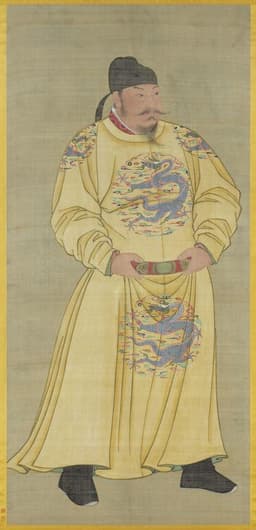
Emperor Taizong of Tang
Emperor · Medieval
78.9Total
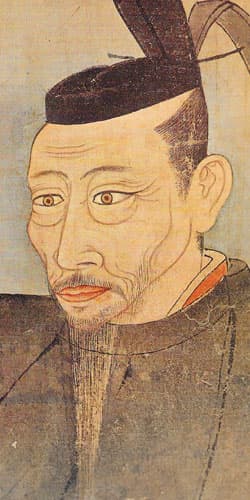
Toyotomi Hideyoshi
General · Modern
82.0Total
Basic Information
Born
598
1537
Died
649
1598
Era
Medieval
Modern
Nationality
China
Japan
Occupation
Emperor
General
Civilization
Eastern
Eastern
Score Comparison
Military (10%)
77.5
79.9
Political (20%)
82.0
78.0
Influence (20%)
85.0
88.0
Legacy (20%)
71.4
80.0
Leadership (15%)
78.0
82.0
Strategy (15%)
80.6
80.4
TOTAL
78.9
82.0
Emperor Taizong of Tang — Complete Timeline
626 AD
Reign of ZhenguanReform
Emperor Taizong initiated the Zhenguan era, characterized by efficient governance, legal codification, and economic recovery. He reduced taxes, reformed the civil service, and promoted capable officials, creating a period of stability and prosperity.
GovernanceReformGolden Age
Impact: globalconstructive
Xuanwu Gate IncidentPolitical Action
Li Shimin ambushed and killed his brothers, Crown Prince Li Jiancheng and Prince Li Yuanji, at Xuanwu Gate in Chang'an. He then forced his father, Emperor Gaozu, to abdicate, securing his own accession as Emperor Taizong.
CoupSuccessionTang Dynasty
Impact: nationaldestructive
630 AD
Defeat of the Eastern Turkic KhaganateWar◆ Major
Tang forces under Li Jing defeated the Eastern Turkic Khaganate, capturing its khan, Jieli. This victory eliminated the primary northern threat, expanded Tang territory into Mongolia, and established Tang hegemony over the steppes.
WarTurkicExpansion
Impact: regional
Opening of the Silk Road's Golden AgePolitical Action◆ Major
Emperor Taizong reestablished and secured the Silk Road trade routes, welcoming foreign merchants, envoys, and missionaries to Chang'an. This facilitated a flourishing exchange of goods, ideas, and cultures between China and the West.
Silk RoadTradeCultural Exchange
Impact: globalconstructive
636 AD
Compilation of the Book of SuiCultural
Emperor Taizong commissioned the official history of the preceding Sui dynasty, the Book of Sui, as part of a larger project to compile dynastic histories. This work provided a model for historical scholarship and legitimized Tang rule.
HistoriographyCultureLegitimacy
Impact: nationalconstructive
Toyotomi Hideyoshi — Complete Timeline
1583 AD
Battle of ShizugatakeWar◆ Major
Hideyoshi defeated his rival Shibata Katsuie at the Battle of Shizugatake, solidifying his control over central Japan. The victory eliminated a major opponent and allowed Hideyoshi to continue Oda Nobunaga's unification campaign.
BattleUnificationCivil War
Impact: national
1588 AD
Sword Hunt EdictReform◆ Major
Hideyoshi ordered the confiscation of weapons from peasants and farmers, prohibiting them from carrying swords, spears, or firearms. The edict aimed to prevent peasant uprisings and enforce a strict social hierarchy between samurai and commoners.
Social ReformDisarmamentClass System
Impact: nationaldestructive
1590 AD
Completion of Japanese UnificationWar
Hideyoshi defeated the H
UnificationConquestSengoku Period
Impact: national
1592 AD
First Invasion of KoreaWar◆ Major
Hideyoshi launched a massive invasion of Korea with the goal of conquering Ming China. Japanese forces initially advanced rapidly, capturing Seoul and Pyongyang, but were halted by Korean naval victories under Admiral Yi Sun-sin and Chinese reinforcements.
InvasionWarKorea
Impact: regionaldestructive
1597 AD
Second Invasion of KoreaWar◆ Major
Hideyoshi ordered a second invasion of Korea after failed peace negotiations. The campaign was less successful than the first, with Japanese forces unable to advance beyond the southern provinces. The invasion ended with Hideyoshi's death in 1598.
InvasionWarKorea
Impact: regionaldestructive
Expert Analysis
Origins
Toyotomi Hideyoshi (1537–1598) rose from a peasant family in Owari Province to become Japan's supreme ruler. His humble beginnings shaped his pragmatic and ambitious nature. In contrast, Emperor Taizong of Tang (598–649) was born Li Shimin, a prince of the Tang dynasty, son of Emperor Gaozu. His aristocratic upbringing gave him access to military command and political power from an early age. Hideyoshi's rise is a rags-to-riches story, while Taizong's was one of consolidation and legitimacy.
Rise to Power
Hideyoshi began as a lowly sandal-bearer for Oda Nobunaga, but his tactical brilliance and loyalty saw him rise through the ranks. After Nobunaga's death in 1582, Hideyoshi avenged him and defeated rivals like Shibata Katsuie at the Battle of Shizugatake (1583), securing his position. He completed the unification of Japan by 1590, subduing the Hojo clan. Taizong, as Li Shimin, played a key role in founding the Tang dynasty, leading campaigns against the Sui and other rivals. In 626, he staged the Xuanwu Gate Incident, killing his brothers and forcing his father to abdicate, becoming emperor. His path was marked by ruthless familial betrayal, contrasting Hideyoshi's more gradual, merit-based ascent.
Leadership & Governance
Hideyoshi ruled as Kampaku (regent) and later Taiko (retired regent), implementing innovative policies like the Sword Hunt Edict (1588), which disarmed peasants and solidified samurai class distinctions. He also conducted land surveys and controlled trade. His governance was centralized but often tyrannical, with strict social controls. Taizong's Reign of Zhenguan (627–649) is celebrated as a golden age of Chinese governance. He promoted Confucian meritocracy, reformed the legal code, and established efficient bureaucracy. He was known for listening to advisors like Wei Zheng. Taizong's leadership was more enlightened and institution-building, while Hideyoshi's was more pragmatic and militaristic.
Triumph & Tragedy
Hideyoshi's triumph was unifying Japan after centuries of war, a feat that brought peace. However, his tragedy was his hubris: the invasions of Korea (1592–1598) failed disastrously, draining resources and leading to his death. Taizong's triumphs include defeating the Eastern Turkic Khaganate (630), securing the Silk Road, and expanding Tang influence into Central Asia. His tragedy was the succession crisis and his own mortality, but his reign ended peacefully. Hideyoshi's end was marked by the chaos of his failed Korean campaigns, while Taizong died a revered emperor.
Character & Destiny
Hideyoshi was charismatic, cunning, and ambitious, but also vain and prone to overreach. His destiny was to rise from obscurity and unify Japan, but his legacy was marred by the Korean invasions. Taizong was talented, decisive, and reflective, but also ruthless in seizing power. His destiny was to create a model of governance that influenced China for centuries. Hideyoshi's character was more mercurial; Taizong's more calculated.
Legacy
Hideyoshi's legacy is complex: he unified Japan, but his invasions of Korea sowed enmity and his social policies shaped the Edo period. He is remembered as a great unifier, but also as a flawed conqueror. Taizong's legacy is overwhelmingly positive: the Zhenguan era set standards for Chinese governance, and his military campaigns secured China's borders. He is considered one of China's greatest emperors. Hideyoshi's legacy is more national, Taizong's more imperial.
Conclusion
Comparing Hideyoshi and Taizong reveals two different types of greatness. Hideyoshi's rise from peasant to ruler is more dramatic, and his unification of Japan was a monumental achievement. However, his disastrous Korean invasions and lack of institutional reforms limit his score. Taizong's rule was more stable, his governance more enlightened, and his empire more enduring. While Hideyoshi scores higher on individual metrics (M=80, P=78, I=88, L=80, D=82, S=80, T=82), Taizong's overall impact on civilization is greater. The score gap of 3.1 points reflects Hideyoshi's higher personal dynamism, but Taizong's superior legacy. In a direct comparison, Emperor Taizong of Tang is the more significant historical figure due to his lasting contributions to governance and empire.
Rankings
🥇
Toyotomi HideyoshiLeader
Mil: 79.9Pol: 78.0Inf: 88.0
82.0
🥈
Emperor Taizong of Tang
Mil: 77.5Pol: 82.0Inf: 85.0
78.9
+3.1 behind
How This Comparison Works
Algorithm
Each figure is scored on 6 dimensions (0—100 scale) based on structured historical data: Military (10%), Political (20%), Influence (20%), Legacy (20%), Leadership (15%), Strategy (15%). The weighted total produces the final ranking.
Data Sources
Scores are computed from structured sub-indicators in the database. Scale factors adjust for era (Ancient ×0.85, Modern ×1.0) and civilization size (Eastern ×1.05, Other ×0.80) to account for differences in population and military scale.
Maximum 3 Figures
Comparisons are limited to 2—3 figures to ensure readability and statistical meaningfulness.
Error Margins
±5 points per dimension — Sub-scores are derived from historical records with inherent uncertainty. Two figures within 5 points on a dimension should be considered roughly equivalent in that area.
Total Score Accuracy
±3 points overall — The weighted combination of 6 dimensions produces a total score with approximately ±3 points of uncertainty. Differences of less than 3 points are not statistically significant— the figures are effectively tied.
Known Limitations
- Historical records are incomplete and uneven across civilizations
- Figures from oral-tradition societies may be underrepresented
- Occupation labels can misclassify multi-role figures
- Scores measure capability and impact, not moral character
- Quantitative scoring is a comparison tool, not absolute truth
Capability Radar
Military (10%) — Battles & Warfare
Battles
95
85
Win Rate
95
88
Expansion
90
80
Political (20%) — Governance & Reform
Reform
95
95
Diplomacy
95
80
Economy
95
90
Influence (20%) — Cultural & Global Reach
Cultural
90
85
Global
90
70
Legacy (20%) — Historical Impact
Historical
95
90
Longevity
95
85
Leadership (15%) — Power & Stability
Tenure
85
85
Stability
95
75
Strategy (15%) — Tactics & Innovation
Strategy
95
92
Tactics
95
90
Reform
90
95
Similar Comparisons
Comments & Discussion
No comments yet. Be the first to share your thoughts!