Loading...
Emperor Taizong of Tang vs Toussaint Louverture
Emperor Taizong of Tang leads by 0.4 pts · 2 figures compared
…
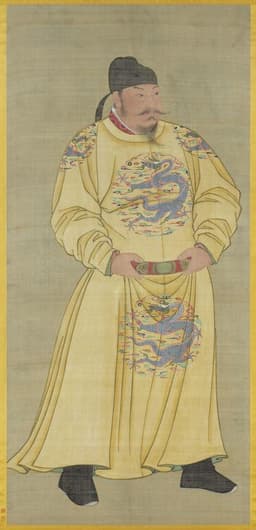
Emperor Taizong of Tang
Emperor · Medieval
78.9Total
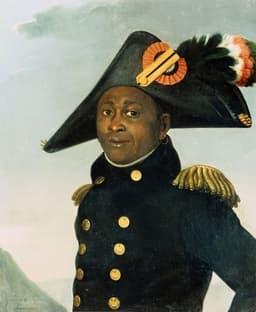
Toussaint Louverture
General · Modern
78.5Total
Basic Information
Born
598
1743
Died
649
1803
Era
Medieval
Modern
Nationality
China
Haiti
Occupation
Emperor
General
Civilization
Eastern
Western
Score Comparison
Military (10%)
77.5
85.0
Political (20%)
82.0
70.3
Influence (20%)
85.0
84.0
Legacy (20%)
71.4
82.0
Leadership (15%)
78.0
72.0
Strategy (15%)
80.6
72.0
TOTAL
78.9
78.5
Emperor Taizong of Tang — Complete Timeline
626 AD
Reign of ZhenguanReform
Emperor Taizong initiated the Zhenguan era, characterized by efficient governance, legal codification, and economic recovery. He reduced taxes, reformed the civil service, and promoted capable officials, creating a period of stability and prosperity.
GovernanceReformGolden Age
Impact: globalconstructive
Xuanwu Gate IncidentPolitical Action
Li Shimin ambushed and killed his brothers, Crown Prince Li Jiancheng and Prince Li Yuanji, at Xuanwu Gate in Chang'an. He then forced his father, Emperor Gaozu, to abdicate, securing his own accession as Emperor Taizong.
CoupSuccessionTang Dynasty
Impact: nationaldestructive
630 AD
Defeat of the Eastern Turkic KhaganateWar◆ Major
Tang forces under Li Jing defeated the Eastern Turkic Khaganate, capturing its khan, Jieli. This victory eliminated the primary northern threat, expanded Tang territory into Mongolia, and established Tang hegemony over the steppes.
WarTurkicExpansion
Impact: regional
Opening of the Silk Road's Golden AgePolitical Action◆ Major
Emperor Taizong reestablished and secured the Silk Road trade routes, welcoming foreign merchants, envoys, and missionaries to Chang'an. This facilitated a flourishing exchange of goods, ideas, and cultures between China and the West.
Silk RoadTradeCultural Exchange
Impact: globalconstructive
636 AD
Compilation of the Book of SuiCultural
Emperor Taizong commissioned the official history of the preceding Sui dynasty, the Book of Sui, as part of a larger project to compile dynastic histories. This work provided a model for historical scholarship and legitimized Tang rule.
HistoriographyCultureLegitimacy
Impact: nationalconstructive
Toussaint Louverture — Complete Timeline
1791 AD
Haitian Revolution LeadershipWar
Louverture joined the slave revolt in Saint-Domingue, quickly rising to leadership. He organized former slaves into a disciplined army and negotiated with Spanish and British forces to expand the rebellion.
Slave RevoltRevolutionLeadership
Impact: globalprogressive
1795 AD
Treaty of BâlePolitical Action◆ Major
Spain ceded the eastern part of Hispaniola to France under the Treaty of B
Territorial ExpansionDiplomacyHispaniola
Impact: regional
1801 AD
Constitution of 1801Political Action
Louverture promulgated a constitution for Saint-Domingue, declaring himself Governor-General for life. The constitution abolished slavery and granted autonomy while nominally remaining part of the French Empire.
ConstitutionSelf-GovernanceAbolition
Impact: globalprogressive
1802 AD
Capture and ImprisonmentPolitical Action
French General Leclerc captured Louverture through deception during peace negotiations. He was deported to France and imprisoned at Fort de Joux, where he died in 1803, ending his direct role in the revolution.
BetrayalImprisonmentFrench Repression
Impact: globaltragic
Expert Analysis
Origins
Emperor Taizong of Tang (Li Shimin) was born in 598 AD into the Tang imperial family, the second son of Emperor Gaozu. He grew up in a period of civil war and demonstrated military talent from a young age. Toussaint Louverture was born around 1743 on a plantation in Saint-Domingue (now Haiti) as a slave. He gained freedom around age 33 and became a prosperous planter. Both emerged from turbulent backgrounds, but Taizong had aristocratic privileges while Louverture rose from bondage.
Rise to Power
Taizong orchestrated the Xuanwu Gate Incident in 626 AD, killing his brothers and forcing his father to abdicate, securing the throne. This ruthless coup established his sole authority. Louverture gradually rose through the ranks of the Haitian Revolution, initially as a doctor and then as a military commander. By 1793, he aligned with the Spanish against the French, then switched to the French after they abolished slavery. He outmaneuvered rivals and became the de facto leader of Saint-Domingue by 1799. Taizong’s rise was swift and violent; Louverture’s was strategic and incremental.
Leadership & Governance
Taizong’s reign (626-649) is known as the "Reign of Zhenguan," a model of effective governance. He reduced taxes, reformed the legal code, and promoted Confucian scholarship. He expanded the empire, defeating the Eastern Turkic Khaganate in 630, and secured the Silk Road, fostering trade and cultural exchange. Louverture governed Saint-Domingue as a military governor, restoring order and the plantation economy under state control. He issued the Constitution of 1801, which declared him governor-for-life and maintained slavery abolition but required forced labor. Taizong’s governance was more stable and long-lasting; Louverture’s was revolutionary but controversial.
Triumph & Tragedy
Taizong’s greatest triumphs were the defeat of the Eastern Turks and the establishment of the Silk Road’s golden age, making Tang China a global power. His tragedy was the succession struggle after his death, but his legacy endured. Louverture’s triumph was leading the only successful slave revolt in history, creating the first Black-led republic. His tragedy was his capture by Napoleon’s forces in 1802 and imprisonment in France, where he died in 1803. Taizong died naturally in 649; Louverture’s end was a betrayal.
Character & Destiny
Taizong was pragmatic, ruthless, and wise, known for his willingness to listen to advisors. He embodied the Confucian ideal of a virtuous ruler, despite his violent path to power. His destiny was to build a dynasty that lasted nearly 300 years. Louverture was charismatic, brilliant, and autocratic. He believed in freedom and equality but also in authoritarian control. His destiny was to inspire revolutions worldwide, but his personal fate was imprisonment. Both were complex figures who combined idealism with hard pragmatism.
Legacy
Taizong is revered as one of China’s greatest emperors, his reign a golden age of prosperity and culture. The Tang dynasty’s influence on East Asia is immense. Louverture is a symbol of anti-colonial struggle and Black liberation. His legacy inspired later revolutions in Latin America and Africa. However, his posthumous reputation is debated due to his authoritarian measures. Taizong’s legacy is more uniformly positive in China; Louverture’s is more contested globally.
Conclusion
Emperor Taizong of Tang scores higher overall (78.7 vs 78.3) and achieved a more stable and enduring empire. Louverture’s revolution was historically transformative but incomplete. Taizong’s governance model and cultural impact are more extensive. However, Louverture’s fight for freedom against slavery is morally profound. In terms of historical influence, Taizong edges ahead, but Louverture’s symbolic power remains unmatched.
**Numerical Scores:**
- **Emperor Taizong of Tang:** 78.7 (Overall)
- **Toussaint Louverture:** 78.3 (Overall)
**Final Verdict:** Emperor Taizong of Tang wins by a narrow margin due to his more enduring state-building and cultural legacy.
Rankings
🥇
Emperor Taizong of TangLeader
Mil: 77.5Pol: 82.0Inf: 85.0
78.9
🥈
Toussaint Louverture
Mil: 85.0Pol: 70.3Inf: 84.0
78.5
+0.4 behind
How This Comparison Works
Algorithm
Each figure is scored on 6 dimensions (0—100 scale) based on structured historical data: Military (10%), Political (20%), Influence (20%), Legacy (20%), Leadership (15%), Strategy (15%). The weighted total produces the final ranking.
Data Sources
Scores are computed from structured sub-indicators in the database. Scale factors adjust for era (Ancient ×0.85, Modern ×1.0) and civilization size (Eastern ×1.05, Other ×0.80) to account for differences in population and military scale.
Maximum 3 Figures
Comparisons are limited to 2—3 figures to ensure readability and statistical meaningfulness.
Error Margins
±5 points per dimension — Sub-scores are derived from historical records with inherent uncertainty. Two figures within 5 points on a dimension should be considered roughly equivalent in that area.
Total Score Accuracy
±3 points overall — The weighted combination of 6 dimensions produces a total score with approximately ±3 points of uncertainty. Differences of less than 3 points are not statistically significant— the figures are effectively tied.
Known Limitations
- Historical records are incomplete and uneven across civilizations
- Figures from oral-tradition societies may be underrepresented
- Occupation labels can misclassify multi-role figures
- Scores measure capability and impact, not moral character
- Quantitative scoring is a comparison tool, not absolute truth
Capability Radar
Military (10%) — Battles & Warfare
Battles
95
85
Win Rate
95
80
Expansion
90
70
Political (20%) — Governance & Reform
Reform
95
85
Diplomacy
95
80
Economy
95
60
Influence (20%) — Cultural & Global Reach
Cultural
90
85
Global
90
85
Legacy (20%) — Historical Impact
Historical
95
95
Longevity
95
90
Leadership (15%) — Power & Stability
Tenure
85
65
Stability
95
55
Strategy (15%) — Tactics & Innovation
Strategy
95
85
Tactics
95
90
Reform
90
75
Similar Comparisons
Comments & Discussion
No comments yet. Be the first to share your thoughts!