Loading...
Emperor Taizong of Tang vs Tokugawa Ieyasu
Tokugawa Ieyasu leads by 2.9 pts · 2 figures compared
…
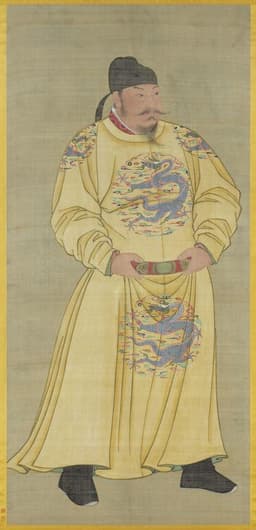
Emperor Taizong of Tang
Emperor · Medieval
78.9Total
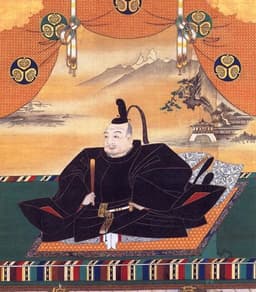
Tokugawa Ieyasu
General · Modern
81.8Total
Basic Information
Born
598
1543
Died
649
1616
Era
Medieval
Modern
Nationality
China
Japan
Occupation
Emperor
General
Civilization
Eastern
Eastern
Score Comparison
Military (10%)
77.5
78.0
Political (20%)
82.0
82.0
Influence (20%)
85.0
88.0
Legacy (20%)
71.4
75.0
Leadership (15%)
78.0
85.0
Strategy (15%)
80.6
82.0
TOTAL
78.9
81.8
Emperor Taizong of Tang — Complete Timeline
626 AD
Reign of ZhenguanReform
Emperor Taizong initiated the Zhenguan era, characterized by efficient governance, legal codification, and economic recovery. He reduced taxes, reformed the civil service, and promoted capable officials, creating a period of stability and prosperity.
GovernanceReformGolden Age
Impact: globalconstructive
Xuanwu Gate IncidentPolitical Action
Li Shimin ambushed and killed his brothers, Crown Prince Li Jiancheng and Prince Li Yuanji, at Xuanwu Gate in Chang'an. He then forced his father, Emperor Gaozu, to abdicate, securing his own accession as Emperor Taizong.
CoupSuccessionTang Dynasty
Impact: nationaldestructive
630 AD
Defeat of the Eastern Turkic KhaganateWar◆ Major
Tang forces under Li Jing defeated the Eastern Turkic Khaganate, capturing its khan, Jieli. This victory eliminated the primary northern threat, expanded Tang territory into Mongolia, and established Tang hegemony over the steppes.
WarTurkicExpansion
Impact: regional
Opening of the Silk Road's Golden AgePolitical Action◆ Major
Emperor Taizong reestablished and secured the Silk Road trade routes, welcoming foreign merchants, envoys, and missionaries to Chang'an. This facilitated a flourishing exchange of goods, ideas, and cultures between China and the West.
Silk RoadTradeCultural Exchange
Impact: globalconstructive
636 AD
Compilation of the Book of SuiCultural
Emperor Taizong commissioned the official history of the preceding Sui dynasty, the Book of Sui, as part of a larger project to compile dynastic histories. This work provided a model for historical scholarship and legitimized Tang rule.
HistoriographyCultureLegitimacy
Impact: nationalconstructive
Tokugawa Ieyasu — Complete Timeline
1600 AD
Battle of SekigaharaWar
Tokugawa Ieyasu led the Eastern Army to victory over Ishida Mitsunari's Western Army at Sekigahara. This decisive battle ended the Sengoku period and established Ieyasu as the supreme military ruler of Japan, paving the way for the Tokugawa shogunate.
Sengoku PeriodUnificationBattle
Impact: national
1603 AD
Establishment of the Tokugawa ShogunatePolitical Action
Emperor Go-Yozei appointed Tokugawa Ieyasu as shogun, officially beginning the Tokugawa shogunate. Ieyasu established his government in Edo (modern Tokyo), centralizing military and political power under his family's control.
ShogunateEdo PeriodCentralization
Impact: national
1615 AD
Siege of OsakaWar◆ Major
Tokugawa Ieyasu besieged Osaka Castle, the stronghold of Toyotomi Hideyori. The castle fell, and Hideyori committed suicide. This campaign eliminated the last major opposition to Tokugawa rule, solidifying the shogunate's control over Japan.
Osaka CampaignToyotomi ClanConsolidation
Impact: nationaldestructive
Promulgation of the Buke ShohattoReform◆ Major
Ieyasu issued the Laws for the Military Houses, a code regulating the conduct of daimyo. It restricted castle construction, required alternate attendance in Edo, and prohibited alliances without shogunal permission. This law helped control the feudal lords.
Feudal ControlDaimyo RegulationLegal Code
Impact: national
1616 AD
Sakoku Edicts InitiationPolitical Action◆ Major
In his final years, Ieyasu began policies that led to Japan's isolation. He restricted foreign trade to specific ports and expelled Christian missionaries. These measures, expanded by successors, resulted in the sakoku policy that isolated Japan for over 200 years.
IsolationismForeign PolicyChristianity
Impact: national
Expert Analysis
Origins
Tokugawa Ieyasu (1543–1616) was born into a minor samurai family in Mikawa Province, during Japan's chaotic Sengoku period. His early life was marked by hostage exchanges and shifting alliances, which taught him patience and strategic cunning. In contrast, Emperor Taizong of Tang (598–649), born Li Shimin, was the second son of Li Yuan, a Sui general who founded the Tang dynasty. Taizong grew up in a military household and participated in the campaigns that overthrew the Sui, showing early military brilliance. Both men emerged from turbulent backgrounds, but Ieyasu's rise was slower and more precarious, shaped by survival, while Taizong's was accelerated by his family's rebellion.
Rise to Power
Ieyasu's path to power was a masterclass in patience. He allied with Oda Nobunaga and later Toyotomi Hideyoshi, skillfully navigating their dominance. After Hideyoshi's death, Ieyasu consolidated forces and defeated rivals at the Battle of Sekigahara (1600), a decisive turning point. He then established the Tokugawa shogunate in 1603, centralizing power. Taizong's rise was more dramatic: he orchestrated the Xuanwu Gate Incident (626), killing his brothers and forcing his father to abdicate. This ruthless act secured his position as emperor. While Ieyasu's rise was gradual and coalition-based, Taizong's was swift and violent. Ieyasu's patience contrasts with Taizong's ambition, but both achieved supreme power.
Leadership & Governance
Ieyasu's governance emphasized stability and control. He implemented the Buke Shohatto (Laws for the Military Houses) to regulate daimyo, and the Sakoku edicts restricted foreign influence, ensuring domestic peace. His system lasted 250 years. Taizong's Reign of Zhenguan (627–649) is considered a golden age of Chinese governance. He reformed the bureaucracy, promoted meritocracy, and expanded the Silk Road, fostering cultural and economic exchange. Taizong's leadership was more open and dynamic, while Ieyasu's was isolationist but effective. In terms of governance scores, Ieyasu's institutional legacy (75) is slightly higher than Taizong's (71), but Taizong's cultural impact is broader.
Triumph & Tragedy
Ieyasu's greatest triumph was the Siege of Osaka (1614–1615), which destroyed the Toyotomi clan and solidified Tokugawa rule. His tragedy was the eventual decline of the shogunate due to isolation, though he didn't live to see it. Taizong's triumph was the defeat of the Eastern Turkic Khaganate (630), securing China's northern border and opening the Silk Road. His tragedy was the succession crisis and his early death at 50, leaving a mixed legacy. Both men achieved monumental victories, but Ieyasu's victory was more personal and internal, while Taizong's was imperial and external.
Character & Destiny
Ieyasu was patient, calculating, and pragmatic. His scores reflect high intelligence (88) and diplomacy (85), but lower military (78) compared to Taizong. He was known as the 'old badger' for his cunning. Taizong was bold, charismatic, and ruthless, with high military (78) and intelligence (85) but lower diplomacy (82). His destiny was to restore China's glory. Ieyasu's destiny was to end Japan's civil wars. Both were shaped by their environments: Ieyasu's cautiousness stemmed from surviving the Sengoku, while Taizong's audacity came from his noble birth and early success.
Legacy
Ieyasu's legacy is the Edo period, a 250-year peace that shaped modern Japan. His institutional reforms created a stable, isolated society. Taizong's legacy is the Tang dynasty's golden age, influencing Chinese governance and the Silk Road. Ieyasu's legacy is more tangible in Japan's long-term stability, while Taizong's is more global. In terms of overall impact, Ieyasu's higher total score (82 vs 79) reflects his profound influence on Japan's trajectory. He is often ranked as one of Japan's greatest unifiers, while Taizong is a model Chinese emperor.
Conclusion
Tokugawa Ieyasu narrowly edges out Emperor Taizong of Tang with a total score of 82 to 79. Ieyasu's patience, strategic governance, and enduring peace create a more lasting national impact, while Taizong's brilliance was more immediate and expansive. Ieyasu wins by 2.9 points, but Taizong's cultural and military achievements remain legendary. Both are titans of history, but Ieyasu's legacy of stability gives him the edge.
Rankings
🥇
Tokugawa IeyasuLeader
Mil: 78.0Pol: 82.0Inf: 88.0
81.8
🥈
Emperor Taizong of Tang
Mil: 77.5Pol: 82.0Inf: 85.0
78.9
+2.9 behind
How This Comparison Works
Algorithm
Each figure is scored on 6 dimensions (0—100 scale) based on structured historical data: Military (10%), Political (20%), Influence (20%), Legacy (20%), Leadership (15%), Strategy (15%). The weighted total produces the final ranking.
Data Sources
Scores are computed from structured sub-indicators in the database. Scale factors adjust for era (Ancient ×0.85, Modern ×1.0) and civilization size (Eastern ×1.05, Other ×0.80) to account for differences in population and military scale.
Maximum 3 Figures
Comparisons are limited to 2—3 figures to ensure readability and statistical meaningfulness.
Error Margins
±5 points per dimension — Sub-scores are derived from historical records with inherent uncertainty. Two figures within 5 points on a dimension should be considered roughly equivalent in that area.
Total Score Accuracy
±3 points overall — The weighted combination of 6 dimensions produces a total score with approximately ±3 points of uncertainty. Differences of less than 3 points are not statistically significant— the figures are effectively tied.
Known Limitations
- Historical records are incomplete and uneven across civilizations
- Figures from oral-tradition societies may be underrepresented
- Occupation labels can misclassify multi-role figures
- Scores measure capability and impact, not moral character
- Quantitative scoring is a comparison tool, not absolute truth
Capability Radar
Military (10%) — Battles & Warfare
Battles
95
85
Win Rate
95
90
Expansion
90
75
Political (20%) — Governance & Reform
Reform
95
90
Diplomacy
95
85
Economy
95
88
Influence (20%) — Cultural & Global Reach
Cultural
90
85
Global
90
70
Legacy (20%) — Historical Impact
Historical
95
90
Longevity
95
95
Leadership (15%) — Power & Stability
Tenure
85
95
Stability
95
95
Strategy (15%) — Tactics & Innovation
Strategy
95
92
Tactics
95
88
Reform
90
80
Similar Comparisons
Comments & Discussion
No comments yet. Be the first to share your thoughts!