Loading...
Emperor Taizong of Tang vs Theodosius I
Emperor Taizong of Tang leads by 2.9 pts · 2 figures compared
…
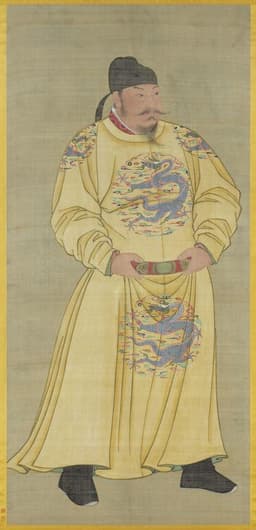
Emperor Taizong of Tang
Emperor · Medieval
78.9Total

Theodosius I
Emperor · Ancient
76.0Total
Basic Information
Born
598
347
Died
649
395
Era
Medieval
Ancient
Nationality
China
Roman Empire
Occupation
Emperor
Emperor
Civilization
Eastern
Western
Score Comparison
Military (10%)
77.5
72.5
Political (20%)
82.0
65.0
Influence (20%)
85.0
85.0
Legacy (20%)
71.4
90.0
Leadership (15%)
78.0
68.0
Strategy (15%)
80.6
50.0
TOTAL
78.9
76.0
Emperor Taizong of Tang — Complete Timeline
626 AD
Reign of ZhenguanReform
Emperor Taizong initiated the Zhenguan era, characterized by efficient governance, legal codification, and economic recovery. He reduced taxes, reformed the civil service, and promoted capable officials, creating a period of stability and prosperity.
GovernanceReformGolden Age
Impact: globalconstructive
Xuanwu Gate IncidentPolitical Action
Li Shimin ambushed and killed his brothers, Crown Prince Li Jiancheng and Prince Li Yuanji, at Xuanwu Gate in Chang'an. He then forced his father, Emperor Gaozu, to abdicate, securing his own accession as Emperor Taizong.
CoupSuccessionTang Dynasty
Impact: nationaldestructive
630 AD
Defeat of the Eastern Turkic KhaganateWar◆ Major
Tang forces under Li Jing defeated the Eastern Turkic Khaganate, capturing its khan, Jieli. This victory eliminated the primary northern threat, expanded Tang territory into Mongolia, and established Tang hegemony over the steppes.
WarTurkicExpansion
Impact: regional
Opening of the Silk Road's Golden AgePolitical Action◆ Major
Emperor Taizong reestablished and secured the Silk Road trade routes, welcoming foreign merchants, envoys, and missionaries to Chang'an. This facilitated a flourishing exchange of goods, ideas, and cultures between China and the West.
Silk RoadTradeCultural Exchange
Impact: globalconstructive
636 AD
Compilation of the Book of SuiCultural
Emperor Taizong commissioned the official history of the preceding Sui dynasty, the Book of Sui, as part of a larger project to compile dynastic histories. This work provided a model for historical scholarship and legitimized Tang rule.
HistoriographyCultureLegitimacy
Impact: nationalconstructive
Theodosius I — Complete Timeline
380 AD
Edict of ThessalonicaPolitical Action
Theodosius I issued the Edict of Thessalonica, declaring Nicene Christianity the official state religion of the Roman Empire. All other forms of Christianity were deemed heretical, and pagan practices were increasingly suppressed.
ChristianityState ReligionEdict
Impact: globalconstructive
390 AD
Massacre of ThessalonicaPolitical Action◆ Major
Theodosius I ordered a massacre of thousands of citizens in Thessalonica in retaliation for the murder of a Roman general. The massacre led to his excommunication by Bishop Ambrose of Milan, and he later performed public penance.
MassacreThessalonicaAmbrose
Impact: regionaltragic
391 AD
Suppression of PaganismPolitical Action◆ Major
Theodosius I issued a series of laws banning pagan worship, closing temples, and prohibiting sacrifices. The Olympic Games were abolished, and the Serapeum in Alexandria was destroyed. These actions accelerated the decline of paganism in the empire.
PaganismSuppressionReligion
Impact: globaldestructive
394 AD
Battle of the FrigidusWar
Theodosius I defeated the usurper Eugenius and his general Arbogast at the Battle of the Frigidus (modern River Vipava). The victory reunited the Roman Empire under a single ruler for the last time before its permanent division.
Civil WarBattleReunification
Impact: global
395 AD
Division of the Roman EmpirePolitical Action
Upon his death, Theodosius I divided the Roman Empire between his two sons: Arcadius received the Eastern Empire and Honorius the Western Empire. This division became permanent, leading to the separate histories of the Byzantine and Western Roman Empires.
DivisionSuccessionEast-West
Impact: global
Expert Analysis
Origins
Emperor Taizong of Tang (Li Shimin) was born in 598 into the Tang dynasty's founding family. His father, Li Yuan, was a general who revolted against the Sui dynasty, with Li Shimin playing a crucial role in the rebellion. In contrast, Theodosius I was born in 347 in Hispania to a military family. His father, Theodosius the Elder, was a successful general, but was executed under Emperor Valentinian I. Theodosius's early career was military, serving in Moesia and Britain. Both came from privileged backgrounds, but Taizong's path to power was bloodier.
Rise to Power
Taizong's rise was marked by the Xuanwu Gate Incident in 626, where he ambushed and killed his brothers, the crown prince and another prince, then forced his father to abdicate. This fratricide secured his throne. Theodosius's rise was more conventional: after his father's execution, he retired, but was summoned by Emperor Gratian to become co-emperor in the East in 379 following the Battle of Adrianople. He was elevated to Augustus without violent usurpation, though he later faced usurpers.
Leadership & Governance
Taizong ruled through the "Reign of Zhenguan" (627-649), a model of Confucian governance. He emphasized meritocracy, reformed the civil service, lowered taxes, and promoted trade along the Silk Road. His military campaigns defeated the Eastern Turkic Khaganate in 630, securing China's borders. Theodosius I strengthened the empire by making Christianity the state religion via the Edict of Thessalonica (380), which suppressed paganism and Arianism. He also faced the Gothic problem, settling them as foederati. However, his Massacre of Thessalonica (390) showed a brutal side, leading to his penance by Ambrose. Taizong's governance was more stable and prosperous, while Theodosius's religious policies had long-term divisive effects.
Triumph & Tragedy
Taizong's triumphs include the defeat of the Eastern Turks, expansion into Central Asia, and the Silk Road's golden age. He also compiled the Book of Sui, promoting historiography. His tragedy was the Xuanwu Gate Incident, which haunted him. Theodosius's triumph was the Battle of the Frigidus (394), where he defeated the usurper Eugenius, reuniting the empire. His tragedy was the division of the Roman Empire after his death in 395, which led to the permanent split and eventual fall of the West. Taizong's achievements were more enduring, as Tang influence lasted centuries.
Character & Destiny
Taizong was ruthless in ambition but wise in governance. He famously said, "The people are the foundation of the state." His destiny was to create a golden age. Theodosius was devoutly Christian, sometimes intolerant, and his destiny was to Christianize Rome but also accelerate its division. Taizong's character was more multifaceted, blending warrior and philosopher.
Legacy
Taizong's legacy is the Tang dynasty's golden age, influencing East Asian culture, politics, and trade. The Zhenguan era is a benchmark for good governance. Theodosius's legacy is Christianity's dominance in Europe and the division of the empire. His policies shaped medieval Europe but also contributed to the West's collapse. Taizong's legacy is more positive and lasting.
Conclusion
Emperor Taizong of Tang scores higher overall (78 vs 72) with superior military, political, and cultural achievements. Theodosius I was pivotal in religious history but his empire fragmented. Taizong's reign was a model of stability and prosperity, while Theodosius's was marked by religious strife and division. Thus, Taizong is the more effective emperor.
**Scores:**
- Emperor Taizong of Tang: Overall 78
- Theodosius I: Overall 72
- Score Gap: 2.9, Higher: Emperor Taizong of Tang
Rankings
🥇
Emperor Taizong of TangLeader
Mil: 77.5Pol: 82.0Inf: 85.0
78.9
🥈
Theodosius I
Mil: 72.5Pol: 65.0Inf: 85.0
76.0
+2.9 behind
How This Comparison Works
Algorithm
Each figure is scored on 6 dimensions (0—100 scale) based on structured historical data: Military (10%), Political (20%), Influence (20%), Legacy (20%), Leadership (15%), Strategy (15%). The weighted total produces the final ranking.
Data Sources
Scores are computed from structured sub-indicators in the database. Scale factors adjust for era (Ancient ×0.85, Modern ×1.0) and civilization size (Eastern ×1.05, Other ×0.80) to account for differences in population and military scale.
Maximum 3 Figures
Comparisons are limited to 2—3 figures to ensure readability and statistical meaningfulness.
Error Margins
±5 points per dimension — Sub-scores are derived from historical records with inherent uncertainty. Two figures within 5 points on a dimension should be considered roughly equivalent in that area.
Total Score Accuracy
±3 points overall — The weighted combination of 6 dimensions produces a total score with approximately ±3 points of uncertainty. Differences of less than 3 points are not statistically significant— the figures are effectively tied.
Known Limitations
- Historical records are incomplete and uneven across civilizations
- Figures from oral-tradition societies may be underrepresented
- Occupation labels can misclassify multi-role figures
- Scores measure capability and impact, not moral character
- Quantitative scoring is a comparison tool, not absolute truth
Capability Radar
Military (10%) — Battles & Warfare
Battles
95
65
Win Rate
95
60
Expansion
90
45
Political (20%) — Governance & Reform
Reform
95
85
Diplomacy
95
75
Economy
95
60
Influence (20%) — Cultural & Global Reach
Cultural
90
90
Global
90
90
Legacy (20%) — Historical Impact
Historical
95
95
Longevity
95
95
Leadership (15%) — Power & Stability
Tenure
85
70
Stability
95
55
Strategy (15%) — Tactics & Innovation
Strategy
95
60
Tactics
95
55
Reform
90
50
Similar Comparisons
Comments & Discussion
No comments yet. Be the first to share your thoughts!