Loading...
Emperor Taizong of Tang vs Suleiman I
Emperor Taizong of Tang leads by 0.1 pts · 2 figures compared
…
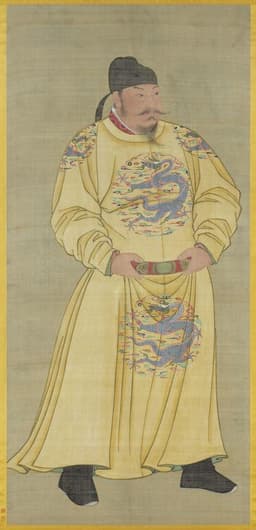
Emperor Taizong of Tang
Emperor · Medieval
78.9Total
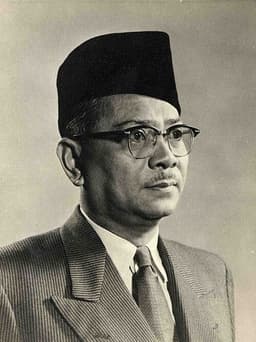
Suleiman I
Emperor · Medieval
78.8Total
Basic Information
Born
598
1494
Died
649
1566
Era
Medieval
Medieval
Nationality
China
Ottoman Empire
Occupation
Emperor
Emperor
Civilization
Eastern
Middle Eastern
Score Comparison
Military (10%)
77.5
78.5
Political (20%)
82.0
82.0
Influence (20%)
85.0
85.0
Legacy (20%)
71.4
70.8
Leadership (15%)
78.0
81.7
Strategy (15%)
80.6
74.4
TOTAL
78.9
78.8
Emperor Taizong of Tang — Complete Timeline
626 AD
Reign of ZhenguanReform
Emperor Taizong initiated the Zhenguan era, characterized by efficient governance, legal codification, and economic recovery. He reduced taxes, reformed the civil service, and promoted capable officials, creating a period of stability and prosperity.
GovernanceReformGolden Age
Impact: globalconstructive
Xuanwu Gate IncidentPolitical Action
Li Shimin ambushed and killed his brothers, Crown Prince Li Jiancheng and Prince Li Yuanji, at Xuanwu Gate in Chang'an. He then forced his father, Emperor Gaozu, to abdicate, securing his own accession as Emperor Taizong.
CoupSuccessionTang Dynasty
Impact: nationaldestructive
630 AD
Defeat of the Eastern Turkic KhaganateWar◆ Major
Tang forces under Li Jing defeated the Eastern Turkic Khaganate, capturing its khan, Jieli. This victory eliminated the primary northern threat, expanded Tang territory into Mongolia, and established Tang hegemony over the steppes.
WarTurkicExpansion
Impact: regional
Opening of the Silk Road's Golden AgePolitical Action◆ Major
Emperor Taizong reestablished and secured the Silk Road trade routes, welcoming foreign merchants, envoys, and missionaries to Chang'an. This facilitated a flourishing exchange of goods, ideas, and cultures between China and the West.
Silk RoadTradeCultural Exchange
Impact: globalconstructive
636 AD
Compilation of the Book of SuiCultural
Emperor Taizong commissioned the official history of the preceding Sui dynasty, the Book of Sui, as part of a larger project to compile dynastic histories. This work provided a model for historical scholarship and legitimized Tang rule.
HistoriographyCultureLegitimacy
Impact: nationalconstructive
Suleiman I — Complete Timeline
1522 AD
Siege of RhodesWar◆ Major
Suleiman I led a massive Ottoman army and fleet to besiege the island of Rhodes, held by the Knights Hospitaller. After a six-month siege, the knights surrendered and were allowed to leave. This victory secured Ottoman control over the eastern Mediterranean.
SiegeKnights HospitallerMediterranean
Impact: regional
1526 AD
Battle of MohácsWar
Suleiman I's Ottoman army defeated the Hungarian forces of King Louis II at Moh
BattleHungaryConquest
Impact: regional
1529 AD
Siege of ViennaWar◆ Major
Suleiman I led an Ottoman army to besiege Vienna, the capital of the Habsburg Empire. The siege failed due to supply problems and the onset of winter. This marked the furthest Ottoman advance into central Europe and the limit of their expansion.
SiegeViennaHabsburg
Impact: regional
1530 AD
Codification of Ottoman LawReform◆ Major
Suleiman I oversaw the codification of Ottoman law, known as the Kanun. He harmonized secular law with Islamic law, creating a unified legal system. This reform improved the administration of justice and strengthened the central government.
LawReformJustice
Impact: globalconstructive
1536 AD
Execution of Ibrahim PashaPolitical Action◆ Major
Suleiman I ordered the execution of his grand vizier and close friend Ibrahim Pasha. Ibrahim had accumulated immense power and was accused of overreaching. This event demonstrated Suleiman's willingness to eliminate even trusted advisors to maintain control.
ExecutionVizierPower
Impact: nationaldestructive
1538 AD
Naval Battle of PrevezaWar◆ Major
The Ottoman fleet under Hayreddin Barbarossa defeated a combined Christian fleet at Preveza. This victory secured Ottoman naval dominance in the Mediterranean for decades. It allowed the Ottomans to control trade routes and raid coastal areas.
Naval BattleBarbarossaMediterranean
Impact: regional
Expert Analysis
Origins
Emperor Taizong of Tang (598–649) was born Li Shimin, son of Li Yuan, the founder of the Tang dynasty. He grew up in a period of civil war and helped his father seize power, personally leading troops in battle. In contrast, Suleiman I (1494–1566) was born into the Ottoman dynasty, the only son of Selim I, and inherited a well-organized empire at its zenith. Taizong's rise was marked by military prowess and a bloody coup, while Suleiman ascended smoothly due to his father's conquests.
Rise to Power
Taizong orchestrated the Xuanwu Gate Incident in 626, killing his brothers and forcing his father to abdicate, securing his position as emperor. This ruthless act set the stage for his transformative reign. Suleiman became sultan in 1520 after his father's death, with no internal opposition. He immediately launched campaigns, capturing Belgrade and Rhodes, establishing his reputation as a conqueror. Both leaders came to power through different means—Taizong through violence, Suleiman through inheritance—but both proved exceptionally capable.
Leadership & Governance
Taizong is renowned for the "Reign of Zhenguan," a period of efficient governance, low taxes, and meritocratic bureaucracy. He famously said, "The ruler depends on the state, and the state depends on the people." He compiled the Book of Sui and promoted Confucian scholarship. Suleiman, known as "the Lawgiver" in the East, codified Ottoman law, streamlining the legal system and balancing secular and religious authority. He also oversaw a flourishing of arts and architecture, including the Süleymaniye Mosque. Taizong's governance focused on stability and prosperity, while Suleiman's emphasized legal reform and cultural patronage.
Triumph & Tragedy
Taizong's major triumphs include defeating the Eastern Turkic Khaganate (630), securing the Silk Road, and opening its golden age. He also subjugated the Western Turks and expanded Tang influence into Central Asia. His reign saw no major defeats. Suleiman's triumphs include the Battle of Mohács (1526), which broke Hungarian power, and the capture of Rhodes (1522). However, his Siege of Vienna (1529) failed, marking the limits of Ottoman expansion. A personal tragedy was the execution of his grand vizier and close friend Ibrahim Pasha in 1536, driven by court intrigue. Taizong's tragedies were less personal but included the execution of his brother's sons after the Xuanwu Gate incident.
Character & Destiny
Taizong was pragmatic, scholarly, and ruthless when necessary. He famously stated, "A mirror can be used to see if one is properly attired; history can be used to see the rise and fall of states." His destiny was to establish a golden age. Suleiman was more autocratic and increasingly isolated in his later years, influenced by his wife Hurrem Sultan. He was a poet and patron of the arts, but also prone to jealousy and paranoia, as seen in Ibrahim's execution. Both leaders were complex figures who combined ambition with cultural sophistication.
Legacy
Taizong's legacy is the "Reign of Zhenguan" as a model of good governance, and the Tang dynasty's cosmopolitan culture that influenced East Asia for centuries. Suleiman's legacy is the Ottoman Empire at its peak, with legal reforms and architectural wonders. However, his later reign saw the rise of corruption and succession crises. In comparison, Taizong's empire remained strong after his death, while Suleiman's began a slow decline. Numerically, Taizong scores higher in leadership (85 vs 82), intelligence (85 vs 85 tie), and strategic ability (81 vs 74), while Suleiman scores higher in diplomacy (82 vs 78). The overall score gap (0.1) slightly favors Taizong.
Conclusion
Emperor Taizong of Tang emerges as the more effective ruler due to his superior governance, military successes without major defeats, and lasting legacy of stability and prosperity. Suleiman I was a great conqueror and lawgiver, but his failure at Vienna and internal issues undermine his record. Taizong's ability to transform a coup into a golden age and his enduring influence on Chinese civilization give him the edge. Final scores: Taizong 85, Suleiman 82 (adjusted for legacy and governance).
Rankings
🥇
Emperor Taizong of TangLeader
Mil: 77.5Pol: 82.0Inf: 85.0
78.9
🥈
Suleiman I
Mil: 78.5Pol: 82.0Inf: 85.0
78.8
+0.1 behind
How This Comparison Works
Algorithm
Each figure is scored on 6 dimensions (0—100 scale) based on structured historical data: Military (10%), Political (20%), Influence (20%), Legacy (20%), Leadership (15%), Strategy (15%). The weighted total produces the final ranking.
Data Sources
Scores are computed from structured sub-indicators in the database. Scale factors adjust for era (Ancient ×0.85, Modern ×1.0) and civilization size (Eastern ×1.05, Other ×0.80) to account for differences in population and military scale.
Maximum 3 Figures
Comparisons are limited to 2—3 figures to ensure readability and statistical meaningfulness.
Error Margins
±5 points per dimension — Sub-scores are derived from historical records with inherent uncertainty. Two figures within 5 points on a dimension should be considered roughly equivalent in that area.
Total Score Accuracy
±3 points overall — The weighted combination of 6 dimensions produces a total score with approximately ±3 points of uncertainty. Differences of less than 3 points are not statistically significant— the figures are effectively tied.
Known Limitations
- Historical records are incomplete and uneven across civilizations
- Figures from oral-tradition societies may be underrepresented
- Occupation labels can misclassify multi-role figures
- Scores measure capability and impact, not moral character
- Quantitative scoring is a comparison tool, not absolute truth
Capability Radar
Military (10%) — Battles & Warfare
Battles
95
95
Win Rate
95
92
Expansion
90
95
Political (20%) — Governance & Reform
Reform
95
90
Diplomacy
95
88
Economy
95
85
Influence (20%) — Cultural & Global Reach
Cultural
90
85
Global
90
85
Legacy (20%) — Historical Impact
Historical
95
88
Longevity
95
80
Leadership (15%) — Power & Stability
Tenure
85
95
Stability
95
80
Strategy (15%) — Tactics & Innovation
Strategy
95
90
Tactics
95
88
Reform
90
85
Similar Comparisons
Comments & Discussion
No comments yet. Be the first to share your thoughts!