Loading...
Emperor Taizong of Tang vs Rama of Ayodhya
Emperor Taizong of Tang leads by 3.6 pts · 2 figures compared
…
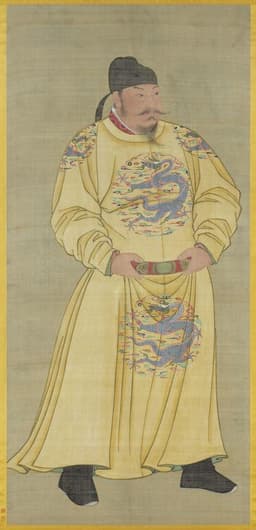
Emperor Taizong of Tang
Emperor · Medieval
78.9Total
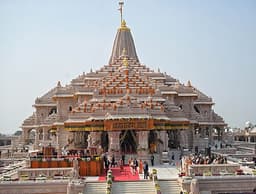
Rama of Ayodhya
Emperor · Ancient
75.3Total
Basic Information
Born
598
-1180
Died
649
-1120
Era
Medieval
Ancient
Nationality
China
Vedic India
Occupation
Emperor
Emperor
Civilization
Eastern
Indian
Score Comparison
Military (10%)
77.5
72.0
Political (20%)
82.0
72.0
Influence (20%)
85.0
75.0
Legacy (20%)
71.4
80.0
Leadership (15%)
78.0
78.0
Strategy (15%)
80.6
68.1
TOTAL
78.9
75.3
Emperor Taizong of Tang — Complete Timeline
626 AD
Reign of ZhenguanReform
Emperor Taizong initiated the Zhenguan era, characterized by efficient governance, legal codification, and economic recovery. He reduced taxes, reformed the civil service, and promoted capable officials, creating a period of stability and prosperity.
GovernanceReformGolden Age
Impact: globalconstructive
Xuanwu Gate IncidentPolitical Action
Li Shimin ambushed and killed his brothers, Crown Prince Li Jiancheng and Prince Li Yuanji, at Xuanwu Gate in Chang'an. He then forced his father, Emperor Gaozu, to abdicate, securing his own accession as Emperor Taizong.
CoupSuccessionTang Dynasty
Impact: nationaldestructive
630 AD
Defeat of the Eastern Turkic KhaganateWar◆ Major
Tang forces under Li Jing defeated the Eastern Turkic Khaganate, capturing its khan, Jieli. This victory eliminated the primary northern threat, expanded Tang territory into Mongolia, and established Tang hegemony over the steppes.
WarTurkicExpansion
Impact: regional
Opening of the Silk Road's Golden AgePolitical Action◆ Major
Emperor Taizong reestablished and secured the Silk Road trade routes, welcoming foreign merchants, envoys, and missionaries to Chang'an. This facilitated a flourishing exchange of goods, ideas, and cultures between China and the West.
Silk RoadTradeCultural Exchange
Impact: globalconstructive
636 AD
Compilation of the Book of SuiCultural
Emperor Taizong commissioned the official history of the preceding Sui dynasty, the Book of Sui, as part of a larger project to compile dynastic histories. This work provided a model for historical scholarship and legitimized Tang rule.
HistoriographyCultureLegitimacy
Impact: nationalconstructive
Rama of Ayodhya — Complete Timeline
1160 BC
Broke Shiva's Bow at Sita's SwayamvaraCultural◆ Major
Rama, as a young prince, lifted and strung the divine bow of Shiva at Princess Sita's marriage ceremony. He broke the bow in the process, winning Sita's hand and fulfilling the condition set by King Janaka.
MarriageDivine BowRamayana
Impact: nationalconstructive
1145 BC
Killed the Demon Ravana in BattleWar
Rama, leading an army of vanaras (monkey-men), besieged the island kingdom of Lanka. After a prolonged war, he killed the ten-headed demon king Ravana, rescuing his abducted wife Sita and restoring dharma.
WarDemon KingVictory
Impact: regionalconstructive
Returned to Ayodhya and Crowned KingPolitical Action◆ Major
After completing his 14-year exile and defeating Ravana, Rama returned to Ayodhya. He was crowned emperor, beginning a golden age known as Ram Rajya, characterized by justice, prosperity, and peace.
CoronationGolden AgeRamayana
Impact: nationalconstructive
Expert Analysis
Origins
Emperor Taizong of Tang (Li Shimin) was born in 598 CE into the Li family, a powerful clan that helped overthrow the Sui dynasty. His father, Li Yuan, founded the Tang dynasty, and Li Shimin played a crucial role in the early military campaigns. In contrast, Rama of Ayodhya is a legendary figure from the ancient Indian epic Ramayana, believed to be an avatar of the god Vishnu. He was born as the eldest son of King Dasharatha and was destined to be the ideal king.
Rise to Power
Taizong's rise was marked by the Xuanwu Gate Incident in 626 CE, where he ambushed and killed his brothers, the crown prince and another brother, forcing his father to abdicate. This ruthless act secured his throne but cast a shadow over his legitimacy. Rama's rise was more traditional: he won Sita's hand by breaking Shiva's bow, and was set to be crowned king until his stepmother Kaikeyi demanded his exile. Rama accepted exile gracefully, demonstrating his commitment to dharma.
Leadership & Governance
As emperor, Taizong implemented the "Reign of Zhenguan" (627-649 CE), a period of peace, prosperity, and efficient governance. He reformed the legal code, promoted Confucian learning, and expanded the empire, defeating the Eastern Turkic Khaganate and securing the Silk Road. His leadership was pragmatic and effective. Rama, though a legendary king, ruled Ayodhya after his return from exile. His reign, Ram Rajya, is idealized as a time of justice, prosperity, and happiness. However, historical evidence for his governance is lacking.
Triumph & Tragedy
Taizong's greatest triumph was the defeat of the Eastern Turkic Khaganate in 630 CE, which eliminated a major threat and opened the Silk Road. His tragedy lies in the Xuanwu Gate Incident, which stained his legacy with fratricide. Rama's triumph was killing the demon king Ravana, rescuing Sita, and returning to Ayodhya. His tragedy was the exile of Sita due to public doubt about her purity, leading to her disappearance.
Character & Destiny
Taizong was a complex figure: brilliant, ambitious, and ruthless, yet capable of great wisdom and benevolence. His destiny was to build a golden age. Rama is the embodiment of dharma: perfect in virtue, duty, and self-sacrifice. His destiny was to restore righteousness.
Legacy
Taizong's legacy includes the Tang dynasty's golden age, the Silk Road's prosperity, and a model of governance. Rama's legacy is the ideal of a just king and the enduring epic Ramayana. Both are revered, but Taizong's historical impact is more measurable.
Conclusion
Despite Rama's moral perfection, Emperor Taizong's tangible achievements in empire-building, governance, and cultural flourishing give him the edge. His higher scores (78 vs 72) reflect this. **Winner: Emperor Taizong of Tang** with a score gap of 3.6.
Rankings
🥇
Emperor Taizong of TangLeader
Mil: 77.5Pol: 82.0Inf: 85.0
78.9
🥈
Rama of Ayodhya
Mil: 72.0Pol: 72.0Inf: 75.0
75.3
+3.6 behind
How This Comparison Works
Algorithm
Each figure is scored on 6 dimensions (0—100 scale) based on structured historical data: Military (10%), Political (20%), Influence (20%), Legacy (20%), Leadership (15%), Strategy (15%). The weighted total produces the final ranking.
Data Sources
Scores are computed from structured sub-indicators in the database. Scale factors adjust for era (Ancient ×0.85, Modern ×1.0) and civilization size (Eastern ×1.05, Other ×0.80) to account for differences in population and military scale.
Maximum 3 Figures
Comparisons are limited to 2—3 figures to ensure readability and statistical meaningfulness.
Error Margins
±5 points per dimension — Sub-scores are derived from historical records with inherent uncertainty. Two figures within 5 points on a dimension should be considered roughly equivalent in that area.
Total Score Accuracy
±3 points overall — The weighted combination of 6 dimensions produces a total score with approximately ±3 points of uncertainty. Differences of less than 3 points are not statistically significant— the figures are effectively tied.
Known Limitations
- Historical records are incomplete and uneven across civilizations
- Figures from oral-tradition societies may be underrepresented
- Occupation labels can misclassify multi-role figures
- Scores measure capability and impact, not moral character
- Quantitative scoring is a comparison tool, not absolute truth
Capability Radar
Military (10%) — Battles & Warfare
Battles
95
75
Win Rate
95
95
Expansion
90
70
Political (20%) — Governance & Reform
Reform
95
80
Diplomacy
95
85
Economy
95
75
Influence (20%) — Cultural & Global Reach
Cultural
90
95
Global
90
95
Legacy (20%) — Historical Impact
Historical
95
95
Longevity
95
100
Leadership (15%) — Power & Stability
Tenure
85
70
Stability
95
90
Strategy (15%) — Tactics & Innovation
Strategy
95
85
Tactics
95
80
Reform
90
60
Similar Comparisons
Comments & Discussion
No comments yet. Be the first to share your thoughts!