Loading...
Emperor Taizong of Tang vs Napoleon Bonaparte
Emperor Taizong of Tang leads by 8.0 pts · 2 figures compared
…
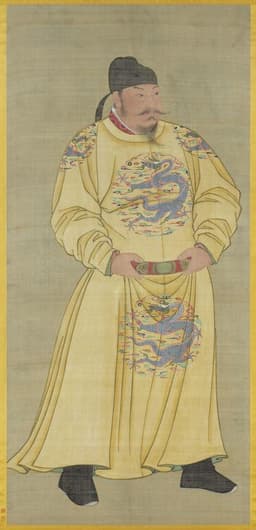
Emperor Taizong of Tang
Emperor · Medieval
78.9Total

Napoleon Bonaparte
General · Modern
70.9Total
Basic Information
Born
598
1769
Died
649
1821
Era
Medieval
Modern
Nationality
China
France
Occupation
Emperor
General
Civilization
Eastern
Western
Score Comparison
Military (10%)
77.5
94.0
Political (20%)
82.0
72.0
Influence (20%)
85.0
40.0
Legacy (20%)
71.4
80.0
Leadership (15%)
78.0
78.0
Strategy (15%)
80.6
90.0
TOTAL
78.9
70.9
Emperor Taizong of Tang — Complete Timeline
626 AD
Reign of ZhenguanReform
Emperor Taizong initiated the Zhenguan era, characterized by efficient governance, legal codification, and economic recovery. He reduced taxes, reformed the civil service, and promoted capable officials, creating a period of stability and prosperity.
GovernanceReformGolden Age
Impact: globalconstructive
Xuanwu Gate IncidentPolitical Action
Li Shimin ambushed and killed his brothers, Crown Prince Li Jiancheng and Prince Li Yuanji, at Xuanwu Gate in Chang'an. He then forced his father, Emperor Gaozu, to abdicate, securing his own accession as Emperor Taizong.
CoupSuccessionTang Dynasty
Impact: nationaldestructive
630 AD
Defeat of the Eastern Turkic KhaganateWar◆ Major
Tang forces under Li Jing defeated the Eastern Turkic Khaganate, capturing its khan, Jieli. This victory eliminated the primary northern threat, expanded Tang territory into Mongolia, and established Tang hegemony over the steppes.
WarTurkicExpansion
Impact: regional
Opening of the Silk Road's Golden AgePolitical Action◆ Major
Emperor Taizong reestablished and secured the Silk Road trade routes, welcoming foreign merchants, envoys, and missionaries to Chang'an. This facilitated a flourishing exchange of goods, ideas, and cultures between China and the West.
Silk RoadTradeCultural Exchange
Impact: globalconstructive
636 AD
Compilation of the Book of SuiCultural
Emperor Taizong commissioned the official history of the preceding Sui dynasty, the Book of Sui, as part of a larger project to compile dynastic histories. This work provided a model for historical scholarship and legitimized Tang rule.
HistoriographyCultureLegitimacy
Impact: nationalconstructive
Napoleon Bonaparte — Complete Timeline
1799 AD
Coup of 18 BrumaireOther◆ Major
Napoleon Bonaparte, with support from his brother Lucien and key political figures, overthrew the Directory in a bloodless coup. He established the Consulate with himself as First Consul, effectively becoming the ruler of France. This event ended the French Revolution's most unstable period.
French RevolutionCoupRise to Power
Impact: regional
1804 AD
Promulgation of the Napoleonic CodeOther◆ Major
Napoleon enacted the Civil Code of the French, known as the Napoleonic Code, a comprehensive set of laws that replaced the fragmented feudal legal systems. The code established legal equality, protected property rights, and secularized law. It became the basis for legal systems in many European and world countries.
Legal ReformNapoleonic CodeCivil Law
Impact: globalconstructive
1805 AD
Battle of AusterlitzWar◆ Major
Napoleon's Grande Arm
Napoleonic WarsBattleDecisive Victory
Impact: global
1812 AD
Invasion of RussiaWar◆ Major
Napoleon led the Grande Arm
Napoleonic WarsInvasionDisaster
Impact: globaldestructive
1815 AD
Battle of WaterlooWar◆ Major
Napoleon's French army was defeated by the combined forces of the Duke of Wellington's Anglo-Allied army and Gebhard Leberecht von Bl
Napoleonic WarsBattleFinal Defeat
Impact: globaldestructive
Expert Analysis
emperor-taizong-of-tang-vs-napoleon-bonaparte
# The Emperor and the Eagle: Why Taizong Built While Napoleon Burned
On a summer morning in 626, Li Shimin stood at the gates of Chang'an, his hands stained with the blood of his own brothers. Half a world away and twelve centuries later, Napoleon Bonaparte would stand before the gates of Moscow, watching a city burn that he had come to conquer. Both men seized power through violence. Both reshaped the world. But one built an empire that lasted three centuries, while the other's crumbled in a single generation. The difference lies not in their ambition, but in what they understood about the nature of power itself.
Origins
Li Shimin was born into chaos. The Sui dynasty was collapsing, China fractured by rebellion and famine. His father, Li Yuan, was a regional governor who rose against the failing dynasty, and young Li Shimin—barely eighteen—proved himself a military prodigy, convincing his hesitant father to strike for the throne. He grew up in a world where legitimacy meant survival, where every alliance was temporary, and where the Mandate of Heaven could be won or lost in a single battle.
Napoleon Bonaparte was born on the island of Corsica, a place of fierce independence and perpetual resentment against French rule. His family were minor nobles, but his education at French military academies taught him a different lesson: that talent could overcome birth, that merit was the only true aristocracy. The French Revolution had shattered the old order, and in its ruins, a young artillery officer saw opportunity.
Both men were outsiders who remade themselves. But Li Shimin inherited a civilization with a continuous tradition of imperial governance stretching back a thousand years. Napoleon inherited a revolution that had already destroyed its own foundations.
Rise to Power
The Xuanwu Gate Incident of 626 was not a coup—it was a massacre. Li Shimin ambushed his elder brother, the Crown Prince, and his younger brother at the capital's northern gate. He personally shot the Crown Prince with an arrow, then dispatched his men to finish the others. Within days, his father abdicated. The throne was his.
Napoleon's rise was more theatrical. The 1799 Coup of 18 Brumaire saw him march into the Council of Five Hundred, surrounded by grenadiers, and declare the Revolution over. Where Li Shimin killed in silence, Napoleon performed for history. Both men understood that power must be seized, but Li Shimin seized it as a son of the ruling house, while Napoleon seized it as a general who had made himself indispensable.
The difference matters. Li Shimin's illegitimacy was personal—he had murdered his brothers. Napoleon's illegitimacy was structural—he had no claim to rule France except his own ambition. One had to prove he deserved the throne. The other had to prove the throne itself could exist.
Leadership & Governance
As Emperor Taizong, Li Shimin governed through the "Reign of Zhenguan," a period that Chinese historians still cite as a golden age of governance. He codified laws, reduced taxes, and appointed officials based on merit rather than birth. He famously kept a mirror on his desk—not for vanity, but to remind himself to examine his own faults. When his ministers criticized him, he listened. When they were right, he thanked them. The Tang legal code he established would influence East Asian law for over a millennium.
Napoleon's governance was equally transformative but fundamentally different. The Napoleonic Code standardized French law across Europe, abolished feudal privileges, and established legal equality. He reformed education, created the Bank of France, and built roads and canals that connected his empire. But where Taizong ruled through consultation and consensus, Napoleon ruled through will and fear. "I am the State," he might have said—though the actual words belong to Louis XIV, Napoleon lived them.
The difference in military strategy reveals their characters. Taizong's general Li Jing defeated the Eastern Turkic Khaganate in 630 through careful planning and coalition-building, capturing the khan and incorporating his people into the Tang empire. Napoleon's 1805 victory at Austerlitz was a masterpiece of tactical brilliance, luring the Austrians and Russians into a trap and crushing them in a single day. Taizong conquered to pacify. Napoleon conquered to dominate.
Triumph & Tragedy
Taizong's greatest triumph was the Silk Road's golden age. By securing the trade routes, he opened China to the world—Persian merchants, Nestorian Christians, Buddhist monks from India, all flowed into Chang'an, making it the most cosmopolitan city on earth. The Tang dynasty became a magnet for civilization, not because it conquered, but because it welcomed.
Napoleon's greatest triumph was the Continental System, his attempt to blockade Britain economically. It failed. His invasion of Russia in 1812, with 600,000 men, ended in catastrophe. The retreat from Moscow destroyed his Grand Army, and within two years, he was exiled to Elba.
But the true tragedy is not their defeats—it is their responses. After the Xuanwu Gate Incident, Taizong spent his reign trying to prove he deserved the throne through good governance. After Waterloo, Napoleon spent his final years on Saint Helena writing memoirs, blaming everyone but himself. "History is a set of lies agreed upon," he said. Taizong would have disagreed. He commissioned the Book of Sui to record history accurately, believing that truth, however painful, was the only foundation for legitimacy.
Character & Destiny
Taizong's personality was shaped by guilt. He had murdered his brothers, forced his father into retirement, and lived with the knowledge that his throne was built on blood. This drove him to be a better ruler—to govern justly, to listen to criticism, to build institutions that would outlast him. He once said, "Using a mirror of bronze, one can see if one's hat is straight. Using history as a mirror, one can see the rise and fall of dynasties." He saw himself as a steward, not a master.
Napoleon's personality was shaped by ambition. He believed in destiny, in the power of the individual will to reshape reality. "Impossible is a word to be found only in the dictionary of fools," he declared. He saw himself as a force of nature, not a servant of institutions. This made him brilliant in battle but disastrous in governance. He could conquer Europe but could not hold it, because he never understood that empires are built on consent, not fear.
Legacy
Taizong's legacy is the Tang dynasty itself, which lasted until 907 and became China's golden age. The "Reign of Zhenguan" remains a model of good governance studied by Chinese officials today. His military conquests secured China's borders for generations. His cultural policies made Tang China the center of the civilized world.
Napoleon's legacy is more ambiguous. The Napoleonic Code survives across Europe and beyond. His military innovations influenced warfare for a century. But his empire collapsed within his own lifetime, and his final legacy is the lesson that even the greatest genius cannot rule alone. "There are only two forces that unite men," he wrote—"fear and interest." Taizong would have added a third: trust.
Conclusion
Standing at the gates of Moscow in 1812, Napoleon watched his empire burn. Standing at the gates of Chang'an in 626, Li Shimin watched his empire begin. Both men seized power through violence. Both were military geniuses. Both transformed their worlds. But one understood that the purpose of power is to serve, while the other believed that power was its own purpose. The difference between a dynasty that lasts three centuries and an empire that lasts one generation is not luck or genius—it is the humility to know that history will judge, and the wisdom to govern accordingly. Taizong built a mirror. Napoleon built a monument. The mirror outlasted the monument.
Rankings
🥇
Emperor Taizong of TangLeader
Mil: 77.5Pol: 82.0Inf: 85.0
78.9
🥈
Napoleon Bonaparte
Mil: 94.0Pol: 72.0Inf: 40.0
70.9
+8.0 behind
How This Comparison Works
Algorithm
Each figure is scored on 6 dimensions (0—100 scale) based on structured historical data: Military (10%), Political (20%), Influence (20%), Legacy (20%), Leadership (15%), Strategy (15%). The weighted total produces the final ranking.
Data Sources
Scores are computed from structured sub-indicators in the database. Scale factors adjust for era (Ancient ×0.85, Modern ×1.0) and civilization size (Eastern ×1.05, Other ×0.80) to account for differences in population and military scale.
Maximum 3 Figures
Comparisons are limited to 2—3 figures to ensure readability and statistical meaningfulness.
Error Margins
±5 points per dimension — Sub-scores are derived from historical records with inherent uncertainty. Two figures within 5 points on a dimension should be considered roughly equivalent in that area.
Total Score Accuracy
±3 points overall — The weighted combination of 6 dimensions produces a total score with approximately ±3 points of uncertainty. Differences of less than 3 points are not statistically significant— the figures are effectively tied.
Known Limitations
- Historical records are incomplete and uneven across civilizations
- Figures from oral-tradition societies may be underrepresented
- Occupation labels can misclassify multi-role figures
- Scores measure capability and impact, not moral character
- Quantitative scoring is a comparison tool, not absolute truth
Capability Radar
Military (10%) — Battles & Warfare
Battles
95
95
Win Rate
95
90
Expansion
90
95
Political (20%) — Governance & Reform
Reform
95
95
Diplomacy
95
80
Economy
95
85
Influence (20%) — Cultural & Global Reach
Cultural
90
85
Global
90
90
Legacy (20%) — Historical Impact
Historical
95
95
Longevity
95
90
Leadership (15%) — Power & Stability
Tenure
85
85
Stability
95
70
Strategy (15%) — Tactics & Innovation
Strategy
95
95
Tactics
95
98
Reform
90
92
Similar Comparisons
Comments & Discussion
No comments yet. Be the first to share your thoughts!