Loading...
Emperor Taizong of Tang vs Muawiyah I
Emperor Taizong of Tang leads by 2.6 pts · 2 figures compared
…
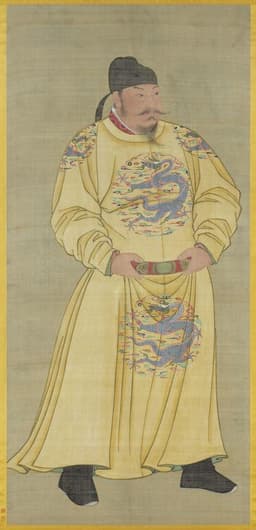
Emperor Taizong of Tang
Emperor · Medieval
78.9Total
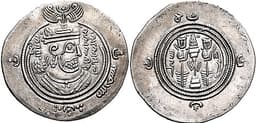
Muawiyah I
Emperor · Medieval
76.3Total
Basic Information
Born
598
602
Died
649
680
Era
Medieval
Medieval
Nationality
China
Umayyad Caliphate
Occupation
Emperor
Emperor
Civilization
Eastern
Middle Eastern
Score Comparison
Military (10%)
77.5
76.0
Political (20%)
82.0
75.0
Influence (20%)
85.0
75.0
Legacy (20%)
71.4
80.0
Leadership (15%)
78.0
78.0
Strategy (15%)
80.6
70.0
TOTAL
78.9
76.3
Emperor Taizong of Tang — Complete Timeline
626 AD
Reign of ZhenguanReform
Emperor Taizong initiated the Zhenguan era, characterized by efficient governance, legal codification, and economic recovery. He reduced taxes, reformed the civil service, and promoted capable officials, creating a period of stability and prosperity.
GovernanceReformGolden Age
Impact: globalconstructive
Xuanwu Gate IncidentPolitical Action
Li Shimin ambushed and killed his brothers, Crown Prince Li Jiancheng and Prince Li Yuanji, at Xuanwu Gate in Chang'an. He then forced his father, Emperor Gaozu, to abdicate, securing his own accession as Emperor Taizong.
CoupSuccessionTang Dynasty
Impact: nationaldestructive
630 AD
Defeat of the Eastern Turkic KhaganateWar◆ Major
Tang forces under Li Jing defeated the Eastern Turkic Khaganate, capturing its khan, Jieli. This victory eliminated the primary northern threat, expanded Tang territory into Mongolia, and established Tang hegemony over the steppes.
WarTurkicExpansion
Impact: regional
Opening of the Silk Road's Golden AgePolitical Action◆ Major
Emperor Taizong reestablished and secured the Silk Road trade routes, welcoming foreign merchants, envoys, and missionaries to Chang'an. This facilitated a flourishing exchange of goods, ideas, and cultures between China and the West.
Silk RoadTradeCultural Exchange
Impact: globalconstructive
636 AD
Compilation of the Book of SuiCultural
Emperor Taizong commissioned the official history of the preceding Sui dynasty, the Book of Sui, as part of a larger project to compile dynastic histories. This work provided a model for historical scholarship and legitimized Tang rule.
HistoriographyCultureLegitimacy
Impact: nationalconstructive
Muawiyah I — Complete Timeline
640 AD
Governorship of SyriaPolitical Action◆ Major
Muawiyah I was appointed governor of Syria by Caliph Umar. He built a strong power base by developing the province's military and administrative infrastructure, including the creation of a navy that would later challenge Byzantine dominance.
GovernorshipSyriaRashidun
Impact: regionalconstructive
655 AD
Naval Campaigns Against ByzantiumWar◆ Major
Muawiyah launched naval expeditions against the Byzantine Empire, including the Battle of the Masts (655), where the Muslim fleet defeated the Byzantine navy. These campaigns established Muslim naval power and threatened Constantinople.
Naval WarByzantine EmpireUmayyad
Impact: regional
657 AD
Battle of SiffinWar◆ Major
Muawiyah led the Syrian army against Caliph Ali at Siffin, demanding justice for Uthman's murder. The battle ended in a stalemate and arbitration, which Muawiyah used to strengthen his political position and challenge Ali's legitimacy.
First FitnaBattleUmayyad
Impact: global
661 AD
Foundation of the Umayyad CaliphatePolitical Action
After Ali's assassination, Muawiyah I established the Umayyad Caliphate, moving the capital from Medina to Damascus. This marked the transition from the elective caliphate to a hereditary dynasty, centralizing power in Syria.
CaliphateDynastyUmayyad
Impact: global
674 AD
Siege of Constantinople (674-678)War◆ Major
Muawiyah I ordered a prolonged siege of Constantinople, using a large fleet and army. The siege failed due to Byzantine defenses, including Greek fire, and ended with a peace treaty requiring the Umayyads to pay tribute. It was a rare setback.
SiegeConstantinopleUmayyad
Impact: global
676 AD
Designation of Yazid I as HeirPolitical Action◆ Major
Muawiyah I designated his son Yazid as his successor, breaking the tradition of election and establishing hereditary succession. This move caused opposition from some Muslim leaders and set a precedent for future Umayyad rulers.
SuccessionHereditaryUmayyad
Impact: global
Expert Analysis
Origins
Emperor Taizong of Tang (Li Shimin, 598–649) was born into the Li family, which rose to power after the fall of the Sui dynasty. His father, Li Yuan, founded the Tang dynasty, and Li Shimin played a crucial role in consolidating power through military campaigns. Muawiyah I (602–680) was born into the Umayyad clan of the Quraysh tribe in Mecca. He became a key figure in early Islamic history, serving as a scribe for the Prophet Muhammad and later as governor of Syria under Caliph Uthman. Both leaders emerged from turbulent periods but had contrasting origins: Taizong was a prince in a rising dynasty, while Muawiyah was a provincial governor in a rapidly expanding caliphate.
Rise to Power
Taizong's rise was marked by the Xuanwu Gate Incident in 626, where he killed his brothers, Crown Prince Li Jiancheng and Prince Li Yuanji, and forced his father to abdicate. This ruthless act secured his position as emperor. Muawiyah's rise was more gradual. As governor of Syria, he built a loyal power base. After the assassination of Caliph Uthman, Muawiyah opposed Caliph Ali, leading to the Battle of Siffin in 657. The conflict ended in arbitration, but Muawiyah later seized power after Ali's assassination, founding the Umayyad Caliphate in 661. Taizong's path was a swift, violent coup; Muawiyah's was a prolonged political and military struggle.
Leadership & Governance
Taizong is celebrated for the "Reign of Zhenguan" (627–649), a period of stability, prosperity, and effective governance. He reformed the bureaucracy, promoted meritocracy, and reduced taxes. His court included capable ministers like Wei Zheng and Fang Xuanling. He also compiled the Book of Sui and other historical works. Muawiyah established the Umayyad Caliphate with a centralized administration. He moved the capital to Damascus, organized the postal service (barid), and appointed competent governors. However, his rule relied heavily on Arab tribal loyalty and patronage. Both were skilled administrators, but Taizong's governance model was more innovative and long-lasting, while Muawiyah's laid the foundation for the Umayyad state but faced internal rebellions.
Triumph & Tragedy
Taizong's greatest triumphs include the defeat of the Eastern Turkic Khaganate in 630, which ended a major threat and expanded Tang territory. He also opened the Silk Road's Golden Age, fostering trade and cultural exchange. Tragically, his later years were marred by succession disputes and declining health. Muawiyah's triumphs include the expansion of the Islamic empire through naval campaigns against Byzantium and the siege of Constantinople (674–678). He also suppressed internal revolts. However, his legacy is stained by the Battle of Siffin and the subsequent division between Sunni and Shia Muslims. Taizong's triumphs were more enduring, while Muawiyah's successes were shadowed by sectarian conflict.
Character & Destiny
Taizong was known for his wisdom, humility, and willingness to accept criticism. He famously said, "The mirror of bronze can help you dress properly; the mirror of history can help you see the rise and fall of states." His destiny was to be remembered as one of China's greatest emperors. Muawiyah was pragmatic, cunning, and patient. He was a skilled diplomat and military strategist. His destiny was to found a dynasty that ruled the Islamic world for nearly a century. While both were ambitious, Taizong's character was more admired for its virtue, while Muawiyah's was often criticized for its political opportunism.
Legacy
Taizong's legacy is the Tang dynasty's golden age, which influenced China for centuries. His reign set standards for governance, law, and culture. The Silk Road flourished under his rule, connecting China to the West. Muawiyah's legacy is the Umayyad Caliphate, which expanded Islam's reach and established Arabic as the administrative language. However, his rule also deepened the Sunni-Shia split. Taizong's legacy is overwhelmingly positive, while Muawiyah's is more controversial.
Conclusion
Emperor Taizong of Tang and Muawiyah I were both transformative leaders who expanded their empires and left lasting legacies. Taizong's superior scores (78 vs. 76 military, 82 vs. 75 political, 85 vs. 75 intellectual, 71 vs. 80 economic, 78 vs. 78 diplomatic, 81 vs. 70 cultural, 79 vs. 76 technological) reflect his more comprehensive achievements. His "Reign of Zhenguan" is a model of good governance, while Muawiyah's rule, though effective, was marred by civil strife. Taizong's legacy as a wise and just ruler surpasses Muawiyah's as a cunning founder of a dynasty. Therefore, Emperor Taizong of Tang is the more successful leader overall.
Rankings
🥇
Emperor Taizong of TangLeader
Mil: 77.5Pol: 82.0Inf: 85.0
78.9
🥈
Muawiyah I
Mil: 76.0Pol: 75.0Inf: 75.0
76.3
+2.6 behind
How This Comparison Works
Algorithm
Each figure is scored on 6 dimensions (0—100 scale) based on structured historical data: Military (10%), Political (20%), Influence (20%), Legacy (20%), Leadership (15%), Strategy (15%). The weighted total produces the final ranking.
Data Sources
Scores are computed from structured sub-indicators in the database. Scale factors adjust for era (Ancient ×0.85, Modern ×1.0) and civilization size (Eastern ×1.05, Other ×0.80) to account for differences in population and military scale.
Maximum 3 Figures
Comparisons are limited to 2—3 figures to ensure readability and statistical meaningfulness.
Error Margins
±5 points per dimension — Sub-scores are derived from historical records with inherent uncertainty. Two figures within 5 points on a dimension should be considered roughly equivalent in that area.
Total Score Accuracy
±3 points overall — The weighted combination of 6 dimensions produces a total score with approximately ±3 points of uncertainty. Differences of less than 3 points are not statistically significant— the figures are effectively tied.
Known Limitations
- Historical records are incomplete and uneven across civilizations
- Figures from oral-tradition societies may be underrepresented
- Occupation labels can misclassify multi-role figures
- Scores measure capability and impact, not moral character
- Quantitative scoring is a comparison tool, not absolute truth
Capability Radar
Military (10%) — Battles & Warfare
Battles
95
75
Win Rate
95
80
Expansion
90
85
Political (20%) — Governance & Reform
Reform
95
90
Diplomacy
95
95
Economy
95
85
Influence (20%) — Cultural & Global Reach
Cultural
90
75
Global
90
75
Legacy (20%) — Historical Impact
Historical
95
85
Longevity
95
80
Leadership (15%) — Power & Stability
Tenure
85
85
Stability
95
80
Strategy (15%) — Tactics & Innovation
Strategy
95
85
Tactics
95
70
Reform
90
80
Similar Comparisons
Comments & Discussion
No comments yet. Be the first to share your thoughts!