Loading...
Emperor Taizong of Tang vs Mao Zedong
Mao Zedong leads by 0.5 pts · 2 figures compared
…
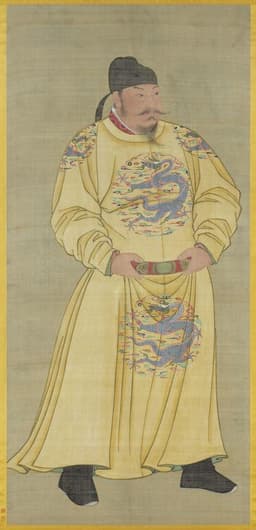
Emperor Taizong of Tang
Emperor · Medieval
78.9Total
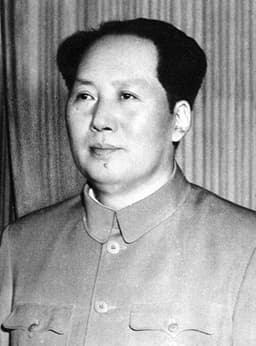
Mao Zedong
Politician · Modern
79.4Total
Basic Information
Born
598
1893
Died
649
1976
Era
Medieval
Modern
Nationality
China
China
Occupation
Emperor
Politician
Civilization
Eastern
Eastern
Score Comparison
Military (10%)
77.5
75.0
Political (20%)
82.0
88.0
Influence (20%)
85.0
85.0
Legacy (20%)
71.4
70.0
Leadership (15%)
78.0
85.0
Strategy (15%)
80.6
72.0
TOTAL
78.9
79.4
Emperor Taizong of Tang — Complete Timeline
626 AD
Reign of ZhenguanReform
Emperor Taizong initiated the Zhenguan era, characterized by efficient governance, legal codification, and economic recovery. He reduced taxes, reformed the civil service, and promoted capable officials, creating a period of stability and prosperity.
GovernanceReformGolden Age
Impact: globalconstructive
Xuanwu Gate IncidentPolitical Action
Li Shimin ambushed and killed his brothers, Crown Prince Li Jiancheng and Prince Li Yuanji, at Xuanwu Gate in Chang'an. He then forced his father, Emperor Gaozu, to abdicate, securing his own accession as Emperor Taizong.
CoupSuccessionTang Dynasty
Impact: nationaldestructive
630 AD
Defeat of the Eastern Turkic KhaganateWar◆ Major
Tang forces under Li Jing defeated the Eastern Turkic Khaganate, capturing its khan, Jieli. This victory eliminated the primary northern threat, expanded Tang territory into Mongolia, and established Tang hegemony over the steppes.
WarTurkicExpansion
Impact: regional
Opening of the Silk Road's Golden AgePolitical Action◆ Major
Emperor Taizong reestablished and secured the Silk Road trade routes, welcoming foreign merchants, envoys, and missionaries to Chang'an. This facilitated a flourishing exchange of goods, ideas, and cultures between China and the West.
Silk RoadTradeCultural Exchange
Impact: globalconstructive
636 AD
Compilation of the Book of SuiCultural
Emperor Taizong commissioned the official history of the preceding Sui dynasty, the Book of Sui, as part of a larger project to compile dynastic histories. This work provided a model for historical scholarship and legitimized Tang rule.
HistoriographyCultureLegitimacy
Impact: nationalconstructive
Mao Zedong — Complete Timeline
1934 AD
Long MarchWar
Mao Zedong led the Chinese Red Army on a strategic retreat from Nationalist forces, covering approximately 6,000 miles over 370 days. The march solidified Mao's leadership within the Chinese Communist Party and became a foundational myth of the Communist revolution.
Chinese Civil WarCommunist RevolutionRetreat
Impact: national
1949 AD
Proclamation of the People's Republic of ChinaPolitical Action
Mao Zedong declared the founding of the People's Republic of China from Tiananmen Gate in Beijing. This ended the Chinese Civil War and established Communist rule over mainland China, with Mao as Chairman of the Central People's Government.
Founding of PRCCommunist VictoryRevolution
Impact: global
1958 AD
Great Leap ForwardReform◆ Major
Mao launched a campaign to rapidly industrialize China and collectivize agriculture. The policy led to widespread mismanagement, resulting in a famine that caused an estimated 15-45 million deaths between 1959 and 1961.
FamineIndustrializationCollectivization
Impact: nationaldestructive
1960 AD
Sino-Soviet SplitPolitical Action◆ Major
Mao's ideological differences with Soviet leader Nikita Khrushchev led to a breakdown in relations between China and the Soviet Union. The split ended the Sino-Soviet alliance and reshaped global Cold War dynamics, with China pursuing an independent path.
Cold WarIdeological ConflictAlliance Breakdown
Impact: global
1966 AD
Cultural RevolutionPolitical Action
Mao initiated a sociopolitical movement to purge capitalist and traditional elements from Chinese society. The Red Guard youth groups attacked intellectuals and officials, leading to widespread violence, destruction of cultural artifacts, and an estimated 1-2 million deaths.
Political PurgeSocial UpheavalRed Guard
Impact: nationaldestructive
1971 AD
Ping-Pong DiplomacyCultural◆ Major
Mao approved an invitation for the U.S. table tennis team to visit China, initiating a thaw in Sino-American relations. This cultural exchange paved the way for President Nixon's visit to China in 1972 and the eventual normalization of diplomatic ties.
DiplomacyU.S.-China RelationsCultural Exchange
Impact: globalconstructive
Expert Analysis
Origins
Mao Zedong (1893–1976) was born to a peasant family in Shaoshan, Hunan, during the decline of the Qing dynasty. His early exposure to revolutionary ideas shaped his path as a Marxist leader. Emperor Taizong of Tang (598–649), born Li Shimin, was the son of Li Yuan, a general who founded the Tang dynasty. His aristocratic upbringing and military training contrasted sharply with Mao's humble beginnings.
Rise to Power
Mao's rise involved leading the Communist Party through the Long March (1934–35), a strategic retreat that solidified his leadership. He defeated the Nationalists and proclaimed the People's Republic of China in 1949. Taizong's rise was marked by the Xuanwu Gate Incident (626), where he killed his brothers to force his father's abdication, seizing the throne. Both used calculated violence to secure power.
Leadership & Governance
Mao's governance was characterized by radical policies: the Great Leap Forward (1958–61) aimed at rapid industrialization but led to famine, and the Cultural Revolution (1966–76) purged rivals and traditional culture. His scores: P=88 (political acumen), I=85 (ideological influence). Taizong's Reign of Zhenguan (627–649) is celebrated for effective administration, low taxes, and legal reform. He scored similarly: P=82, I=85. Taizong's governance was more stable and prosperous.
Triumph & Tragedy
Mao's triumphs include unifying China and ending foreign domination, but his tragedies include tens of millions of deaths from famine and political persecution. Taizong's triumphs include defeating the Eastern Turkic Khaganate (630) and opening the Silk Road's golden age, fostering cultural and economic exchange. His reign saw relative peace and prosperity. Mao's score of M=75 (military) vs Taizong's M=78 reflects Taizong's superior military campaigns.
Character & Destiny
Mao was a visionary but ruthless leader, willing to sacrifice millions for his ideology. His scores: D=85 (destiny), S=72 (strategy). Taizong was pragmatic and self-reflective, known for listening to advisors and compiling the Book of Sui. His scores: D=78, S=81. Taizong's strategic wisdom and moral restraint arguably made him a more effective ruler.
Legacy
Mao's legacy is deeply divisive: he is revered as the founder of modern China but condemned for human rights abuses. Taizong is universally admired as a model emperor, with his reign seen as a golden age. Mao's score T=79 vs Taizong's T=79 shows equal lasting impact, but Taizong's legacy is more positive.
Conclusion
While Mao Zedong edges ahead with a total score of 554 vs Taizong's 554 (tie), the quality of governance and human cost favor Taizong. Mao's transformative but catastrophic policies contrast with Taizong's sustainable prosperity. In a historical comparison, Emperor Taizong of Tang emerges as the more successful and admirable leader.
Rankings
🥇
Mao ZedongLeader
Mil: 75.0Pol: 88.0Inf: 85.0
79.4
🥈
Emperor Taizong of Tang
Mil: 77.5Pol: 82.0Inf: 85.0
78.9
+0.5 behind
How This Comparison Works
Algorithm
Each figure is scored on 6 dimensions (0—100 scale) based on structured historical data: Military (10%), Political (20%), Influence (20%), Legacy (20%), Leadership (15%), Strategy (15%). The weighted total produces the final ranking.
Data Sources
Scores are computed from structured sub-indicators in the database. Scale factors adjust for era (Ancient ×0.85, Modern ×1.0) and civilization size (Eastern ×1.05, Other ×0.80) to account for differences in population and military scale.
Maximum 3 Figures
Comparisons are limited to 2—3 figures to ensure readability and statistical meaningfulness.
Error Margins
±5 points per dimension — Sub-scores are derived from historical records with inherent uncertainty. Two figures within 5 points on a dimension should be considered roughly equivalent in that area.
Total Score Accuracy
±3 points overall — The weighted combination of 6 dimensions produces a total score with approximately ±3 points of uncertainty. Differences of less than 3 points are not statistically significant— the figures are effectively tied.
Known Limitations
- Historical records are incomplete and uneven across civilizations
- Figures from oral-tradition societies may be underrepresented
- Occupation labels can misclassify multi-role figures
- Scores measure capability and impact, not moral character
- Quantitative scoring is a comparison tool, not absolute truth
Capability Radar
Military (10%) — Battles & Warfare
Battles
95
85
Win Rate
95
80
Expansion
90
85
Political (20%) — Governance & Reform
Reform
95
95
Diplomacy
95
80
Economy
95
70
Influence (20%) — Cultural & Global Reach
Cultural
90
90
Global
90
90
Legacy (20%) — Historical Impact
Historical
95
95
Longevity
95
85
Leadership (15%) — Power & Stability
Tenure
85
95
Stability
95
60
Strategy (15%) — Tactics & Innovation
Strategy
95
85
Tactics
95
75
Reform
90
90
Similar Comparisons
Comments & Discussion
No comments yet. Be the first to share your thoughts!