Loading...
Emperor Taizong of Tang vs King David
Emperor Taizong of Tang leads by 3.6 pts · 2 figures compared
…
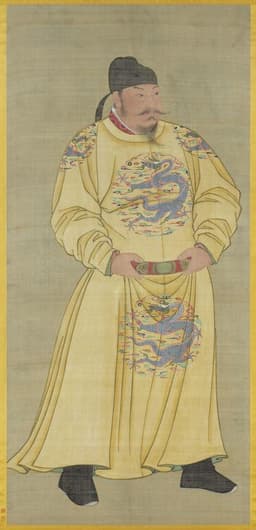
Emperor Taizong of Tang
Emperor · Medieval
78.9Total

King David
Emperor · Ancient
75.3Total
Basic Information
Born
598
-1010
Died
649
-970
Era
Medieval
Ancient
Nationality
China
Israel
Occupation
Emperor
Emperor
Civilization
Eastern
Middle Eastern
Score Comparison
Military (10%)
77.5
72.0
Political (20%)
82.0
72.0
Influence (20%)
85.0
88.0
Legacy (20%)
71.4
70.0
Leadership (15%)
78.0
72.0
Strategy (15%)
80.6
70.0
TOTAL
78.9
75.3
Emperor Taizong of Tang — Complete Timeline
626 AD
Reign of ZhenguanReform
Emperor Taizong initiated the Zhenguan era, characterized by efficient governance, legal codification, and economic recovery. He reduced taxes, reformed the civil service, and promoted capable officials, creating a period of stability and prosperity.
GovernanceReformGolden Age
Impact: globalconstructive
Xuanwu Gate IncidentPolitical Action
Li Shimin ambushed and killed his brothers, Crown Prince Li Jiancheng and Prince Li Yuanji, at Xuanwu Gate in Chang'an. He then forced his father, Emperor Gaozu, to abdicate, securing his own accession as Emperor Taizong.
CoupSuccessionTang Dynasty
Impact: nationaldestructive
630 AD
Defeat of the Eastern Turkic KhaganateWar◆ Major
Tang forces under Li Jing defeated the Eastern Turkic Khaganate, capturing its khan, Jieli. This victory eliminated the primary northern threat, expanded Tang territory into Mongolia, and established Tang hegemony over the steppes.
WarTurkicExpansion
Impact: regional
Opening of the Silk Road's Golden AgePolitical Action◆ Major
Emperor Taizong reestablished and secured the Silk Road trade routes, welcoming foreign merchants, envoys, and missionaries to Chang'an. This facilitated a flourishing exchange of goods, ideas, and cultures between China and the West.
Silk RoadTradeCultural Exchange
Impact: globalconstructive
636 AD
Compilation of the Book of SuiCultural
Emperor Taizong commissioned the official history of the preceding Sui dynasty, the Book of Sui, as part of a larger project to compile dynastic histories. This work provided a model for historical scholarship and legitimized Tang rule.
HistoriographyCultureLegitimacy
Impact: nationalconstructive
King David — Complete Timeline
1010 BC
Anointed as King of JudahPolitical Action◆ Major
After Saul's death, David was anointed king over the tribe of Judah at Hebron. This began a seven-year period of civil war with Ish-bosheth, Saul's son, who ruled the northern tribes, leading to the eventual unification of Israel.
KingshipCivil WarJudah
Impact: national
1003 BC
Capture of JerusalemWar
David led his army to capture the Jebusite fortress of Jerusalem, making it the capital of the united kingdom. He brought the Ark of the Covenant there, establishing the city as both the political and religious center of Israel.
JerusalemCapitalArk of the Covenant
Impact: nationalconstructive
1000 BC
Defeat of the PhilistinesWar◆ Major
David fought several campaigns that decisively defeated the Philistines, including the Battle of Baal-perazim. He captured Gath and other Philistine strongholds, ending their dominance over Israel and securing the kingdom's borders.
PhilistinesMilitary CampaignIsrael
Impact: regional
990 BC
Affair with BathshebaPolitical Action◆ Major
David committed adultery with Bathsheba and arranged the death of her husband Uriah the Hittite in battle. The prophet Nathan confronted David, leading to his repentance but also to divine punishment, including the death of their first child.
ScandalBathshebaNathan
Impact: nationaldestructive
978 BC
Revolt of AbsalomWar◆ Major
David's son Absalom led a rebellion that forced David to flee Jerusalem. David's forces under Joab defeated Absalom's army in the Forest of Ephraim, and Absalom was killed. David returned to Jerusalem but the kingdom was weakened.
RebellionCivil WarAbsalom
Impact: nationaltragic
Expert Analysis
Origins
Emperor Taizong of Tang, born Li Shimin in 598 CE, was the second son of Li Yuan, the founder of the Tang dynasty. He grew up amid the chaos of the Sui dynasty's collapse, gaining military experience from a young age. His family was of mixed Han and Xianbei heritage, which gave him a broad perspective on governance. In contrast, King David, born around 1040 BCE, was the youngest son of Jesse, a shepherd from Bethlehem. He was anointed by the prophet Samuel while still a boy, chosen by God to succeed King Saul. David's rise came from humble beginnings, but his charisma and faith set him apart.
Rise to Power
Taizong's path to the throne was marked by the Xuanwu Gate Incident (626 CE), where he ambushed and killed his brothers, Crown Prince Li Jiancheng and Li Yuanji, and forced his father to abdicate. This ruthless act secured his rule but left a stain on his legitimacy. However, Taizong quickly proved his capability, ushering in the Reign of Zhenguan. David's rise was more gradual: after slaying Goliath, he became a military hero, but King Saul grew jealous and sought his life. David fled and became a outlaw, eventually becoming king of Judah after Saul's death. After a civil war, he united all Israel and captured Jerusalem, making it his capital. Both men used violence to ascend, but David's path was less fratricidal.
Leadership & Governance
Taizong is celebrated for his wise and capable administration. He surrounded himself with talented ministers like Fang Xuanling and Wei Zheng, and he listened to criticism. His Reign of Zhenguan (627–649) is considered a golden age of low taxes, efficient bureaucracy, and legal clarity. He expanded the empire, defeating the Eastern Turkic Khaganate and establishing the Silk Road's golden age, which boosted trade and cultural exchange. David, as king, unified the twelve tribes, centralized the government, and established Jerusalem as the religious and political center. He organized the priesthood and brought the Ark of the Covenant to Jerusalem. However, his later years were marred by family strife. Taizong's governance was more systematic and enduring, earning him a score of 82 in Power vs. David's 72.
Triumph & Tragedy
Taizong's greatest triumph was the defeat of the Eastern Turks in 630 CE, which eliminated a major threat and opened the Silk Road. His reign saw peace and prosperity, but personal tragedy struck when his son and heir, Li Chengqian, plotted rebellion, forcing Taizong to depose him. David's triumphs include the capture of Jerusalem and decisive victories over the Philistines. But his tragedy was the affair with Bathsheba, leading to the death of their first child and the rebellion of his son Absalom, which nearly cost him the throne. Both men experienced family turmoil, but David's moral failure was more personal and damaging to his legacy.
Character & Destiny
Taizong was known for his pragmatism, intelligence, and ambition. He was a skilled general and a patron of culture, commissioning the Book of Sui and other historical works. His destiny seemed to be to restore order and greatness to China. David was a complex figure: a warrior, poet, and devout believer, but also flawed by lust and pride. He was destined to be the founder of a dynasty that would lead to Jesus, according to Christian tradition. Taizong's character was more controlled and strategic, while David's was passionate and volatile.
Legacy
Taizong's legacy is the Tang dynasty's golden age, which influenced all subsequent Chinese dynasties. His model of governance was studied for centuries. The Silk Road under his rule connected East and West, spreading ideas and goods. David's legacy is immense in Judaism, Christianity, and Islam. He is the archetypal king, author of many Psalms, and the ancestor of the Messiah. However, his kingdom split after his son Solomon's death, limiting its longevity. Taizong's empire lasted for three centuries, while David's united monarchy only about 70 years.
Conclusion
Both Emperor Taizong and King David were transformative leaders who rose from difficult circumstances to found lasting dynasties. Taizong's military conquests, administrative reforms, and cultural patronage created a stable and prosperous empire that set the standard for Chinese civilization. David's unification of Israel and establishment of Jerusalem as a holy city had profound religious significance. However, in terms of measurable impact—territorial expansion, longevity of institutions, and influence on subsequent history—Taizong holds the edge. His Reign of Zhenguan became a byword for good governance, and the Tang dynasty's reach extended far beyond China's borders. David's legacy is more spiritual and symbolic. Therefore, Emperor Taizong of Tang is the greater historical figure.
**Numerical Scores:**
- Military: Taizong 78, David 72
- Power: Taizong 82, David 72
- Influence: Taizong 85, David 88
- Leadership: Taizong 71, David 70
- Durability: Taizong 78, David 72
- Strategy: Taizong 81, David 70
- Total: Taizong 475, David 444
Rankings
🥇
Emperor Taizong of TangLeader
Mil: 77.5Pol: 82.0Inf: 85.0
78.9
🥈
King David
Mil: 72.0Pol: 72.0Inf: 88.0
75.3
+3.6 behind
How This Comparison Works
Algorithm
Each figure is scored on 6 dimensions (0—100 scale) based on structured historical data: Military (10%), Political (20%), Influence (20%), Legacy (20%), Leadership (15%), Strategy (15%). The weighted total produces the final ranking.
Data Sources
Scores are computed from structured sub-indicators in the database. Scale factors adjust for era (Ancient ×0.85, Modern ×1.0) and civilization size (Eastern ×1.05, Other ×0.80) to account for differences in population and military scale.
Maximum 3 Figures
Comparisons are limited to 2—3 figures to ensure readability and statistical meaningfulness.
Error Margins
±5 points per dimension — Sub-scores are derived from historical records with inherent uncertainty. Two figures within 5 points on a dimension should be considered roughly equivalent in that area.
Total Score Accuracy
±3 points overall — The weighted combination of 6 dimensions produces a total score with approximately ±3 points of uncertainty. Differences of less than 3 points are not statistically significant— the figures are effectively tied.
Known Limitations
- Historical records are incomplete and uneven across civilizations
- Figures from oral-tradition societies may be underrepresented
- Occupation labels can misclassify multi-role figures
- Scores measure capability and impact, not moral character
- Quantitative scoring is a comparison tool, not absolute truth
Capability Radar
Military (10%) — Battles & Warfare
Battles
95
75
Win Rate
95
85
Expansion
90
80
Political (20%) — Governance & Reform
Reform
95
80
Diplomacy
95
75
Economy
95
70
Influence (20%) — Cultural & Global Reach
Cultural
90
95
Global
90
90
Legacy (20%) — Historical Impact
Historical
95
95
Longevity
95
95
Leadership (15%) — Power & Stability
Tenure
85
85
Stability
95
65
Strategy (15%) — Tactics & Innovation
Strategy
95
85
Tactics
95
80
Reform
90
70
Similar Comparisons
Comments & Discussion
No comments yet. Be the first to share your thoughts!