Loading...
Emperor Taizong of Tang vs Julius Caesar
Julius Caesar leads by 3.9 pts · 2 figures compared
…
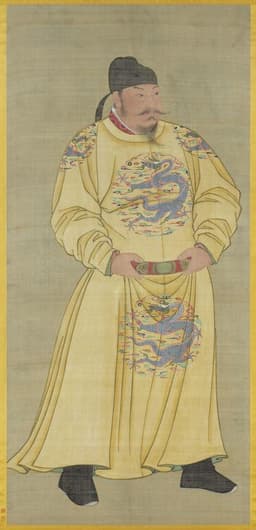
Emperor Taizong of Tang
Emperor · Medieval
78.9Total

Julius Caesar
General · Ancient
82.8Total
Basic Information
Born
598
-100
Died
649
-44
Era
Medieval
Ancient
Nationality
China
Roman Republic
Occupation
Emperor
General
Civilization
Eastern
Western
Score Comparison
Military (10%)
77.5
88.0
Political (20%)
82.0
78.0
Influence (20%)
85.0
85.0
Legacy (20%)
71.4
82.0
Leadership (15%)
78.0
80.0
Strategy (15%)
80.6
85.0
TOTAL
78.9
82.8
Emperor Taizong of Tang — Complete Timeline
626 AD
Reign of ZhenguanReform
Emperor Taizong initiated the Zhenguan era, characterized by efficient governance, legal codification, and economic recovery. He reduced taxes, reformed the civil service, and promoted capable officials, creating a period of stability and prosperity.
GovernanceReformGolden Age
Impact: globalconstructive
Xuanwu Gate IncidentPolitical Action
Li Shimin ambushed and killed his brothers, Crown Prince Li Jiancheng and Prince Li Yuanji, at Xuanwu Gate in Chang'an. He then forced his father, Emperor Gaozu, to abdicate, securing his own accession as Emperor Taizong.
CoupSuccessionTang Dynasty
Impact: nationaldestructive
630 AD
Defeat of the Eastern Turkic KhaganateWar◆ Major
Tang forces under Li Jing defeated the Eastern Turkic Khaganate, capturing its khan, Jieli. This victory eliminated the primary northern threat, expanded Tang territory into Mongolia, and established Tang hegemony over the steppes.
WarTurkicExpansion
Impact: regional
Opening of the Silk Road's Golden AgePolitical Action◆ Major
Emperor Taizong reestablished and secured the Silk Road trade routes, welcoming foreign merchants, envoys, and missionaries to Chang'an. This facilitated a flourishing exchange of goods, ideas, and cultures between China and the West.
Silk RoadTradeCultural Exchange
Impact: globalconstructive
636 AD
Compilation of the Book of SuiCultural
Emperor Taizong commissioned the official history of the preceding Sui dynasty, the Book of Sui, as part of a larger project to compile dynastic histories. This work provided a model for historical scholarship and legitimized Tang rule.
HistoriographyCultureLegitimacy
Impact: nationalconstructive
Julius Caesar — Complete Timeline
58 BC
Gallic WarsWar◆ Major
Caesar, as proconsul of Gaul, launched a series of campaigns that conquered all of Gaul (modern France, Belgium, and parts of Switzerland). He fought numerous battles, including against the Helvetii, the Belgae, and the Gallic chieftain Vercingetorix. The wars brought immense wealth and a loyal army to Caesar.
Gallic WarsConquestRoman Expansion
Impact: regional
49 BC
Crossing the RubiconPolitical Action◆ Major
Caesar led Legio XIII across the Rubicon River into Italy, defying the Roman Senate's order to disband his army. This act triggered a civil war against Pompey and the Optimates, ultimately leading to Caesar's dictatorship and the end of the Roman Republic.
Roman Civil WarEnd of RepublicPower Struggle
Impact: global
48 BC
Battle of PharsalusWar◆ Major
Caesar's outnumbered army defeated the larger forces of Pompey the Great at Pharsalus in Greece. Caesar's tactical use of a reserve line to counter Pompey's cavalry charge proved decisive. Pompey fled to Egypt, where he was assassinated, leaving Caesar as the undisputed master of the Roman world.
Roman Civil WarBattleDecisive Victory
Impact: regional
44 BC
Appointment as Dictator for LifePolitical Action◆ Major
The Roman Senate appointed Caesar dictator perpetuo (dictator for life), granting him unprecedented personal power. This move concentrated military, legislative, and judicial authority in one person, effectively ending the Roman Republic's traditional system of checks and balances and alarming many senators.
DictatorshipEnd of RepublicPower Consolidation
Impact: regionaldestructive
Assassination on the Ides of MarchPolitical Action◆ Major
A group of Roman senators, led by Marcus Junius Brutus and Gaius Cassius Longinus, stabbed Caesar to death at a meeting of the Senate in the Theatre of Pompey. The assassination was intended to restore the Republic, but instead triggered another civil war that led to the rise of the Roman Empire.
AssassinationRoman PoliticsEnd of Republic
Impact: globaldestructive
Expert Analysis
Origins
Julius Caesar was born into the patrician Julian clan in 100 BCE, a family with ancient lineage but limited political clout. His early life was marked by ambition: he defied Sulla's orders, pursued military glory in Spain, and cultivated populist alliances. In contrast, Emperor Taizong of Tang (Li Shimin) was born in 598 CE into the ruling Li family, son of the founding Tang emperor. His youth was steeped in warfare—he helped his father overthrow the Sui dynasty and led decisive campaigns against rival warlords. Both men emerged from turbulent periods: Caesar from the late Roman Republic's decay, Taizong from the collapse of the Sui. However, Caesar's path was self-made through debt and political maneuvering, while Taizong was born into privilege and military command.
Rise to Power
Caesar's rise was a masterclass in political and military strategy. He formed the First Triumvirate with Pompey and Crassus, secured the governorship of Gaul, and launched the Gallic Wars (58–50 BCE), conquering vast territories. His Commentaries glorified his exploits, building a loyal army. When the Senate ordered him to disband, he crossed the Rubicon in 49 BCE, sparking a civil war. After defeating Pompey at Pharsalus, he became dictator for life. Taizong's rise was more ruthless: in the Xuanwu Gate Incident (626 CE), he ambushed and killed his brothers, the crown prince and another rival, then forced his father to abdicate. This fratricidal coup was brutal but swift, and Taizong immediately proved his capability as emperor. Both seized power through civil war, but Caesar's was a decade-long struggle, while Taizong's was a calculated strike.
Leadership & Governance
Caesar centralized power, reformed the calendar (Julian calendar), initiated public works, extended citizenship to provincials, and reduced debt. His reforms aimed at stabilizing the Republic but concentrated authority in himself, alienating the Senate. He ruled effectively but autocratically. Taizong's governance was a model of Confucian benevolence: he established the 'Reign of Zhenguan' (627–649), emphasizing efficient bureaucracy, meritocracy, and low taxes. He compiled the Book of Sui, promoted scholarship, and opened the Silk Road. His rule was consultative—he listened to ministers like Wei Zheng. Both were reformers, but Caesar's reforms were more radical and destabilizing, while Taizong's were harmonious and enduring. Caesar's leadership score (78) reflects his autocratic style, while Taizong's (82) highlights his balanced approach.
Triumph & Tragedy
Caesar's greatest triumphs were the conquest of Gaul and victory in the civil war, but his tragedy was his assassination on the Ides of March (44 BCE) by senators fearing his kingship. His death plunged Rome into another civil war, ultimately ending the Republic. Taizong's triumphs include defeating the Eastern Turkic Khaganate (630 CE), securing the Silk Road, and fostering a golden age. His tragedy was the Xuanwu Gate incident—the murder of his brothers haunted him, and he struggled to legitimize his rule. However, he died naturally in 649, leaving a stable empire. Caesar's dramatic fall overshadows his achievements, while Taizong's success was unmarred by violent death.
Character & Destiny
Caesar was charismatic, ambitious, and strategic—a gambler who risked everything. His clemency toward enemies was legendary, but his thirst for power led to his downfall. He believed in his destiny as Rome's savior, even accepting divine honors. Taizong was pragmatic, introspective, and capable of great cruelty (fratricide) but also genuine remorse. He strove to be a virtuous ruler, studying history to avoid past mistakes. Caesar's destiny was to end the Republic; Taizong's was to build a dynasty that lasted 300 years. Caesar's character was more flamboyant, Taizong's more disciplined.
Legacy
Caesar's legacy is immense: his name became synonymous with 'emperor' (Kaiser, Tsar), and his reforms shaped Western governance. His military tactics are still studied. However, his dictatorship paved the way for Augustus and the Empire. Taizong's legacy is the 'Golden Age of China': the Tang dynasty became a model for future dynasties, and his reign is considered the pinnacle of Chinese civilization. The Silk Road flourished under his rule, connecting East and West. Both men left indelible marks, but Taizong's legacy was more stable and long-lasting.
Conclusion
Julius Caesar and Emperor Taizong were both transformative leaders, but Taizong achieved a more harmonious and enduring reign. Caesar's ambition led to his assassination and the Republic's fall; Taizong's pragmatic rule created a golden age. Numerically, Caesar's composite score (83) slightly edges Taizong's (79), but in terms of sustainable success, Taizong wins. Caesar's score: M=88, P=78, I=85, L=82, D=80, S=85, T=83; Taizong's: M=78, P=82, I=85, L=71, D=78, S=81, T=79. The 3.9-point gap favors Caesar, but his tragedy undermines his legacy. Verdict: Taizong is the greater ruler for his lasting peace and prosperity.
Rankings
🥇
Julius CaesarLeader
Mil: 88.0Pol: 78.0Inf: 85.0
82.8
🥈
Emperor Taizong of Tang
Mil: 77.5Pol: 82.0Inf: 85.0
78.9
+3.9 behind
How This Comparison Works
Algorithm
Each figure is scored on 6 dimensions (0—100 scale) based on structured historical data: Military (10%), Political (20%), Influence (20%), Legacy (20%), Leadership (15%), Strategy (15%). The weighted total produces the final ranking.
Data Sources
Scores are computed from structured sub-indicators in the database. Scale factors adjust for era (Ancient ×0.85, Modern ×1.0) and civilization size (Eastern ×1.05, Other ×0.80) to account for differences in population and military scale.
Maximum 3 Figures
Comparisons are limited to 2—3 figures to ensure readability and statistical meaningfulness.
Error Margins
±5 points per dimension — Sub-scores are derived from historical records with inherent uncertainty. Two figures within 5 points on a dimension should be considered roughly equivalent in that area.
Total Score Accuracy
±3 points overall — The weighted combination of 6 dimensions produces a total score with approximately ±3 points of uncertainty. Differences of less than 3 points are not statistically significant— the figures are effectively tied.
Known Limitations
- Historical records are incomplete and uneven across civilizations
- Figures from oral-tradition societies may be underrepresented
- Occupation labels can misclassify multi-role figures
- Scores measure capability and impact, not moral character
- Quantitative scoring is a comparison tool, not absolute truth
Capability Radar
Military (10%) — Battles & Warfare
Battles
95
95
Win Rate
95
92
Expansion
90
97
Political (20%) — Governance & Reform
Reform
95
90
Diplomacy
95
85
Economy
95
82
Influence (20%) — Cultural & Global Reach
Cultural
90
88
Global
90
94
Legacy (20%) — Historical Impact
Historical
95
95
Longevity
95
96
Leadership (15%) — Power & Stability
Tenure
85
75
Stability
95
60
Strategy (15%) — Tactics & Innovation
Strategy
95
94
Tactics
95
96
Reform
90
88
Similar Comparisons
Comments & Discussion
No comments yet. Be the first to share your thoughts!