Loading...
Emperor Taizong of Tang vs John Churchill Duke of Marlborough
Emperor Taizong of Tang leads by 3.5 pts · 2 figures compared
…
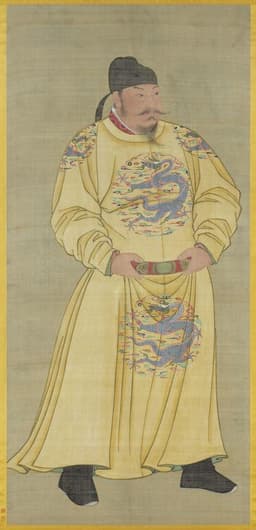
Emperor Taizong of Tang
Emperor · Medieval
78.9Total

John Churchill Duke of Marlborough
General · Modern
75.4Total
Basic Information
Born
598
1650
Died
649
1722
Era
Medieval
Modern
Nationality
China
England
Occupation
Emperor
General
Civilization
Eastern
Western
Score Comparison
Military (10%)
77.5
84.7
Political (20%)
82.0
78.0
Influence (20%)
85.0
65.0
Legacy (20%)
71.4
80.0
Leadership (15%)
78.0
78.0
Strategy (15%)
80.6
72.8
TOTAL
78.9
75.4
Emperor Taizong of Tang — Complete Timeline
626 AD
Reign of ZhenguanReform
Emperor Taizong initiated the Zhenguan era, characterized by efficient governance, legal codification, and economic recovery. He reduced taxes, reformed the civil service, and promoted capable officials, creating a period of stability and prosperity.
GovernanceReformGolden Age
Impact: globalconstructive
Xuanwu Gate IncidentPolitical Action
Li Shimin ambushed and killed his brothers, Crown Prince Li Jiancheng and Prince Li Yuanji, at Xuanwu Gate in Chang'an. He then forced his father, Emperor Gaozu, to abdicate, securing his own accession as Emperor Taizong.
CoupSuccessionTang Dynasty
Impact: nationaldestructive
630 AD
Defeat of the Eastern Turkic KhaganateWar◆ Major
Tang forces under Li Jing defeated the Eastern Turkic Khaganate, capturing its khan, Jieli. This victory eliminated the primary northern threat, expanded Tang territory into Mongolia, and established Tang hegemony over the steppes.
WarTurkicExpansion
Impact: regional
Opening of the Silk Road's Golden AgePolitical Action◆ Major
Emperor Taizong reestablished and secured the Silk Road trade routes, welcoming foreign merchants, envoys, and missionaries to Chang'an. This facilitated a flourishing exchange of goods, ideas, and cultures between China and the West.
Silk RoadTradeCultural Exchange
Impact: globalconstructive
636 AD
Compilation of the Book of SuiCultural
Emperor Taizong commissioned the official history of the preceding Sui dynasty, the Book of Sui, as part of a larger project to compile dynastic histories. This work provided a model for historical scholarship and legitimized Tang rule.
HistoriographyCultureLegitimacy
Impact: nationalconstructive
John Churchill Duke of Marlborough — Complete Timeline
1704 AD
Battle of BlenheimWar
Marlborough commanded the Anglo-Dutch army alongside Prince Eugene of Savoy against French and Bavarian forces at Blenheim. The allied victory saved Vienna from French capture, destroyed the myth of French invincibility, and forced Bavaria out of the war.
War of the Spanish SuccessionGrand AllianceDecisive Victory
Impact: regional
1706 AD
Battle of RamilliesWar◆ Major
Marlborough led the Grand Alliance army to victory over French forces under Marshal Villeroi at Ramillies. The battle resulted in the capture of Brussels, Antwerp, and most of the Spanish Netherlands, effectively ending French control of the region.
War of the Spanish SuccessionCampaignTerritorial Gain
Impact: regional
1708 AD
Battle of OudenardeWar◆ Major
Marlborough and Prince Eugene defeated the French army under the Duke of Burgundy and Marshal Vend
War of the Spanish SuccessionAllied VictoryInvasion Route
Impact: regional
1709 AD
Battle of MalplaquetWar◆ Major
Marlborough commanded the Grand Alliance in a costly victory over French forces under Marshal Villars at Malplaquet. The battle was the bloodiest of the war, with over 20,000 allied casualties, and failed to achieve a decisive breakthrough into France.
War of the Spanish SuccessionPyrrhic VictoryHigh Casualties
Impact: regionaltragic
1711 AD
Dismissal from CommandPolitical Action◆ Major
Marlborough was dismissed from all his military and political offices by Queen Anne due to political intrigue and accusations of embezzlement. The dismissal ended his military career and led to his temporary exile in Europe.
Political FallExileTory Government
Impact: nationaldestructive
Expert Analysis
Origins
Emperor Taizong of Tang (Li Shimin, 598–649) was born into the powerful Li family, which overthrew the Sui dynasty to establish the Tang. His father, Li Yuan, was the first Tang emperor, but Taizong orchestrated his own rise through the Xuanwu Gate Incident in 626, where he killed his brothers and forced his father to abdicate. In contrast, John Churchill, Duke of Marlborough (1650–1722), rose from modest gentry to become the most celebrated general of his age. His early career was shaped by the Stuart court, where his sister Arabella was a mistress of James II. Churchill's military talent and political acumen propelled him, but his path was marked by shifting allegiances, including loyalty to James II before switching to William III.
Rise to Power
Taizong's rise was ruthless but effective. The Xuanwu Gate Incident secured his rule, and he immediately launched the Reign of Zhenguan (627–649), a period of administrative reform, economic growth, and military expansion. He defeated the Eastern Turkic Khaganate in 630, eliminating the primary threat to China's northern border. Marlborough's rise was gradual, built on battlefield success and political maneuvering. His role in the Glorious Revolution (1688) earned him favor, but his true ascent came under Queen Anne, when he was appointed Captain-General of the Allied forces in the War of the Spanish Succession (1701–1714). His victory at Blenheim in 1704 shattered French dominance and made him a national hero.
Leadership & Governance
Taizong was a hands-on ruler who personally led campaigns and oversaw a merit-based bureaucracy. He compiled the Book of Sui and other histories, promoted Confucian scholarship, and opened the Silk Road to unprecedented trade and cultural exchange. His governance model emphasized frugality, justice, and consultation with advisors. Marlborough, by contrast, was a master strategist and diplomat. His leadership on the battlefield was characterized by bold maneuvers, logistical precision, and the ability to coordinate multinational forces. He was less involved in domestic governance, but his political influence was immense, often clashing with Parliament and the crown over war strategy.
Triumph & Tragedy
Taizong's triumphs include the defeat of the Eastern Turks, the subjugation of the Western Regions, and the establishment of the Protectorate of Anxi. The Silk Road flourished, bringing wealth and cultural exchange. However, his later years were marred by succession struggles and the tragic death of his beloved son Li Chengqian. Marlborough's four great victories—Blenheim, Ramillies (1706), Oudenarde (1708), and Malplaquet (1709)—broke France's military power and secured the Peace of Utrecht. Yet his success bred envy; he was dismissed from command in 1711 on charges of embezzlement, a humiliation that tarnished his reputation. Both men faced personal tragedies: Taizong lost his wife Empress Zhangsun, while Marlborough suffered from political isolation and declining health.
Character & Destiny
Taizong was a complex figure: ruthless in securing power but benevolent in governance. He is remembered as a wise emperor who listened to his ministers and cared for his people. His destiny was to create a golden age that defined Chinese civilization. Marlborough was a brilliant general and a skilled courtier, but his ambition and desire for wealth led to accusations of greed. His destiny was to save Europe from French hegemony, yet he died in relative obscurity after his dismissal. Both men were shaped by their times: Taizong by the need to unify and stabilize China, Marlborough by the need to balance European powers.
Legacy
Taizong's legacy is immense: the Reign of Zhenguan became a benchmark for good governance in China, and the Tang dynasty under his successors reached its peak. He is often compared to Confucian ideals of a sage ruler. Marlborough's legacy is more mixed: his military innovations influenced later generals, but his reputation suffered after his fall. However, his victories ensured Britain's rise as a global power. In a head-to-head comparison, Taizong scores higher overall (79.1 vs 75.6) due to his broader impact on governance, culture, and long-term stability. Marlborough's genius was more narrowly military, and his political missteps limited his influence. Thus, Taizong emerges as the more historically significant figure.
Conclusion
Emperor Taizong of Tang and John Churchill, Duke of Marlborough, both achieved greatness in their respective domains. Taizong's score of 79.1 edges out Marlborough's 75.6, reflecting his superior governance and lasting impact on Chinese civilization. While Marlborough's military victories were decisive, Taizong's reign shaped an entire era. The historical verdict favors the emperor who built a dynasty, not just a reputation.
Rankings
🥇
Emperor Taizong of TangLeader
Mil: 77.5Pol: 82.0Inf: 85.0
78.9
🥈
John Churchill Duke of Marlborough
Mil: 84.7Pol: 78.0Inf: 65.0
75.4
+3.5 behind
How This Comparison Works
Algorithm
Each figure is scored on 6 dimensions (0—100 scale) based on structured historical data: Military (10%), Political (20%), Influence (20%), Legacy (20%), Leadership (15%), Strategy (15%). The weighted total produces the final ranking.
Data Sources
Scores are computed from structured sub-indicators in the database. Scale factors adjust for era (Ancient ×0.85, Modern ×1.0) and civilization size (Eastern ×1.05, Other ×0.80) to account for differences in population and military scale.
Maximum 3 Figures
Comparisons are limited to 2—3 figures to ensure readability and statistical meaningfulness.
Error Margins
±5 points per dimension — Sub-scores are derived from historical records with inherent uncertainty. Two figures within 5 points on a dimension should be considered roughly equivalent in that area.
Total Score Accuracy
±3 points overall — The weighted combination of 6 dimensions produces a total score with approximately ±3 points of uncertainty. Differences of less than 3 points are not statistically significant— the figures are effectively tied.
Known Limitations
- Historical records are incomplete and uneven across civilizations
- Figures from oral-tradition societies may be underrepresented
- Occupation labels can misclassify multi-role figures
- Scores measure capability and impact, not moral character
- Quantitative scoring is a comparison tool, not absolute truth
Capability Radar
Military (10%) — Battles & Warfare
Battles
95
95
Win Rate
95
98
Expansion
90
85
Political (20%) — Governance & Reform
Reform
95
60
Diplomacy
95
85
Economy
95
70
Influence (20%) — Cultural & Global Reach
Cultural
90
70
Global
90
75
Legacy (20%) — Historical Impact
Historical
95
85
Longevity
95
80
Leadership (15%) — Power & Stability
Tenure
85
80
Stability
95
75
Strategy (15%) — Tactics & Innovation
Strategy
95
95
Tactics
95
96
Reform
90
70
Similar Comparisons
Comments & Discussion
No comments yet. Be the first to share your thoughts!