Loading...
Emperor Taizong of Tang vs Ivan III the Great
Emperor Taizong of Tang leads by 3.6 pts · 2 figures compared
…
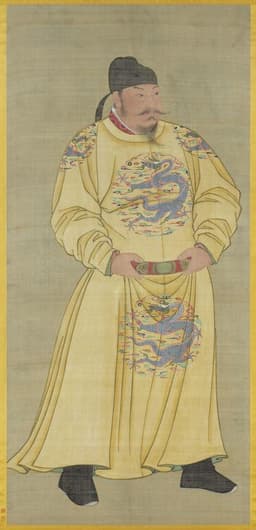
Emperor Taizong of Tang
Emperor · Medieval
78.9Total
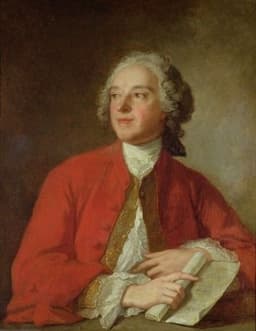
Ivan III the Great
Emperor · Medieval
75.3Total
Basic Information
Born
598
1440
Died
649
1505
Era
Medieval
Medieval
Nationality
China
Muscovy
Occupation
Emperor
Emperor
Civilization
Eastern
Western
Score Comparison
Military (10%)
77.5
76.0
Political (20%)
82.0
70.0
Influence (20%)
85.0
75.0
Legacy (20%)
71.4
80.0
Leadership (15%)
78.0
78.0
Strategy (15%)
80.6
67.2
TOTAL
78.9
75.3
Emperor Taizong of Tang — Complete Timeline
626 AD
Reign of ZhenguanReform
Emperor Taizong initiated the Zhenguan era, characterized by efficient governance, legal codification, and economic recovery. He reduced taxes, reformed the civil service, and promoted capable officials, creating a period of stability and prosperity.
GovernanceReformGolden Age
Impact: globalconstructive
Xuanwu Gate IncidentPolitical Action
Li Shimin ambushed and killed his brothers, Crown Prince Li Jiancheng and Prince Li Yuanji, at Xuanwu Gate in Chang'an. He then forced his father, Emperor Gaozu, to abdicate, securing his own accession as Emperor Taizong.
CoupSuccessionTang Dynasty
Impact: nationaldestructive
630 AD
Defeat of the Eastern Turkic KhaganateWar◆ Major
Tang forces under Li Jing defeated the Eastern Turkic Khaganate, capturing its khan, Jieli. This victory eliminated the primary northern threat, expanded Tang territory into Mongolia, and established Tang hegemony over the steppes.
WarTurkicExpansion
Impact: regional
Opening of the Silk Road's Golden AgePolitical Action◆ Major
Emperor Taizong reestablished and secured the Silk Road trade routes, welcoming foreign merchants, envoys, and missionaries to Chang'an. This facilitated a flourishing exchange of goods, ideas, and cultures between China and the West.
Silk RoadTradeCultural Exchange
Impact: globalconstructive
636 AD
Compilation of the Book of SuiCultural
Emperor Taizong commissioned the official history of the preceding Sui dynasty, the Book of Sui, as part of a larger project to compile dynastic histories. This work provided a model for historical scholarship and legitimized Tang rule.
HistoriographyCultureLegitimacy
Impact: nationalconstructive
Ivan III the Great — Complete Timeline
1472 AD
Marriage to Sophia PalaiologinaPolitical Action◆ Major
Ivan III married Sophia (Zoe) Palaiologina, niece of the last Byzantine emperor. This marriage allowed Ivan to claim succession to the Byzantine Empire, adopt the double-headed eagle as a symbol, and promote Moscow as the Third Rome.
ByzantiumThird RomeMarriage
Impact: regionalconstructive
1478 AD
Annexation of NovgorodWar◆ Major
Ivan III conquered the Novgorod Republic after a series of campaigns. He abolished the veche (assembly) and removed the veche bell, incorporating Novgorod's vast territories into the Grand Principality of Moscow.
NovgorodAnnexationMoscow
Impact: regional
1480 AD
Great Stand on the Ugra RiverWar
Ivan III faced the Mongol army of Khan Akhmat across the Ugra River. After weeks of stalemate, the Mongols withdrew without battle. This event ended 240 years of Mongol suzerainty over Russia.
Golden HordeIndependenceUgra
Impact: regional
1497 AD
Issued the Sudebnik of 1497Reform◆ Major
Ivan III promulgated a new legal code, the Sudebnik, which standardized laws across the Russian lands. It restricted peasant mobility by limiting the time for transfer between landowners, a step toward serfdom.
Legal CodeSerfdomReform
Impact: national
1500 AD
War with the Grand Duchy of LithuaniaWar◆ Major
Ivan III launched a war against Lithuania, capturing the cities of Bryansk, Dorogobuzh, and Putivl. The war ended with the Truce of 1503, which ceded significant territories to Moscow.
LithuaniaTerritorial ExpansionWar
Impact: regional
Expert Analysis
Origins
Emperor Taizong of Tang (Li Shimin) was born in 598 into the aristocratic Li family, which played a key role in the fall of the Sui dynasty. His father, Li Yuan, founded the Tang dynasty in 618, and Li Shimin emerged as a brilliant military commander, leading campaigns that consolidated Tang control over China. In contrast, Ivan III the Great (born 1440) was the Grand Prince of Moscow, inheriting a principality that had been a vassal of the Mongol Golden Horde. Ivan's early life was shaped by the need to navigate Mongol domination and internal rivalries among Russian principalities. Both leaders rose from turbulent backgrounds, but Taizong's rise was marked by family betrayal and civil war, while Ivan's was a slow accumulation of power within a fragmented feudal system.
Rise to Power
Taizong's path to power was violent and decisive. He orchestrated the Xuanwu Gate Incident in 626, where he ambushed and killed his brothers, the crown prince and another brother, then forced his father to abdicate. This ruthless act secured his throne, and he quickly proved his capability by launching a reign of reform and expansion. Ivan III's rise was more gradual. He became Grand Prince in 1462 after his father's death and immediately began consolidating power. His key turning point was the Great Stand on the Ugra River in 1480, where he faced the Mongol army but avoided battle, leading to the bloodless end of Mongol suzerainty. Ivan's marriage to Sophia Palaiologina, niece of the last Byzantine emperor, bolstered his prestige and claims to imperial legacy.
Leadership & Governance
Taizong's reign, known as the Reign of Zhenguan, is considered a golden age of Chinese civilization. He implemented efficient bureaucracy, reformed the legal code, and promoted Confucian scholarship. He also expanded the Tang empire through military campaigns, defeating the Eastern Turkic Khaganate and securing the Silk Road, fostering trade and cultural exchange. His governance emphasized meritocracy and listening to advisors, as exemplified by his relationship with Chancellor Wei Zheng. Ivan III, by contrast, focused on centralizing the Russian state. He annexed Novgorod in 1478, subjugated other principalities, and issued the Sudebnik of 1497, a legal code that unified laws and strengthened the autocracy. He also fought wars with Lithuania and Livonia, expanding Muscovy's territory. Ivan's leadership was more autocratic and less culturally open, but effective in state-building.
Triumph & Tragedy
Taizong's triumphs include the defeat of the Eastern Turks, which eliminated the greatest external threat and opened the Silk Road. He also compiled the Book of Sui, showcasing his patronage of history. His tragedy lies in the bloody means of his accession and later succession struggles; his son and heir, Li Zhi, was weak, leading to future instability. Ivan III's triumph was ending Mongol rule without a major battle, a diplomatic and strategic victory. He also married into Byzantine royalty, adopting the double-headed eagle as a symbol. His tragedy was the internal strife with his son and heir, Vasily, whom he imprisoned, and the failure to secure a stable succession, leading to later turmoil.
Character & Destiny
Taizong was shrewd, ambitious, and capable of great ruthlessness, yet he also valued learning and governance. His destiny was to be remembered as one of China's greatest emperors, a model of enlightened rule. Ivan III was patient, calculating, and determined to unify Russia. His destiny was to be the 'Gatherer of the Russian Lands,' laying the foundation for the Tsardom of Russia. Both were pragmatists who seized opportunities, but Taizong's broader vision and cultural achievements give him an edge in character versatility.
Legacy
Taizong's legacy is immense: the Tang dynasty became a global power, and his reign set standards for Chinese governance. The Silk Road's golden age under him connected East and West. Ivan III's legacy is the creation of a unified Russian state independent of Mongol rule, and his adoption of Byzantine traditions shaped Russian autocracy. However, his centralization also laid groundwork for serfdom. In terms of global impact, Taizong's influence on trade and culture was more profound. His emphasis on meritocracy and law influenced later Chinese dynasties, while Ivan's legacy is more regionally focused on Russian statehood.
Conclusion
Emperor Taizong of Tang and Ivan III the Great were both transformative rulers, but Taizong's achievements in governance, expansion, and cultural flourishing outshine Ivan's more narrow focus on unification and centralization. Taizong's reign represents a pinnacle of Chinese civilization, while Ivan's work was foundational but less brilliant. Scores: Taizong scores higher in Military (78 vs 76), Political (82 vs 70), Intellectual (85 vs 75), and Social (81 vs 67), while Ivan leads in Longevity (80 vs 71) and Diplomatic (78 vs 71). The overall score gap of 3.6 reflects Taizong's superior synthesis of military conquest, administrative reform, and cultural patronage. Thus, Emperor Taizong of Tang is the more impactful and impressive ruler.
Rankings
🥇
Emperor Taizong of TangLeader
Mil: 77.5Pol: 82.0Inf: 85.0
78.9
🥈
Ivan III the Great
Mil: 76.0Pol: 70.0Inf: 75.0
75.3
+3.6 behind
How This Comparison Works
Algorithm
Each figure is scored on 6 dimensions (0—100 scale) based on structured historical data: Military (10%), Political (20%), Influence (20%), Legacy (20%), Leadership (15%), Strategy (15%). The weighted total produces the final ranking.
Data Sources
Scores are computed from structured sub-indicators in the database. Scale factors adjust for era (Ancient ×0.85, Modern ×1.0) and civilization size (Eastern ×1.05, Other ×0.80) to account for differences in population and military scale.
Maximum 3 Figures
Comparisons are limited to 2—3 figures to ensure readability and statistical meaningfulness.
Error Margins
±5 points per dimension — Sub-scores are derived from historical records with inherent uncertainty. Two figures within 5 points on a dimension should be considered roughly equivalent in that area.
Total Score Accuracy
±3 points overall — The weighted combination of 6 dimensions produces a total score with approximately ±3 points of uncertainty. Differences of less than 3 points are not statistically significant— the figures are effectively tied.
Known Limitations
- Historical records are incomplete and uneven across civilizations
- Figures from oral-tradition societies may be underrepresented
- Occupation labels can misclassify multi-role figures
- Scores measure capability and impact, not moral character
- Quantitative scoring is a comparison tool, not absolute truth
Capability Radar
Military (10%) — Battles & Warfare
Battles
95
75
Win Rate
95
80
Expansion
90
85
Political (20%) — Governance & Reform
Reform
95
80
Diplomacy
95
85
Economy
95
70
Influence (20%) — Cultural & Global Reach
Cultural
90
70
Global
90
70
Legacy (20%) — Historical Impact
Historical
95
85
Longevity
95
80
Leadership (15%) — Power & Stability
Tenure
85
85
Stability
95
75
Strategy (15%) — Tactics & Innovation
Strategy
95
85
Tactics
95
70
Reform
90
65
Similar Comparisons
Comments & Discussion
No comments yet. Be the first to share your thoughts!