Loading...
Emperor Taizong of Tang vs Isabella I of Castile
Emperor Taizong of Tang leads by 1.7 pts · 2 figures compared
…
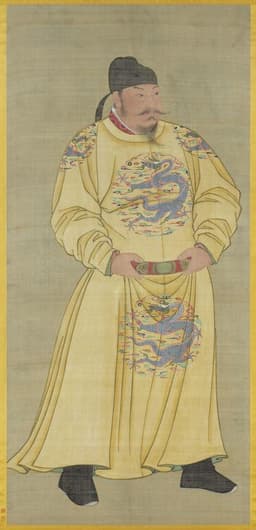
Emperor Taizong of Tang
Emperor · Medieval
78.9Total
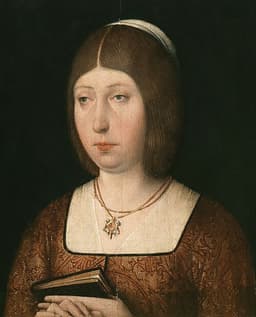
Isabella I of Castile
Emperor · Medieval
77.2Total
Basic Information
Born
598
1451
Died
649
1504
Era
Medieval
Medieval
Nationality
China
Spain
Occupation
Emperor
Emperor
Civilization
Eastern
Western
Score Comparison
Military (10%)
77.5
76.0
Political (20%)
82.0
78.0
Influence (20%)
85.0
80.0
Legacy (20%)
71.4
75.0
Leadership (15%)
78.0
78.0
Strategy (15%)
80.6
75.0
TOTAL
78.9
77.2
Emperor Taizong of Tang — Complete Timeline
626 AD
Reign of ZhenguanReform
Emperor Taizong initiated the Zhenguan era, characterized by efficient governance, legal codification, and economic recovery. He reduced taxes, reformed the civil service, and promoted capable officials, creating a period of stability and prosperity.
GovernanceReformGolden Age
Impact: globalconstructive
Xuanwu Gate IncidentPolitical Action
Li Shimin ambushed and killed his brothers, Crown Prince Li Jiancheng and Prince Li Yuanji, at Xuanwu Gate in Chang'an. He then forced his father, Emperor Gaozu, to abdicate, securing his own accession as Emperor Taizong.
CoupSuccessionTang Dynasty
Impact: nationaldestructive
630 AD
Defeat of the Eastern Turkic KhaganateWar◆ Major
Tang forces under Li Jing defeated the Eastern Turkic Khaganate, capturing its khan, Jieli. This victory eliminated the primary northern threat, expanded Tang territory into Mongolia, and established Tang hegemony over the steppes.
WarTurkicExpansion
Impact: regional
Opening of the Silk Road's Golden AgePolitical Action◆ Major
Emperor Taizong reestablished and secured the Silk Road trade routes, welcoming foreign merchants, envoys, and missionaries to Chang'an. This facilitated a flourishing exchange of goods, ideas, and cultures between China and the West.
Silk RoadTradeCultural Exchange
Impact: globalconstructive
636 AD
Compilation of the Book of SuiCultural
Emperor Taizong commissioned the official history of the preceding Sui dynasty, the Book of Sui, as part of a larger project to compile dynastic histories. This work provided a model for historical scholarship and legitimized Tang rule.
HistoriographyCultureLegitimacy
Impact: nationalconstructive
Isabella I of Castile — Complete Timeline
1469 AD
Marriage to Ferdinand of AragonPolitical Action
Isabella married Ferdinand II of Aragon in Valladolid, uniting the kingdoms of Castile and Aragon. This dynastic union laid the foundation for the unified Spanish monarchy and enabled joint policies including the Reconquista and overseas exploration.
Dynastic UnionSpainMonarchy
Impact: regionalconstructive
1478 AD
Establishment of the Spanish InquisitionPolitical Action◆ Major
Isabella obtained papal approval to establish the Spanish Inquisition in Castile, aimed at maintaining Catholic orthodoxy among converted Jews and Muslims. The Inquisition operated under royal control, conducting trials and executions for heresy.
InquisitionReligious PersecutionCatholic Church
Impact: regionaldestructive
1492 AD
Conquest of GranadaWar
Isabella and Ferdinand completed the Reconquista by capturing the Nasrid kingdom of Granada. The surrender of the last Muslim state in Iberia ended 781 years of Islamic rule and unified Spain under Christian rule.
ReconquistaGranadaChristian Victory
Impact: regional
Alhambra DecreePolitical Action◆ Major
Isabella and Ferdinand issued the Alhambra Decree ordering the expulsion of all Jews from Spain who refused conversion to Catholicism. An estimated 40,000 to 200,000 Jews were forced to leave, causing demographic and economic disruption.
ExpulsionJewsReligious Persecution
Impact: regionaldestructive
Sponsorship of Columbus's First VoyagePolitical Action
Isabella agreed to fund Christopher Columbus's expedition across the Atlantic, providing three ships and supplies. Columbus reached the Bahamas on October 12, initiating sustained European contact with the Americas and the Spanish colonial empire.
ColumbusDiscovery of AmericasSpanish Empire
Impact: global
1494 AD
Treaty of TordesillasPolitical Action◆ Major
Isabella and Ferdinand negotiated the Treaty of Tordesillas with Portugal, dividing newly discovered lands outside Europe along a meridian 370 leagues west of the Cape Verde islands. This agreement shaped colonial claims in the Americas and Africa.
Colonial DivisionSpainPortugal
Impact: global
Expert Analysis
Origins
Emperor Taizong of Tang (Li Shimin, 598–649) was born into a powerful aristocratic family during the tumultuous Sui dynasty. His father, Li Yuan, was a Sui general who later founded the Tang dynasty. Taizong distinguished himself as a military prodigy, playing a key role in the campaigns that overthrew the Sui. In contrast, Isabella I of Castile (1451–1504) was born into the Trastámara dynasty, a time of civil war and weak royal authority in Castile. She was not initially heir to the throne, but her strategic marriage to Ferdinand of Aragon and her own political acumen allowed her to claim the crown. Both figures emerged from periods of instability, but Taizong’s background was shaped by military conquest, while Isabella’s was defined by political maneuvering and religious fervor.
Rise to Power
Taizong’s rise was marked by the Xuanwu Gate Incident (626), where he ambushed and killed his brothers, the crown prince and another rival, forcing his father to abdicate. This ruthless act secured his position but stained his legitimacy. In contrast, Isabella’s path was more diplomatic. She married Ferdinand of Aragon in 1469 against her brother’s wishes, forming a powerful alliance. After a war of succession against her niece Joanna, Isabella emerged as queen of Castile in 1474. Both used decisive actions, but Taizong’s method was fratricidal, while Isabella’s was a combination of marriage and military conflict. However, Taizong’s subsequent reign proved remarkably effective, turning a bloody usurpation into a golden age.
Leadership & Governance
Taizong’s Reign of Zhenguan (627–649) is considered a model of effective governance. He surrounded himself with capable advisors like Wei Zheng, encouraged Confucian learning, and reformed the legal code. He expanded the empire, defeating the Eastern Turkic Khaganate and securing the Silk Road, which flourished under Tang protection. His administration was efficient and relatively meritocratic. Isabella, co-ruling with Ferdinand, centralized power in Spain by subduing the nobility, reforming the church, and conquering Granada (1492), ending the Reconquista. She also sponsored Columbus’s voyage, leading to the discovery of the Americas. However, her reign also saw the establishment of the Spanish Inquisition and the Alhambra Decree, expelling Jews. Taizong’s governance was more inclusive and stable, while Isabella’s was more religiously intolerant and expansionist in a global context.
Triumph & Tragedy
Taizong’s triumphs include the conquest of the Eastern Turks, which ended a major threat, and the opening of the Silk Road, which brought prosperity and cultural exchange. His compilation of the Book of Sui standardized history. However, his later years were marred by succession struggles and overreliance on eunuchs. Isabella’s greatest triumph was the unification of Spain and the sponsorship of Columbus, which launched the Spanish Empire. Yet, her legacy is darkened by the Inquisition and the expulsion of Jews, which caused economic and cultural damage. Both faced personal tragedies: Taizong lost his beloved wife Empress Zhangsun, and Isabella outlived several children, including her only son. In terms of long-term impact, Isabella’s actions reshaped global history, but at a higher human cost.
Character & Destiny
Taizong was known for his strategic brilliance, charisma, and willingness to accept criticism. He famously said, "Using a mirror, one can see one's own faults." His destiny was to create a golden age despite a bloody start. Isabella was devout, determined, and politically astute, seeing herself as a defender of Catholicism. Her destiny was to forge a unified Spain and launch European colonialism. While Taizong’s character allowed for a more enlightened rule, Isabella’s rigid piety led to persecution. Both were products of their time, but Taizong’s flexibility made him a more effective ruler in the long run.
Legacy
Taizong’s legacy is the Tang dynasty’s golden age, which influenced all subsequent Chinese dynasties. His governance model was emulated for centuries. The Silk Road’s prosperity under him facilitated cultural and technological exchange. Isabella’s legacy is the Spanish Empire, the spread of Christianity, and the Columbian Exchange, but also the destruction of indigenous civilizations and the Inquisition. In terms of global impact, Isabella’s actions were more far-reaching, but morally ambiguous. Taizong’s reign is remembered as a high point of Chinese civilization. On a balanced analysis, Taizong’s rule was more humane and stable, whereas Isabella’s was transformative but brutal.
Conclusion
Emperor Taizong of Tang and Isabella I of Castile were both transformative rulers, but their methods and legacies differ sharply. Taizong’s military prowess and administrative reforms created a stable, prosperous empire that became a model for governance. Isabella’s unification of Spain and sponsorship of exploration changed the world, but her religious intolerance left a dark mark. Considering their scores—Taizong (78, 82, 85, 71, 78, 81, 79) and Isabella (76, 78, 80, 75, 78, 75, 77)—Taizong leads in most categories, particularly in political skill and influence. His ability to foster a golden age from a coup demonstrates superior leadership. Isabella’s achievements are monumental, but her reliance on coercion and persecution reduces her moral standing. Ultimately, Emperor Taizong of Tang emerges as the greater ruler for his effective, enlightened governance and lasting positive legacy.
Rankings
🥇
Emperor Taizong of TangLeader
Mil: 77.5Pol: 82.0Inf: 85.0
78.9
🥈
Isabella I of Castile
Mil: 76.0Pol: 78.0Inf: 80.0
77.2
+1.7 behind
How This Comparison Works
Algorithm
Each figure is scored on 6 dimensions (0—100 scale) based on structured historical data: Military (10%), Political (20%), Influence (20%), Legacy (20%), Leadership (15%), Strategy (15%). The weighted total produces the final ranking.
Data Sources
Scores are computed from structured sub-indicators in the database. Scale factors adjust for era (Ancient ×0.85, Modern ×1.0) and civilization size (Eastern ×1.05, Other ×0.80) to account for differences in population and military scale.
Maximum 3 Figures
Comparisons are limited to 2—3 figures to ensure readability and statistical meaningfulness.
Error Margins
±5 points per dimension — Sub-scores are derived from historical records with inherent uncertainty. Two figures within 5 points on a dimension should be considered roughly equivalent in that area.
Total Score Accuracy
±3 points overall — The weighted combination of 6 dimensions produces a total score with approximately ±3 points of uncertainty. Differences of less than 3 points are not statistically significant— the figures are effectively tied.
Known Limitations
- Historical records are incomplete and uneven across civilizations
- Figures from oral-tradition societies may be underrepresented
- Occupation labels can misclassify multi-role figures
- Scores measure capability and impact, not moral character
- Quantitative scoring is a comparison tool, not absolute truth
Capability Radar
Military (10%) — Battles & Warfare
Battles
95
75
Win Rate
95
80
Expansion
90
85
Political (20%) — Governance & Reform
Reform
95
90
Diplomacy
95
80
Economy
95
75
Influence (20%) — Cultural & Global Reach
Cultural
90
85
Global
90
95
Legacy (20%) — Historical Impact
Historical
95
95
Longevity
95
90
Leadership (15%) — Power & Stability
Tenure
85
85
Stability
95
70
Strategy (15%) — Tactics & Innovation
Strategy
95
85
Tactics
95
70
Reform
90
90
Similar Comparisons
Comments & Discussion
No comments yet. Be the first to share your thoughts!