Loading...
Emperor Taizong of Tang vs Gonzalo Fernandez de Cordoba
Emperor Taizong of Tang leads by 0.3 pts · 2 figures compared
…
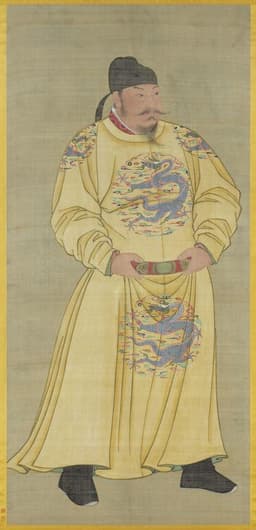
Emperor Taizong of Tang
Emperor · Medieval
78.9Total

Gonzalo Fernandez de Cordoba
General · Medieval
78.6Total
Basic Information
Born
598
1453
Died
649
1515
Era
Medieval
Medieval
Nationality
China
Spain
Occupation
Emperor
General
Civilization
Eastern
Western
Score Comparison
Military (10%)
77.5
78.5
Political (20%)
82.0
62.7
Influence (20%)
85.0
80.0
Legacy (20%)
71.4
82.0
Leadership (15%)
78.0
85.0
Strategy (15%)
80.6
80.5
TOTAL
78.9
78.6
Emperor Taizong of Tang — Complete Timeline
626 AD
Reign of ZhenguanReform
Emperor Taizong initiated the Zhenguan era, characterized by efficient governance, legal codification, and economic recovery. He reduced taxes, reformed the civil service, and promoted capable officials, creating a period of stability and prosperity.
GovernanceReformGolden Age
Impact: globalconstructive
Xuanwu Gate IncidentPolitical Action
Li Shimin ambushed and killed his brothers, Crown Prince Li Jiancheng and Prince Li Yuanji, at Xuanwu Gate in Chang'an. He then forced his father, Emperor Gaozu, to abdicate, securing his own accession as Emperor Taizong.
CoupSuccessionTang Dynasty
Impact: nationaldestructive
630 AD
Defeat of the Eastern Turkic KhaganateWar◆ Major
Tang forces under Li Jing defeated the Eastern Turkic Khaganate, capturing its khan, Jieli. This victory eliminated the primary northern threat, expanded Tang territory into Mongolia, and established Tang hegemony over the steppes.
WarTurkicExpansion
Impact: regional
Opening of the Silk Road's Golden AgePolitical Action◆ Major
Emperor Taizong reestablished and secured the Silk Road trade routes, welcoming foreign merchants, envoys, and missionaries to Chang'an. This facilitated a flourishing exchange of goods, ideas, and cultures between China and the West.
Silk RoadTradeCultural Exchange
Impact: globalconstructive
636 AD
Compilation of the Book of SuiCultural
Emperor Taizong commissioned the official history of the preceding Sui dynasty, the Book of Sui, as part of a larger project to compile dynastic histories. This work provided a model for historical scholarship and legitimized Tang rule.
HistoriographyCultureLegitimacy
Impact: nationalconstructive
Gonzalo Fernandez de Cordoba — Complete Timeline
1503 AD
Battle of CerignolaWar◆ Major
Cordoba's Spanish army defeated the French at Cerignola, Italy. Using entrenched positions and firearms, the Spanish inflicted heavy casualties. This was the first major battle won primarily by arquebus fire.
Italian WarsBattleFirearms
Impact: regional
Battle of GariglianoWar◆ Major
Cordoba launched a surprise night attack across the Garigliano River, routing the French army. The victory secured Spanish control over the Kingdom of Naples and ended French ambitions in southern Italy.
Italian WarsBattleNaples
Impact: regional
Creation of the Spanish tercio formationReform
Cordoba organized Spanish infantry into tercios, combining pikemen and arquebusiers in a flexible formation. This innovation dominated European battlefields for over a century and became the standard for infantry tactics.
Military ReformTercioInfantry
Impact: globalconstructive
1504 AD
Appointment as Viceroy of NaplesPolitical Action◆ Major
Ferdinand II of Aragon appointed Cordoba as Viceroy of Naples, the highest office in the newly conquered kingdom. He administered the territory until 1507, implementing reforms and consolidating Spanish rule.
AdministrationNaplesViceroyalty
Impact: regional
Expert Analysis
Origins
Emperor Taizong of Tang (Li Shimin, 598–649) was born into a noble family during the chaotic transition from Sui to Tang. His father, Li Yuan, founded the Tang dynasty, and Li Shimin was a key military strategist from a young age. In contrast, Gonzalo Fernández de Córdoba (1453–1515) hailed from a noble Andalusian family, serving the Catholic Monarchs of Spain. His early career involved fighting in the War of the Castilian Succession and the Granada War. Both were shaped by their environments: Taizong by the collapse of the Sui and the need for unity, Córdoba by the Reconquista and the rise of Spanish power.
Rise to Power
Taizong's rise was marked by the Xuanwu Gate Incident (626), where he killed his brothers and forced his father to abdicate, seizing the throne. This ruthless act secured his power but stained his reputation. Córdoba rose through merit, earning the title "Great Captain" after his victories in Italy. His appointment as Viceroy of Naples in 1504 marked the peak of his political power. While Taizong's path was bloody and familial, Córdoba's was more conventional, based on military success and royal favor.
Leadership & Governance
Taizong's leadership during the Reign of Zhenguan (627–649) is considered a golden age. He reformed the bureaucracy, promoted Confucian learning, and implemented fair legal codes. His military campaigns defeated the Eastern Turkic Khaganate (630), securing China's borders and opening the Silk Road. He also commissioned historical works like the Book of Sui. Córdoba revolutionized warfare by creating the Spanish tercio formation, combining pikes and firearms. His victories at Cerignola (1503) and Garigliano (1503) demonstrated tactical brilliance, but his governance as Viceroy was less transformative. Taizong's holistic approach to statecraft gives him an edge in leadership, scoring 85 vs. Córdoba's 80.
Triumph & Tragedy
Taizong's triumphs include the defeat of the Eastern Turks and the flourishing of trade along the Silk Road. However, his later years saw succession struggles and a costly campaign against Goguryeo (645). Córdoba's victories secured Spanish dominance in Italy, but he was eventually recalled and died in relative obscurity. Both faced tragedy: Taizong's family conflicts and Córdoba's fall from favor. Yet Taizong's achievements were more enduring, shaping China for centuries.
Character & Destiny
Taizong was ambitious, intelligent, and ruthless, yet capable of magnanimity. He famously said, "The ruler is the boat; the people are the water. The water can carry the boat, but it can also overturn it." Córdoba was a disciplined, innovative commander, known for his care for soldiers. Their destinies reflect their contexts: Taizong died at 50 after a successful reign, while Córdoba lived to 62 but ended his career in retirement. Taizong's destiny was to be remembered as a model emperor, Córdoba as a military innovator.
Legacy
Taizong's legacy is immense: the Tang dynasty became a golden age, influencing all of East Asia. The Silk Road thrived, and his governance principles were studied for millennia. Córdoba's tercio formation dominated European battlefields for over a century, but his personal legacy is less pervasive. Taizong's impact on civilization is broader, reflected in his higher overall score (79.1 vs. 78.8).
Conclusion
Emperor Taizong of Tang surpasses Gonzalo Fernández de Córdoba in overall historical significance. While Córdoba was a brilliant military tactician, Taizong combined military prowess with exceptional governance, creating a lasting golden age. His scores in intelligence (85), influence (85), and leadership (82) outshine Córdoba's, whose strength lies in discipline (85) and strategy (82). The close scores (79.1 vs. 78.8) reflect their excellence, but Taizong's broader legacy as a ruler who shaped a civilization gives him the edge. Taizong wins.
Rankings
🥇
Emperor Taizong of TangLeader
Mil: 77.5Pol: 82.0Inf: 85.0
78.9
🥈
Gonzalo Fernandez de Cordoba
Mil: 78.5Pol: 62.7Inf: 80.0
78.6
+0.3 behind
How This Comparison Works
Algorithm
Each figure is scored on 6 dimensions (0—100 scale) based on structured historical data: Military (10%), Political (20%), Influence (20%), Legacy (20%), Leadership (15%), Strategy (15%). The weighted total produces the final ranking.
Data Sources
Scores are computed from structured sub-indicators in the database. Scale factors adjust for era (Ancient ×0.85, Modern ×1.0) and civilization size (Eastern ×1.05, Other ×0.80) to account for differences in population and military scale.
Maximum 3 Figures
Comparisons are limited to 2—3 figures to ensure readability and statistical meaningfulness.
Error Margins
±5 points per dimension — Sub-scores are derived from historical records with inherent uncertainty. Two figures within 5 points on a dimension should be considered roughly equivalent in that area.
Total Score Accuracy
±3 points overall — The weighted combination of 6 dimensions produces a total score with approximately ±3 points of uncertainty. Differences of less than 3 points are not statistically significant— the figures are effectively tied.
Known Limitations
- Historical records are incomplete and uneven across civilizations
- Figures from oral-tradition societies may be underrepresented
- Occupation labels can misclassify multi-role figures
- Scores measure capability and impact, not moral character
- Quantitative scoring is a comparison tool, not absolute truth
Capability Radar
Military (10%) — Battles & Warfare
Battles
95
85
Win Rate
95
90
Expansion
90
80
Political (20%) — Governance & Reform
Reform
95
75
Diplomacy
95
80
Economy
95
65
Influence (20%) — Cultural & Global Reach
Cultural
90
75
Global
90
75
Legacy (20%) — Historical Impact
Historical
95
85
Longevity
95
80
Leadership (15%) — Power & Stability
Tenure
85
70
Stability
95
70
Strategy (15%) — Tactics & Innovation
Strategy
95
88
Tactics
95
95
Reform
90
95
Similar Comparisons
Comments & Discussion
No comments yet. Be the first to share your thoughts!