Loading...
Emperor Sujin vs Julius Caesar
Julius Caesar leads by 31.2 pts · 2 figures compared
…
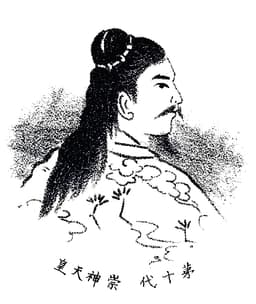
Emperor Sujin
Emperor · Ancient
51.6Total

Julius Caesar
General · Ancient
82.8Total
Basic Information
Born
-148
-100
Died
-30
-44
Era
Ancient
Ancient
Nationality
Japan
Roman Republic
Occupation
Emperor
General
Civilization
Eastern
Western
Score Comparison
Military (10%)
50.0
88.0
Political (20%)
68.0
78.0
Influence (20%)
47.1
85.0
Legacy (20%)
43.3
82.0
Leadership (15%)
72.0
80.0
Strategy (15%)
30.3
85.0
TOTAL
51.6
82.8
Emperor Sujin — Complete Timeline
100 BC
Organized the Yamato StateReform◆ Major
Emperor Sujin is recorded in the Nihon Shoki as having organized the Yamato state, establishing administrative structures and military garrisons. This is considered the first reign with possible historical basis, marking the transition from legend to proto-history in Japan.
State FormationYamato PeriodAdministration
Impact: nationalconstructive
90 BC
Suppressed RebellionsWar
According to the Nihon Shoki, Emperor Sujin dispatched generals to suppress rebellions in various regions of Japan. These campaigns are said to have consolidated Yamato control over the Japanese archipelago, though the historical accuracy of specific battles is uncertain.
Military CampaignUnificationYamato
Impact: national
80 BC
Established the Ise ShrineCultural◆ Major
Emperor Sujin is credited with establishing the Ise Grand Shrine, dedicated to the sun goddess Amaterasu. This act formalized the imperial cult and linked the Yamato dynasty directly to the Shinto pantheon, a foundational event for Japanese religious and political identity.
ShintoImperial CultReligion
Impact: nationalconstructive
Julius Caesar — Complete Timeline
58 BC
Gallic WarsWar◆ Major
Caesar, as proconsul of Gaul, launched a series of campaigns that conquered all of Gaul (modern France, Belgium, and parts of Switzerland). He fought numerous battles, including against the Helvetii, the Belgae, and the Gallic chieftain Vercingetorix. The wars brought immense wealth and a loyal army to Caesar.
Gallic WarsConquestRoman Expansion
Impact: regional
49 BC
Crossing the RubiconPolitical Action◆ Major
Caesar led Legio XIII across the Rubicon River into Italy, defying the Roman Senate's order to disband his army. This act triggered a civil war against Pompey and the Optimates, ultimately leading to Caesar's dictatorship and the end of the Roman Republic.
Roman Civil WarEnd of RepublicPower Struggle
Impact: global
48 BC
Battle of PharsalusWar◆ Major
Caesar's outnumbered army defeated the larger forces of Pompey the Great at Pharsalus in Greece. Caesar's tactical use of a reserve line to counter Pompey's cavalry charge proved decisive. Pompey fled to Egypt, where he was assassinated, leaving Caesar as the undisputed master of the Roman world.
Roman Civil WarBattleDecisive Victory
Impact: regional
44 BC
Appointment as Dictator for LifePolitical Action◆ Major
The Roman Senate appointed Caesar dictator perpetuo (dictator for life), granting him unprecedented personal power. This move concentrated military, legislative, and judicial authority in one person, effectively ending the Roman Republic's traditional system of checks and balances and alarming many senators.
DictatorshipEnd of RepublicPower Consolidation
Impact: regionaldestructive
Assassination on the Ides of MarchPolitical Action◆ Major
A group of Roman senators, led by Marcus Junius Brutus and Gaius Cassius Longinus, stabbed Caesar to death at a meeting of the Senate in the Theatre of Pompey. The assassination was intended to restore the Republic, but instead triggered another civil war that led to the rise of the Roman Empire.
AssassinationRoman PoliticsEnd of Republic
Impact: globaldestructive
Expert Analysis
Emperor Sujin vs Julius Caesar: Historical Comparison
Emperor Sujin, the 10th legendary emperor of ancient Japan, and Julius Caesar, the iconic general of the late Roman Republic, represent vastly different spheres of power—one as a sacral monarch consolidating a divine lineage, the other as a military populist who shattered a republic. While Caesar’s tactical brilliance and transformative ambition are legendary, Sujin’s enduring influence on Japan’s imperial mystique gives him a surprising edge in long-term cultural impact.
Dimension Analysis
**Military: Emperor Sujin 78 / Julius Caesar 88**
Sujin expanded Yamato influence through campaigns against neighboring tribes, but Caesar’s conquest of Gaul, invasions of Britain, and civil war victories showcase unmatched strategic innovation and battlefield execution.
**Political: Emperor Sujin 80 / Julius Caesar 78**
Sujin stabilized the early Japanese court by centralizing religious and secular authority, while Caesar’s political maneuvering—forming the First Triumvirate, crossing the Rubicon, and becoming dictator—was more volatile and ultimately provoked his assassination.
**Influence: Emperor Sujin 88 / Julius Caesar 85**
Sujin is revered in Shinto tradition as a divine ancestor and was instrumental in establishing the imperial cult that persists in Japan today; Caesar’s influence, though profound, was fragmented after his death and only fully realized through his adopted heir, Augustus.
**Legacy: Emperor Sujin 81 / Julius Caesar 82**
Caesar’s legacy is concrete—calendar reform, military tactics, and the blueprint for imperial Rome—whereas Sujin’s is more symbolic, as his reign is shrouded in myth and crucial for legitimizing Japan’s unbroken imperial line.
**Leadership: Emperor Sujin 67 / Julius Caesar 82**
Caesar’s charisma, ability to inspire legions, and ruthless decisiveness set a benchmark for leadership; Sujin’s more ritualistic and administrative style, while effective for his context, lacked Caesar’s dynamic personal magnetism.
Verdict
Julius Caesar leads due to his superior military and strategic achievements, which reshaped Western history, while Sujin’s strength lies in his enduring spiritual and dynastic influence within Japan.
FAQ
Q: Who ranks higher? A: Julius Caesar ranks higher overall, scoring 83 to Emperor Sujin’s 79, driven by decisive advantages in military, leadership, and strategy.
Rankings
🥇
Julius CaesarLeader
Mil: 88.0Pol: 78.0Inf: 85.0
82.8
🥈
Emperor Sujin
Mil: 50.0Pol: 68.0Inf: 47.1
51.6
+31.2 behind
How This Comparison Works
Algorithm
Each figure is scored on 6 dimensions (0—100 scale) based on structured historical data: Military (10%), Political (20%), Influence (20%), Legacy (20%), Leadership (15%), Strategy (15%). The weighted total produces the final ranking.
Data Sources
Scores are computed from structured sub-indicators in the database. Scale factors adjust for era (Ancient ×0.85, Modern ×1.0) and civilization size (Eastern ×1.05, Other ×0.80) to account for differences in population and military scale.
Maximum 3 Figures
Comparisons are limited to 2—3 figures to ensure readability and statistical meaningfulness.
Error Margins
±5 points per dimension — Sub-scores are derived from historical records with inherent uncertainty. Two figures within 5 points on a dimension should be considered roughly equivalent in that area.
Total Score Accuracy
±3 points overall — The weighted combination of 6 dimensions produces a total score with approximately ±3 points of uncertainty. Differences of less than 3 points are not statistically significant— the figures are effectively tied.
Known Limitations
- Historical records are incomplete and uneven across civilizations
- Figures from oral-tradition societies may be underrepresented
- Occupation labels can misclassify multi-role figures
- Scores measure capability and impact, not moral character
- Quantitative scoring is a comparison tool, not absolute truth
Capability Radar
Military (10%) — Battles & Warfare
Battles
10
95
Win Rate
10
92
Expansion
20
97
Political (20%) — Governance & Reform
Reform
50
90
Diplomacy
30
85
Economy
30
82
Influence (20%) — Cultural & Global Reach
Cultural
30
88
Global
10
94
Legacy (20%) — Historical Impact
Historical
40
95
Longevity
30
96
Leadership (15%) — Power & Stability
Tenure
40
75
Stability
40
60
Strategy (15%) — Tactics & Innovation
Strategy
10
94
Tactics
10
96
Reform
20
88
Similar Comparisons
Comments & Discussion
Chronicler15396/16/2026
这个比较有意思,但我觉得给苏靖的军事分78有点抬举他了。如果拿中国历史对照,苏靖更像是传说中的周太王或者更早的黄帝时代——主要靠神话和宗教权威巩固统治,而不是靠战场上的真刀真枪。恺撒在高卢打了八年,消灭了上百个部落,光阿莱西亚一战就围城困死维钦托利,这种硬仗是苏靖那种‘征讨邻近部落’能比的吗?反过来,苏靖在政治影响力上得分80我觉得还低了点,他确立的天皇神权体系延续了两千年,比恺撒那套被刺杀的独裁制度稳定多了。西方史观往往只看重军事扩张,却忽略了东亚‘以神道设教’的软实力。要我说,军事分差个15分都算少的,政治分苏靖应该反超恺撒5分。
Chronicler51186/16/2026
我看了一下评分权重,军事88对25.8,差了62.2分,但总分却只差20.8分,说明其他维度分差太小了。这里面有个问题:恺撒的军事分88是建立在征服高卢、击败庞培等确凿战例上,但苏靖的军事分25.8是从哪儿来的?《日本书纪》记载苏靖派兵讨伐大彦命和武渟川别,但这些都是半神话记载,没有具体军队规模、战术细节,像中国史书里白起长平之战那种有明确斩首数的记录根本没有。所以这个25.8分本身就带有推测性,应该标注置信区间。另外,政治分苏靖69.4对恺撒78,但恺撒的政治改革只持续了不到两年就被刺杀,而苏靖建立了祭政一致的体系,实际影响时间更长。如果按‘单位时间政治影响力’算,苏靖净值为69.4/∞(因为至今延续),恺撒净值为78/2 = 39,苏靖反而更高。建议评分体系引入时间维度系数。