Loading...
This comparison has not been analyzed yet.
One-time AI generation (~1 minute). Scores and timeline are already available below.
Emperor Suinin vs Osorkon II
Osorkon II leads by 11.2 pts · 2 figures compared
…
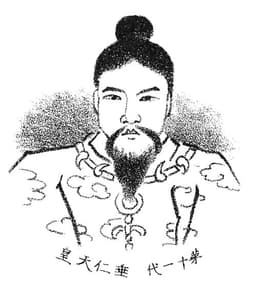
Emperor Suinin
Emperor · Ancient
36.9Total
Osorkon II
Emperor · Ancient
48.1Total
Basic Information
Born
69
-874
Died
70
-850
Era
Ancient
Ancient
Nationality
Japan
Third Intermediate Egypt
Occupation
Emperor
Emperor
Civilization
Eastern
Middle Eastern
Score Comparison
Military (10%)
10.2
47.5
Political (20%)
32.1
68.0
Influence (20%)
44.8
50.2
Legacy (20%)
36.7
40.8
Leadership (15%)
41.5
40.0
Strategy (15%)
45.0
43.7
TOTAL
36.9
48.1
Emperor Suinin — Complete Timeline
29 AD
Reign of Emperor SuininPolitical Action
Emperor Suinin is recorded in the Nihon Shoki as having reigned for nearly 100 years, though modern historians consider this legendary. His reign is primarily known for the story of his son, Yamato Takeru, and the establishment of the Grand Shrine of Ise.
Legendary ReignYamato Period
Impact: national
50 AD
Commissioned the Story of Yamato TakeruCultural
Emperor Suinin is associated with the legendary exploits of his son, Yamato Takeru, a heroic prince who subdued rebellious tribes. This story, recorded in the Kojiki and Nihon Shoki, became a foundational myth of Japanese martial valor and imperial authority.
MythologyHeroic LegendYamato
Impact: national
Osorkon II — Complete Timeline
860 BC
Construction of the Great Temple at BubastisCultural◆ Major
Osorkon II undertook a massive building program at Bubastis, constructing a grand temple to the goddess Bastet. The temple featured a large hypostyle hall, a pylon, and a sacred lake, becoming one of the most important religious centers of the 22nd Dynasty.
BubastisTemple ConstructionBastet
Impact: nationalconstructive
Celebration of the Sed FestivalCultural◆ Major
Osorkon II celebrated a Sed festival (jubilee) in his 30th year, a traditional ritual to renew the pharaoh's strength and legitimacy. The festival was commemorated with reliefs at Bubastis, showcasing his long reign and divine favor.
Sed FestivalJubileeBubastis
Impact: nationalconstructive
850 BC
Diplomatic Relations with AssyriaPolitical Action
Osorkon II maintained diplomatic relations with the rising Assyrian Empire under Ashurnasirpal II. He sent gifts and tribute to Assyria, avoiding conflict and securing Egypt's northern borders during a period of Assyrian expansion.
AssyriaDiplomacyTribute
Impact: regionalconstructive
This comparison has not been analyzed yet.
One-time AI generation (~1 minute). Scores and timeline are already available below.
Rankings
🥇
Osorkon IILeader
Mil: 47.5Pol: 68.0Inf: 50.2
48.1
🥈
Emperor Suinin
Mil: 10.2Pol: 32.1Inf: 44.8
36.9
+11.2 behind
How This Comparison Works
Algorithm
Each figure is scored on 6 dimensions (0—100 scale) based on structured historical data: Military (10%), Political (20%), Influence (20%), Legacy (20%), Leadership (15%), Strategy (15%). The weighted total produces the final ranking.
Data Sources
Scores are computed from structured sub-indicators in the database. Scale factors adjust for era (Ancient ×0.85, Modern ×1.0) and civilization size (Eastern ×1.05, Other ×0.80) to account for differences in population and military scale.
Maximum 3 Figures
Comparisons are limited to 2—3 figures to ensure readability and statistical meaningfulness.
Error Margins
±5 points per dimension — Sub-scores are derived from historical records with inherent uncertainty. Two figures within 5 points on a dimension should be considered roughly equivalent in that area.
Total Score Accuracy
±3 points overall — The weighted combination of 6 dimensions produces a total score with approximately ±3 points of uncertainty. Differences of less than 3 points are not statistically significant— the figures are effectively tied.
Known Limitations
- Historical records are incomplete and uneven across civilizations
- Figures from oral-tradition societies may be underrepresented
- Occupation labels can misclassify multi-role figures
- Scores measure capability and impact, not moral character
- Quantitative scoring is a comparison tool, not absolute truth
Capability Radar
Military (10%) — Battles & Warfare
Battles
5
20
Win Rate
5
25
Expansion
5
15
Political (20%) — Governance & Reform
Reform
10
50
Diplomacy
10
55
Economy
10
60
Influence (20%) — Cultural & Global Reach
Cultural
20
40
Global
5
20
Legacy (20%) — Historical Impact
Historical
20
35
Longevity
20
30
Leadership (15%) — Power & Stability
Tenure
30
60
Stability
20
55
Strategy (15%) — Tactics & Innovation
Strategy
5
20
Tactics
5
20
Reform
5
15
Similar Comparisons
Comments & Discussion
No comments yet. Be the first to share your thoughts!