Loading...
Emperor Jing of Han vs Vasabha
Vasabha leads by 0.6 pts · 2 figures compared
…
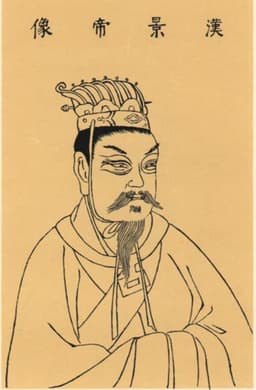
Emperor Jing of Han
Emperor · Ancient
49.2Total

Vasabha
Emperor · Ancient
49.8Total
Basic Information
Born
-188
67
Died
-141
111
Era
Ancient
Ancient
Nationality
China
Sri Lanka
Occupation
Emperor
Emperor
Civilization
Eastern
Indian
Score Comparison
Military (10%)
30.0
47.5
Political (20%)
62.7
68.0
Influence (20%)
51.8
50.2
Legacy (20%)
47.5
45.0
Leadership (15%)
40.0
53.2
Strategy (15%)
60.0
30.3
TOTAL
49.2
49.8
Emperor Jing of Han — Complete Timeline
156 BC
Continuation of Tax ReductionsReform
Emperor Jing maintained the low tax rate of one-thirtieth set by his father, Emperor Wen, and further reduced labor service requirements. This policy sustained agricultural prosperity and popular support, contributing to the Rule of Wen and Jing.
Tax ReformAgricultureRule of Wen and Jing
Impact: nationalconstructive
154 BC
Suppression of the Rebellion of the Seven StatesWar
Seven feudal kingdoms led by Liu Pi of Wu rebelled against Emperor Jing's centralization policies. Emperor Jing appointed Zhou Yafu as commander, who defeated the rebels within three months. This victory crushed the power of the feudal lords and strengthened imperial authority.
RebellionCentralizationZhou Yafu
Impact: national
Execution of Chao CuoPolitical Action◆ Major
Emperor Jing ordered the execution of his advisor Chao Cuo to appease the rebelling seven states, despite Chao Cuo having advocated the centralization policies that triggered the rebellion. This act failed to stop the rebellion but demonstrated the emperor's willingness to sacrifice allies.
ExecutionPolitical SacrificeChao Cuo
Impact: nationaltragic
145 BC
Legal Code SimplificationReform
Emperor Jing ordered the simplification of the legal code, reducing the number of beatings in punishments and standardizing penalties. This reform aimed to prevent deaths from excessive beatings and continued the trend toward a more humane legal system begun by his father.
Legal ReformHumanitarianismPunishment
Impact: nationalprogressive
Vasabha — Complete Timeline
67 AD
Founded the Lambakanna DynastyPolitical Action◆ Major
Vasabha founded the Lambakanna dynasty after overthrowing the previous ruler, Subharaja. He established a new line of kings that would rule Sri Lanka for several centuries, marking a significant shift in the island's political landscape.
Dynasty FoundationPolitical ChangeLambakanna
Impact: regionalconstructive
70 AD
Expanded the Kingdom's BordersWar
Vasabha expanded the borders of the Anuradhapura kingdom through military campaigns, bringing more territory under his control. He consolidated his rule and strengthened the kingdom's defenses against external threats.
Territorial ExpansionMilitary CampaignConsolidation
Impact: regionalconstructive
Built Extensive Irrigation WorksReform◆ Major
Vasabha constructed numerous irrigation tanks and canals across Sri Lanka, including the Mahavilachchiya tank and the Alahara canal. These works improved agricultural productivity and supported the growth of the Anuradhapura kingdom.
IrrigationAgricultureInfrastructure
Impact: regionalconstructive
75 AD
Built the Mahavilachchiya TankReform
Vasabha constructed the Mahavilachchiya tank, one of the largest irrigation reservoirs in ancient Sri Lanka. The tank stored water for irrigation and helped mitigate the effects of drought in the region.
ReservoirDrought MitigationIrrigation
Impact: regionalconstructive
80 AD
Constructed the Elahara CanalReform
Vasabha built the Elahara Canal, a major irrigation channel that diverted water from the Mahaweli River to the dry zone. The canal supported rice cultivation and helped sustain the population of the Anuradhapura kingdom.
CanalWater ManagementAgriculture
Impact: regionalconstructive
Expert Analysis
Origins
Emperor Jing of Han (born 188 BCE, personal name Liu Qi) was the son of Emperor Wen and Empress Dou. He grew up in the Han imperial court, receiving a Confucian education that emphasized frugality and benevolent governance. His father's reign was known for its restraint and low taxes, shaping Jing's own policies.
Vasabha (born around 1st century CE) was a noble of the Lambakanna clan in Sri Lanka. Little is known of his early life, but he rose from a regional chief to challenge the ruling king Subharaja. His background in the dry zone of Sri Lanka likely influenced his later focus on irrigation.
Rise to Power
Emperor Jing ascended the throne in 157 BCE after his father's death. His early reign was marked by the growing power of feudal kings, particularly Liu Pi of Wu. Jing's advisor Chao Cuo advocated reducing their territories, leading to the Rebellion of the Seven States in 154 BCE. Jing initially wavered but appointed Zhou Yafu as commander, who crushed the rebellion. Jing's execution of Chao Cuo to appease the rebels was a tactical mistake but did not stop the rebellion.
Vasabha overthrew Subharaja around 67 CE after a period of instability. He founded the Lambakanna dynasty, which would rule for several centuries. His rise was likely through military force and alliance-building among regional lords. He consolidated power by expanding the kingdom's borders and constructing irrigation infrastructure that boosted his popularity.
Leadership & Governance
Emperor Jing continued the Wen-Jing governance style of low taxes (one-thirtieth of harvest), reduced labor services, and simplified legal codes. He standardized punishments, reducing beatings, which showed a compassionate but firm hand. His centralization policies after the rebellion weakened feudal lords, strengthening imperial control. Jing scored 62.7 in political skill, reflecting his ability to maintain stability.
Vasabha focused on public works. He built the Mahavilachchiya tank and the Elahara canal, diverting water from the Mahaweli River to the dry zone. These projects boosted agricultural output and population. His political score of 68.0 indicates effective governance, but his military score of 47.5 suggests limited warfare. His leadership score of 53.2 shows moderate command.
Triumph & Tragedy
Emperor Jing's greatest triumph was suppressing the Rebellion of the Seven States, which solidified central authority and prevented fragmentation. His greatest failure was executing Chao Cuo, a loyal advisor, which showed indecision and cruelty. The rebellion's suppression cost many lives but preserved the Han dynasty.
Vasabha's triumph was the extensive irrigation system that transformed Sri Lanka's dry zone, supporting rice cultivation for centuries. His failure was that his dynasty's later rulers could not maintain the infrastructure, leading to decline. His military expansion was modest; he scored only 30.3 in strategy.
Character & Destiny
Emperor Jing was cautious and frugal, but his hesitation during the rebellion and execution of Chao Cuo reveal a calculating nature. His reliance on Zhou Yafu showed good judgment, but he later dismissed Zhou, indicating paranoia. His character shaped a reign of stability but also of political ruthlessness.
Vasabha was a builder and consolidator, focused on long-term infrastructure rather than conquest. His destiny was to establish a dynasty that lasted, but his lack of strategic military vision limited his expansion. His personality was that of an administrator rather than a warrior.
Legacy
Emperor Jing's legacy is the consolidation of Han power. The Rebellion of the Seven States was the last major challenge to central authority. His tax and legal reforms set precedents for later Han rulers. He scored 47.5 in legacy, reflecting moderate long-term impact.
Vasabha's legacy is the irrigation works that sustained Sri Lankan agriculture for centuries. The Mahavilachchiya tank still exists. He scored 45.0 in legacy, slightly lower than Jing. However, his dynasty's rule shaped Sri Lankan history.
Conclusion
While Vasabha has a higher total score (49.8 vs 49.2), the difference is minimal. Emperor Jing's political score (62.7) and key event—suppressing the rebellion—had a greater impact on the trajectory of a major civilization. Vasabha's irrigation was vital locally but did not alter global history. Therefore, Emperor Jing of Han had a greater overall impact.
Rankings
🥇
VasabhaLeader
Mil: 47.5Pol: 68.0Inf: 50.2
49.8
🥈
Emperor Jing of Han
Mil: 30.0Pol: 62.7Inf: 51.8
49.2
+0.6 behind
How This Comparison Works
Algorithm
Each figure is scored on 6 dimensions (0—100 scale) based on structured historical data: Military (10%), Political (20%), Influence (20%), Legacy (20%), Leadership (15%), Strategy (15%). The weighted total produces the final ranking.
Data Sources
Scores are computed from structured sub-indicators in the database. Scale factors adjust for era (Ancient ×0.85, Modern ×1.0) and civilization size (Eastern ×1.05, Other ×0.80) to account for differences in population and military scale.
Maximum 3 Figures
Comparisons are limited to 2—3 figures to ensure readability and statistical meaningfulness.
Error Margins
±5 points per dimension — Sub-scores are derived from historical records with inherent uncertainty. Two figures within 5 points on a dimension should be considered roughly equivalent in that area.
Total Score Accuracy
±3 points overall — The weighted combination of 6 dimensions produces a total score with approximately ±3 points of uncertainty. Differences of less than 3 points are not statistically significant— the figures are effectively tied.
Known Limitations
- Historical records are incomplete and uneven across civilizations
- Figures from oral-tradition societies may be underrepresented
- Occupation labels can misclassify multi-role figures
- Scores measure capability and impact, not moral character
- Quantitative scoring is a comparison tool, not absolute truth
Capability Radar
Military (10%) — Battles & Warfare
Battles
40
20
Win Rate
60
20
Expansion
20
20
Political (20%) — Governance & Reform
Reform
60
55
Diplomacy
55
30
Economy
70
65
Influence (20%) — Cultural & Global Reach
Cultural
40
30
Global
30
10
Legacy (20%) — Historical Impact
Historical
55
40
Longevity
50
40
Leadership (15%) — Power & Stability
Tenure
65
60
Stability
50
60
Strategy (15%) — Tactics & Innovation
Strategy
55
15
Tactics
45
15
Reform
30
10
Similar Comparisons
Comments & Discussion
No comments yet. Be the first to share your thoughts!