Loading...
Emperor Guangwu of Han vs Xiao Daocheng
Emperor Guangwu of Han leads by 17.0 pts · 2 figures compared
…

Emperor Guangwu of Han
Emperor · Ancient
68.8Total
Xiao Daocheng
Emperor · Ancient
51.8Total
Basic Information
Born
-5
427
Died
57
482
Era
Ancient
Ancient
Nationality
China
China
Occupation
Emperor
Emperor
Civilization
Eastern
Eastern
Score Comparison
Military (10%)
78.0
50.0
Political (20%)
70.0
48.0
Influence (20%)
55.0
51.8
Legacy (20%)
72.0
42.5
Leadership (15%)
78.0
67.0
Strategy (15%)
70.0
60.0
TOTAL
68.8
51.8
Emperor Guangwu of Han — Complete Timeline
23 AD
Battle of KunyangWar
Liu Xiu led a small force of 9,000 to defeat a 430,000-strong Xin army at Kunyang. Using a surprise attack and psychological warfare, he broke the siege and routed the enemy. This victory made him the leading rebel commander and paved the way for the restoration of Han.
BattleRebellionXin Dynasty
Impact: national
25 AD
Proclamation as EmperorPolitical Action
Liu Xiu declared himself emperor at Hao, adopting the reign name Jianwu. He claimed the Mandate of Heaven to restore the Han dynasty, which had been interrupted by Wang Mang's Xin dynasty. This act established the Eastern Han dynasty, with Luoyang as its capital.
CoronationHan RestorationEastern Han
Impact: nationalconstructive
27 AD
Conquest of the Red EyebrowsWar◆ Major
Emperor Guangwu defeated the Red Eyebrow rebel army at the Battle of Xiao. The Red Eyebrows had captured Chang'an and installed a puppet emperor, but Guangwu's forces crushed them, ending the major rebel threat and consolidating his control over the western regions.
BattleRebellionUnification
Impact: national
30 AD
Reduction of Taxes and Corvée LaborReform◆ Major
Emperor Guangwu reduced the agricultural tax to one-thirtieth of crop yields and cut corv
Tax ReformEconomic RecoveryDemobilization
Impact: nationalconstructive
36 AD
Reunification of ChinaWar
Emperor Guangwu completed the reunification of China by conquering the last independent warlord, Gongsun Shu, in Sichuan. After 12 years of campaigning, he restored the Han dynasty's territory and established a stable central government, ending the civil wars that followed Wang Mang's fall.
UnificationEastern HanCivil War
Impact: nationalconstructive
Xiao Daocheng — Complete Timeline
466 AD
Suppression of the Liu Xiufan RebellionWar◆ Major
Xiao Daocheng led forces to suppress the rebellion of Liu Xiufan, a prince of the Liu Song Dynasty. His victory earned him military command and political influence, allowing him to consolidate power in the court.
Liu SongRebellionMilitary Campaign
Impact: nationalconstructive
479 AD
Coup Against Liu SongPolitical Action
Xiao Daocheng forced Emperor Shun of Liu Song to abdicate and proclaimed himself emperor, founding the Southern Qi Dynasty. This ended the Liu Song Dynasty and established the Southern Qi as the new ruling house in southern China.
Southern QiLiu SongAbdicationDynastic Change
Impact: nationaldestructive
Expert Analysis
Origins
Emperor Guangwu of Han, born Liu Xiu in 5 BC, was a ninth-generation descendant of Han dynasty founder Liu Bang. His father was a minor county magistrate, and Liu Xiu grew up in relative obscurity in Nanyang Commandery. He studied at the Imperial Academy in Chang'an, where he gained knowledge of classical texts and military strategy. His early life was marked by the tumultuous end of the Western Han, when Wang Mang usurped the throne and established the Xin dynasty in 9 AD, plunging the empire into chaos.
Xiao Daocheng, born in 427 AD, came from a scholarly family in Lanling Commandery. His father Xiao Chengzhi was a minor official in the Liu Song dynasty. Xiao Daocheng studied the Confucian classics and served in low-level posts before rising through military ranks. Unlike Liu Xiu, who had imperial lineage, Xiao Daocheng was a commoner whose path to power relied on political maneuvering and military suppression.
Both men emerged from periods of division and usurpation, but their backgrounds differed: Liu Xiu had a claim to legitimacy through blood, while Xiao Daocheng had none.
Rise to Power
Liu Xiu's rise began with the Lulin Rebellion in 22 AD, when he and his brother Liu Yan joined forces against Wang Mang. His decisive military triumph came at the Battle of Kunyang in 23 AD, where he led a force of 9,000 troops against a 430,000-strong Xin army. Using a surprise attack and psychological warfare, he broke the siege and earned a reputation as a military genius. After his brother was killed by the Gengshi Emperor, Liu Xiu skillfully navigated political intrigue, eventually proclaiming himself emperor in 25 AD with the reign name Jianwu. Over the next 12 years, he systematically defeated regional warlords, including the Red Eyebrow rebels and Gongsun Shu, reunifying China under Eastern Han.
Xiao Daocheng rose to prominence within the Liu Song dynasty during the mid-5th century. He gained military command by suppressing the rebellion of Liu Xiufan in 466 AD, which earned him political influence. Over the next decade, he consolidated power through alliances and strategic marriages, culminating in a coup in 479 AD. He forced Emperor Shun of Liu Song to abdicate, executed many imperial family members, and declared himself emperor, founding the Southern Qi dynasty. His rise was more political than military, relying on court intrigue rather than battlefield victories.
Leadership & Governance
Emperor Guangwu's leadership style was characterized by administrative reform and military consolidation. He reduced taxes to one-thirtieth of crop yields, demobilized soldiers to cut costs, and promoted agriculture. He also strengthened central authority by appointing civil officials based on merit and reducing the power of local magnates. His governance restored stability and prosperity to a war-torn empire, earning him the title "Restorer of Han." He scored 78.0 in military and 70.0 in political leadership, reflecting balanced capabilities.
Xiao Daocheng's governance focused on consolidating his dynasty's fragile hold. He adopted a policy of leniency toward former Liu Song officials to win their loyalty, and he reduced some tax burdens. However, his reign lasted only four years (479-482), limiting his reforms. He struggled to control the powerful northern tribes and faced internal rebellions. His political score of 48.0 and military score of 50.0 indicate lower effectiveness. Unlike Guangwu, who built a lasting dynasty, Xiao Daocheng's Southern Qi fell after just 23 years.
Triumph & Tragedy
Emperor Guangwu's greatest triumph was the complete reunification of China by 36 AD, restoring the Han dynasty for another two centuries. His victory at Kunyang remains a classic example of outnumbered forces defeating a larger enemy. He also successfully demobilized his army and transitioned to peacetime governance, a rare feat in ancient China. His tragedies included the murder of his brother Liu Yan by the Gengshi Emperor, which forced him into a precarious political position early on. Later, he faced challenges from powerful consort clans, a problem that would haunt the Eastern Han.
Xiao Daocheng's triumph was founding the Southern Qi dynasty, ending the Liu Song's 60-year rule. He successfully suppressed the rebellion of Liu Xiufan, which secured his military reputation. However, his reign was plagued by insecurity: he executed many Liu Song princes to prevent revolts, tarnishing his legacy. His greatest failure was the brevity of his dynasty; after his death, his son Xiao Ze ruled capably, but subsequent rulers were weak, leading to the dynasty's collapse in 502 AD. His total score of 51.8 reflects this limited impact.
Character & Destiny
Liu Xiu was known for his strategic patience, humility, and ability to inspire loyalty. He often shared credit with his generals and treated defeated enemies with mercy, which helped him win support. His character was shaped by the early loss of his brother, which made him cautious but decisive. Historians praise his ability to balance military and civil administration. His destiny was to restore a golden age, and he succeeded due to his adaptability and long-term vision.
Xiao Daocheng was more ruthless and pragmatic. He did not hesitate to eliminate rivals, including many Liu Song princes. His decision-making was driven by survival rather than grand vision. He lacked the charisma of Liu Xiu and ruled through fear and political calculation. His destiny was to found a short-lived dynasty, as his methods created instability that later rulers could not overcome. His character limited his legacy.
Legacy
Emperor Guangwu's legacy is immense: he restored the Han dynasty, which continued for nearly 200 more years, extending Chinese cultural and political unity. His administrative reforms set precedents for later dynasties. He is remembered as one of China's greatest emperors, with a total score of 68.8. The Eastern Han period saw advancements in science, trade, and culture, largely building on his foundation.
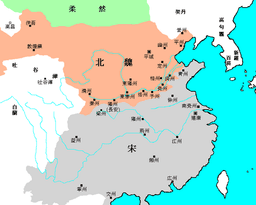
Xiao Daocheng's legacy is more modest. He founded the Southern Qi, one of the Southern Dynasties during the Northern and Southern period, but its brief existence meant limited lasting impact. His dynasty is often overshadowed by the more powerful Northern Wei. His total score of 51.8 reflects his minor role in Chinese history. He is remembered primarily as a transitional figure in a chaotic era.
Conclusion
Emperor Guangwu of Han had a far greater impact than Xiao Daocheng. With a composite score of 68.8 versus 51.8, Guangwu's military skill (78.0) and leadership (78.0) far exceeded Xiao's (50.0 and 67.0). Guangwu restored a major dynasty and shaped Chinese history for centuries, while Xiao founded a short-lived dynasty that quickly fell. The data supports the conclusion that Guangwu was a transformative figure, whereas Xiao was a minor player in a fragmented era.
Rankings
🥇
Emperor Guangwu of HanLeader
Mil: 78.0Pol: 70.0Inf: 55.0
68.8
🥈
Xiao Daocheng
Mil: 50.0Pol: 48.0Inf: 51.8
51.8
+17.0 behind
How This Comparison Works
Algorithm
Each figure is scored on 6 dimensions (0—100 scale) based on structured historical data: Military (10%), Political (20%), Influence (20%), Legacy (20%), Leadership (15%), Strategy (15%). The weighted total produces the final ranking.
Data Sources
Scores are computed from structured sub-indicators in the database. Scale factors adjust for era (Ancient ×0.85, Modern ×1.0) and civilization size (Eastern ×1.05, Other ×0.80) to account for differences in population and military scale.
Maximum 3 Figures
Comparisons are limited to 2—3 figures to ensure readability and statistical meaningfulness.
Error Margins
±5 points per dimension — Sub-scores are derived from historical records with inherent uncertainty. Two figures within 5 points on a dimension should be considered roughly equivalent in that area.
Total Score Accuracy
±3 points overall — The weighted combination of 6 dimensions produces a total score with approximately ±3 points of uncertainty. Differences of less than 3 points are not statistically significant— the figures are effectively tied.
Known Limitations
- Historical records are incomplete and uneven across civilizations
- Figures from oral-tradition societies may be underrepresented
- Occupation labels can misclassify multi-role figures
- Scores measure capability and impact, not moral character
- Quantitative scoring is a comparison tool, not absolute truth
Capability Radar
Military (10%) — Battles & Warfare
Battles
85
45
Win Rate
90
50
Expansion
75
35
Political (20%) — Governance & Reform
Reform
80
50
Diplomacy
80
45
Economy
75
40
Influence (20%) — Cultural & Global Reach
Cultural
70
30
Global
65
20
Legacy (20%) — Historical Impact
Historical
80
40
Longevity
80
25
Leadership (15%) — Power & Stability
Tenure
85
55
Stability
80
35
Strategy (15%) — Tactics & Innovation
Strategy
85
45
Tactics
80
40
Reform
70
30
Similar Comparisons
Comments & Discussion
No comments yet. Be the first to share your thoughts!