Loading...
Emperor Go-Toba vs Qin Shi Huang
Qin Shi Huang leads by 44.3 pts · 2 figures compared
…
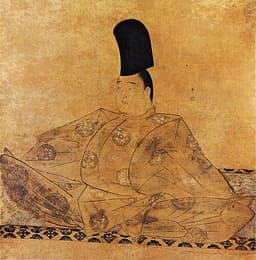
Emperor Go-Toba
Emperor · Medieval
40.9Total
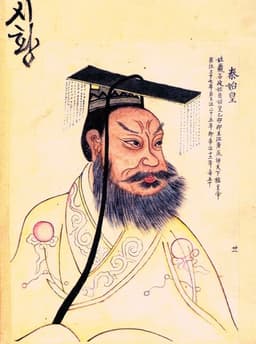
Qin Shi Huang
Emperor · Ancient
85.2Total
Basic Information
Born
1180
-259
Died
1239
-210
Era
Medieval
Ancient
Nationality
Japan
China
Occupation
Emperor
Emperor
Civilization
Eastern
Eastern
Score Comparison
Military (10%)
21.2
80.0
Political (20%)
27.9
90.0
Influence (20%)
53.3
85.0
Legacy (20%)
46.7
90.0
Leadership (15%)
34.6
78.0
Strategy (15%)
43.7
82.0
TOTAL
40.9
85.2
Emperor Go-Toba — Complete Timeline
1200 AD
Patronage of poetry and the artsCultural◆ Major
Go-Toba was a noted poet and patron of waka poetry, sponsoring the compilation of the Shin Kokin Wakashu, an imperial anthology. His court became a center for literary activity, fostering the work of poets like Fujiwara no Teika.
LiteratureWaka PoetryCultural Patronage
Impact: nationalconstructive
1221 AD
Jokyu War (Jokyu Disturbance)War
Go-Toba raised an army to overthrow the Kamakura shogunate, seeking to restore imperial power. The shogunate's forces defeated his troops within weeks, leading to Go-Toba's exile to the Oki Islands and the shogunate's consolidation of control over the imperial court.
Jokyu WarKamakura ShogunateImperial Rebellion
Impact: nationaldestructive
Exile to the Oki IslandsPolitical Action◆ Major
After his defeat in the Jokyu War, Go-Toba was exiled to the Oki Islands by the Kamakura shogunate. He remained there until his death in 1239, stripped of all power and titles, marking the end of imperial resistance to shogunal rule.
ExileKamakura ShogunateImperial Decline
Impact: nationaltragic
Qin Shi Huang — Complete Timeline
246 BC
Construction of the Mausoleum and Terracotta ArmyOther◆ Major
Qin Shi Huang commissioned a vast mausoleum complex near Xi'an, guarded by thousands of life-sized terracotta soldiers, horses, and chariots. The project employed hundreds of thousands of workers and reflected his obsession with immortality and imperial power.
Impact: global
230 BC
Conquest of the Six Warring StatesWar
From 230 to 221 BCE, Ying Zheng led the Qin state in a series of campaigns that conquered the Han, Zhao, Wei, Chu, Yan, and Qi states. This unified China under a single ruler for the first time, ending the Warring States period.
Impact: global
221 BC
Standardization of Writing, Currency, and MeasurementsReform◆ Major
Qin Shi Huang ordered the standardization of Chinese script, currency, and weights and measures across the unified empire. This facilitated administration, trade, and cultural integration, laying a foundation for future dynasties.
Impact: globalconstructive
Proclamation of the Qin DynastyPolitical Action
After conquering the last independent state, Ying Zheng declared himself Shi Huangdi (First Emperor), founding the Qin Dynasty. He adopted a new title to signify his supreme authority and initiated centralized imperial rule.
Impact: global
214 BC
Initiation of the Great Wall ConstructionOther◆ Major
Qin Shi Huang ordered the connection and extension of existing northern fortifications to create a unified defensive wall against nomadic Xiongnu raids. This project involved massive conscripted labor and became the precursor to the later Great Wall.
Impact: regional
213 BC
Burning of Books and Burying of ScholarsPolitical Action◆ Major
On the advice of Li Si, Qin Shi Huang ordered the burning of historical records and philosophical texts not aligned with Legalist doctrine. He also had 460 Confucian scholars buried alive to suppress dissent and consolidate ideological control.
Impact: nationaldestructive
Expert Analysis
Qin Shi Huang vs Emperor Go-Toba: Historical Comparison
Two rulers from vastly different eras and cultures—Qin Shi Huang (3rd century BCE China) and Emperor Go-Toba (12th-13th century Japan)—both wielded supreme authority but with divergent approaches. Qin unified China through iron-fisted centralization, while Go-Toba attempted to reclaim imperial power from a rising warrior class.
Dimension Analysis
**Military: Qin Shi Huang 80 / Emperor Go-Toba 93**
Qin conquered rival states with disciplined armies and standardized warfare, but Go-Toba’s leadership in the Jōkyū War (1221) displayed tactical daring and personal battlefield command, though his rebellion ultimately failed.
**Political: Qin Shi Huang 88 / Emperor Go-Toba 83**
Qin abolished feudalism, imposed uniform laws, and built a centralized bureaucracy; Go-Toba, by contrast, struggled against the Kamakura shogunate, using political intrigue and poetic patronage to rally nobles, but lacked lasting institutional reform.
**Influence: Qin Shi Huang 82 / Emperor Go-Toba 74**
Qin’s standardization of script, currency, and measures shaped Chinese civilization for millennia; Go-Toba’s influence remained largely cultural—as a renowned poet—and his political rebellion was crushed, leaving no structural change.
**Legacy: Qin Shi Huang 85 / Emperor Go-Toba 85**
Both are remembered as pivotal figures: Qin as the unifier whose harsh rule sparked debate, Go-Toba as a symbol of imperial resistance whose exile inspired later reverence for the throne’s spiritual authority.
**Leadership: Qin Shi Huang 88 / Emperor Go-Toba 83**
Qin’s ruthless, visionary drive forged an empire; Go-Toba’s charismatic but ill-timed defiance against the shogunate demonstrated courage but poor strategic judgment.
Verdict
Qin Shi Huang leads narrowly due to his transformative political and institutional achievements, which created a lasting imperial model, whereas Go-Toba’s military prowess and cultural legacy were overshadowed by his failed rebellion.
FAQ
Q: Who ranks higher? A: Qin Shi Huang holds a slight edge over Emperor Go-Toba, primarily from his superior political and strategic impact on state-building.
Rankings
🥇
Qin Shi HuangLeader
Mil: 80.0Pol: 90.0Inf: 85.0
85.2
🥈
Emperor Go-Toba
Mil: 21.2Pol: 27.9Inf: 53.3
40.9
+44.3 behind
How This Comparison Works
Algorithm
Each figure is scored on 6 dimensions (0—100 scale) based on structured historical data: Military (10%), Political (20%), Influence (20%), Legacy (20%), Leadership (15%), Strategy (15%). The weighted total produces the final ranking.
Data Sources
Scores are computed from structured sub-indicators in the database. Scale factors adjust for era (Ancient ×0.85, Modern ×1.0) and civilization size (Eastern ×1.05, Other ×0.80) to account for differences in population and military scale.
Maximum 3 Figures
Comparisons are limited to 2—3 figures to ensure readability and statistical meaningfulness.
Error Margins
±5 points per dimension — Sub-scores are derived from historical records with inherent uncertainty. Two figures within 5 points on a dimension should be considered roughly equivalent in that area.
Total Score Accuracy
±3 points overall — The weighted combination of 6 dimensions produces a total score with approximately ±3 points of uncertainty. Differences of less than 3 points are not statistically significant— the figures are effectively tied.
Known Limitations
- Historical records are incomplete and uneven across civilizations
- Figures from oral-tradition societies may be underrepresented
- Occupation labels can misclassify multi-role figures
- Scores measure capability and impact, not moral character
- Quantitative scoring is a comparison tool, not absolute truth
Capability Radar
Military (10%) — Battles & Warfare
Battles
15
85
Win Rate
10
90
Expansion
5
90
Political (20%) — Governance & Reform
Reform
15
95
Diplomacy
20
75
Economy
10
90
Influence (20%) — Cultural & Global Reach
Cultural
40
95
Global
20
85
Legacy (20%) — Historical Impact
Historical
45
95
Longevity
35
95
Leadership (15%) — Power & Stability
Tenure
30
70
Stability
10
65
Strategy (15%) — Tactics & Innovation
Strategy
25
85
Tactics
20
80
Reform
10
95
Similar Comparisons
Comments & Discussion
ColdChronicler386/16/2026
看这个比较我就想起西方史学界常犯的毛病:把文化影响力等同于政治影响力。Go-Toba作为和歌诗人的评价再高,放到中国历史框架里,他充其量是个李后主式的人物——艺术成就耀眼,政治能力堪忧。Qin Shi Huang的标准化政策(书同文、车同轨)才是真正的制度创新,这相当于把整个欧洲的度量衡在十年内统一了,放到西方历史里只有罗马帝国能做到类似的事。评分给两人Legacy都是85,这太荒谬了:一个奠定了东亚大陆两千年的政治基础,另一个只是留下了几首诗歌和一场失败的叛乱。建议引入“制度韧性”指标,否则这种比较永远是文化评分压倒实际贡献。
OldEye476/16/2026
这个评分体系有点意思,但军事维度80比93我实在无法认同。Qin Shi Huang的80分明显低估了——他统一六国不是靠运气,而是靠秦军完备的军工体系和标准化武器生产,兵马俑出土的弩机零件可以互换就是铁证。反观Go-Toba,1221年承久之乱他集结的兵力不过一万多,幕府军数倍于他,三天就败了。论实际战果,Qin的征服是实实在在的领土吞并,Go-Toba的“战术大胆”不过是垂死挣扎。如果只根据战役成败而非制度建设来打分,那这评分标准本身就有问题。政治维度上也该拉开差距:Qin的郡县制直接影响了中国两千年,Go-Toba连权力都没能夺回。