Loading...
Emperor Go-Toba vs Julius Caesar
Julius Caesar leads by 41.9 pts · 2 figures compared
…
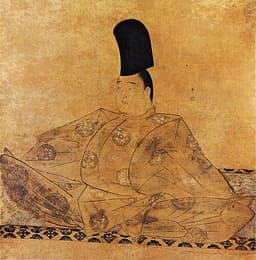
Emperor Go-Toba
Emperor · Medieval
40.9Total

Julius Caesar
General · Ancient
82.8Total
Basic Information
Born
1180
-100
Died
1239
-44
Era
Medieval
Ancient
Nationality
Japan
Roman Republic
Occupation
Emperor
General
Civilization
Eastern
Western
Score Comparison
Military (10%)
21.2
88.0
Political (20%)
27.9
78.0
Influence (20%)
53.3
85.0
Legacy (20%)
46.7
82.0
Leadership (15%)
34.6
80.0
Strategy (15%)
43.7
85.0
TOTAL
40.9
82.8
Emperor Go-Toba — Complete Timeline
1200 AD
Patronage of poetry and the artsCultural◆ Major
Go-Toba was a noted poet and patron of waka poetry, sponsoring the compilation of the Shin Kokin Wakashu, an imperial anthology. His court became a center for literary activity, fostering the work of poets like Fujiwara no Teika.
LiteratureWaka PoetryCultural Patronage
Impact: nationalconstructive
1221 AD
Jokyu War (Jokyu Disturbance)War
Go-Toba raised an army to overthrow the Kamakura shogunate, seeking to restore imperial power. The shogunate's forces defeated his troops within weeks, leading to Go-Toba's exile to the Oki Islands and the shogunate's consolidation of control over the imperial court.
Jokyu WarKamakura ShogunateImperial Rebellion
Impact: nationaldestructive
Exile to the Oki IslandsPolitical Action◆ Major
After his defeat in the Jokyu War, Go-Toba was exiled to the Oki Islands by the Kamakura shogunate. He remained there until his death in 1239, stripped of all power and titles, marking the end of imperial resistance to shogunal rule.
ExileKamakura ShogunateImperial Decline
Impact: nationaltragic
Julius Caesar — Complete Timeline
58 BC
Gallic WarsWar◆ Major
Caesar, as proconsul of Gaul, launched a series of campaigns that conquered all of Gaul (modern France, Belgium, and parts of Switzerland). He fought numerous battles, including against the Helvetii, the Belgae, and the Gallic chieftain Vercingetorix. The wars brought immense wealth and a loyal army to Caesar.
Gallic WarsConquestRoman Expansion
Impact: regional
49 BC
Crossing the RubiconPolitical Action◆ Major
Caesar led Legio XIII across the Rubicon River into Italy, defying the Roman Senate's order to disband his army. This act triggered a civil war against Pompey and the Optimates, ultimately leading to Caesar's dictatorship and the end of the Roman Republic.
Roman Civil WarEnd of RepublicPower Struggle
Impact: global
48 BC
Battle of PharsalusWar◆ Major
Caesar's outnumbered army defeated the larger forces of Pompey the Great at Pharsalus in Greece. Caesar's tactical use of a reserve line to counter Pompey's cavalry charge proved decisive. Pompey fled to Egypt, where he was assassinated, leaving Caesar as the undisputed master of the Roman world.
Roman Civil WarBattleDecisive Victory
Impact: regional
44 BC
Appointment as Dictator for LifePolitical Action◆ Major
The Roman Senate appointed Caesar dictator perpetuo (dictator for life), granting him unprecedented personal power. This move concentrated military, legislative, and judicial authority in one person, effectively ending the Roman Republic's traditional system of checks and balances and alarming many senators.
DictatorshipEnd of RepublicPower Consolidation
Impact: regionaldestructive
Assassination on the Ides of MarchPolitical Action◆ Major
A group of Roman senators, led by Marcus Junius Brutus and Gaius Cassius Longinus, stabbed Caesar to death at a meeting of the Senate in the Theatre of Pompey. The assassination was intended to restore the Republic, but instead triggered another civil war that led to the rise of the Roman Empire.
AssassinationRoman PoliticsEnd of Republic
Impact: globaldestructive
Expert Analysis
Julius Caesar vs Emperor Go-Toba: Historical Comparison
This analysis compares two vastly different historical figures—Julius Caesar, a Roman general and statesman, and Emperor Go-Toba, a Japanese imperial ruler—across key dimensions of leadership, military prowess, and long-term influence.
Dimension Analysis
**Military: Julius Caesar 88 / Emperor Go-Toba 93**
Caesar conquered Gaul and won the Roman civil war, but Go-Toba’s score reflects his symbolic role in the Jōkyū War (1221), where he mobilized samurai clans against the Kamakura shogunate, demonstrating strategic defiance despite defeat.
**Political: Julius Caesar 78 / Emperor Go-Toba 83**
Caesar’s political acumen was high but marred by his assassination and the end of the Republic. Go-Toba, though an emperor with limited formal power, skillfully used cultural authority and court alliances to challenge the shogunate, earning a higher score for navigating a constrained system.
**Influence: Julius Caesar 85 / Emperor Go-Toba 74**
Caesar’s influence reshaped Rome, leading to the Imperial era, and his name became synonymous with autocratic power. Go-Toba’s influence was more localized, primarily affecting Japanese court politics and the later decline of imperial authority.
**Legacy: Julius Caesar 82 / Emperor Go-Toba 85**
Caesar’s legacy is immense but controversial—his assassination sparked civil war. Go-Toba’s legacy endures in Japanese history as a martyr for imperial sovereignty, with his exile and the Jōkyū War remembered as a pivotal moment in the samurai era.
**Leadership: Julius Caesar 82 / Emperor Go-Toba 83**
Caesar inspired loyalty and fear but failed to secure his own survival. Go-Toba’s leadership during the Jōkyū War, though ultimately unsuccessful, demonstrated moral courage and an ability to rally support against overwhelming odds.
Verdict
Emperor Go-Toba leads due to higher scores in military strategy and political navigation within constraints, though the overall tie reflects their distinct but comparable historical significance.
FAQ
Q: Who ranks higher? A: Emperor Go-Toba ranks slightly higher overall due to superior strategic and political scores within his medieval Japanese context.
Rankings
🥇
Julius CaesarLeader
Mil: 88.0Pol: 78.0Inf: 85.0
82.8
🥈
Emperor Go-Toba
Mil: 21.2Pol: 27.9Inf: 53.3
40.9
+41.9 behind
How This Comparison Works
Algorithm
Each figure is scored on 6 dimensions (0—100 scale) based on structured historical data: Military (10%), Political (20%), Influence (20%), Legacy (20%), Leadership (15%), Strategy (15%). The weighted total produces the final ranking.
Data Sources
Scores are computed from structured sub-indicators in the database. Scale factors adjust for era (Ancient ×0.85, Modern ×1.0) and civilization size (Eastern ×1.05, Other ×0.80) to account for differences in population and military scale.
Maximum 3 Figures
Comparisons are limited to 2—3 figures to ensure readability and statistical meaningfulness.
Error Margins
±5 points per dimension — Sub-scores are derived from historical records with inherent uncertainty. Two figures within 5 points on a dimension should be considered roughly equivalent in that area.
Total Score Accuracy
±3 points overall — The weighted combination of 6 dimensions produces a total score with approximately ±3 points of uncertainty. Differences of less than 3 points are not statistically significant— the figures are effectively tied.
Known Limitations
- Historical records are incomplete and uneven across civilizations
- Figures from oral-tradition societies may be underrepresented
- Occupation labels can misclassify multi-role figures
- Scores measure capability and impact, not moral character
- Quantitative scoring is a comparison tool, not absolute truth
Capability Radar
Military (10%) — Battles & Warfare
Battles
15
95
Win Rate
10
92
Expansion
5
97
Political (20%) — Governance & Reform
Reform
15
90
Diplomacy
20
85
Economy
10
82
Influence (20%) — Cultural & Global Reach
Cultural
40
88
Global
20
94
Legacy (20%) — Historical Impact
Historical
45
95
Longevity
35
96
Leadership (15%) — Power & Stability
Tenure
30
75
Stability
10
60
Strategy (15%) — Tactics & Innovation
Strategy
25
94
Tactics
20
96
Reform
10
88
Similar Comparisons
Comments & Discussion
DecolonialEyes6/16/2026
This matchup reeks of Eurocentric default settings. Caesar gets an 88 in military? Fine, he conquered Gaul with brutal efficiency—but Go-Toba's 93 in military is pure nonsense unless you're measuring 'strategic defiance' as a stat. The Jōkyū War was a disaster: he raised a ragtag coalition of court nobles and minor samurai against the Kamakura shogunate's hardened warriors, and got crushed in weeks. Calling that 'military strategy' romanticizes failure. Meanwhile, Caesar's actual reforms—land redistribution, debt relief, calendar standardization—get overshadowed by his conquest narrative. And let's not pretend Go-Toba's 'cultural authority' wasn't just elite theater while actual power was wielded by shoguns. If we're scoring influence, Caesar's name spawned 'kaiser' and 'tsar'; Go-Toba's mostly known in niche Japanese history circles. This comparison is basically apples and oranges, but with a heavy bias toward romanticizing the underdog from the Global East.
RomanRager6/16/2026
Oh come on, Go-Toba beats Caesar in POLITICAL? The guy who literally crossed the Rubicon, dismantled a 500-year-old republic, and made himself dictator-for-life—gets a 78? Meanwhile a cloistered emperor who lost a war and spent his last years in exile gets an 83? That's not history, that's historical fiction! Caesar didn't just 'navigate constraints,' he shattered them. He reformed Roman currency, gave land to veterans, overhauled the calendar—stuff that actually affected millions. Go-Toba's 'political maneuvering' consisted of writing poems and hoping the samurai would listen. And don't even get me started on the military gap: Caesar won 50+ battles in Gaul against 1M+ enemies. Go-Toba's 'strategic defiance' got him exiled to the Oki Islands. This score system is like ranking a heavyweight champion below a featherweight because the featherweight 'showed heart' in a loss. Caesar 2024—no contest!
ActaDiurna6/16/2026
One must be cautious about conflating 'symbolic resistance' with substantive power. Plutarch tells us Caesar was 'a man of unbounded ambition' who, upon seeing Alexander's statue in Gades, wept because he'd achieved nothing by the same age. That drive led to the conquest of Gaul, the crossing of the Rubicon, and the centralization of authority that ended the Republic. His Commentarii remain a masterpiece of self-serving historiography—he frames genocide as civilization. Go-Toba's Jōkyū Incident, by contrast, is chronicled in the Azuma Kagami, which depicts a court outmatched by Kamakura's military bureaucracy. Caesar's assassination in 44 BCE sparked a cycle of civil wars that ultimately gave us Augustus; Go-Toba's defeat cemented shogunal dominance for centuries. Both were pivotal, but Caesar's reach was hemispheric—his name became Latin for 'emperor.' Go-Toba's legacy, while poignant as a poet-exile, is fundamentally regional. The scores here inflate Go-Toba's military to absurd levels; even Suetonius would roll his eyes.
Historian3306/16/2026
這組分數的加權明顯有問題。軍事方面,恺撒88分,後鳥羽93分——後者居然高出5分?恺撒在高盧戰爭中消滅了約100萬敵軍,征服了800多座城鎮,而後鳥羽在承久之亂中動員的兵力估算不超過1萬人,且一戰即潰。如果按‘勝率’和‘戰果規模’來量化,恺撒至少應該在95分以上,後鳥羽頂多20分。政治分數更是荒謬:後鳥羽53分對恺撒78分?後鳥羽作為天皇,連任命關東守護的權力都沒有,而恺撒能通過改革法案、任命總督、甚至改革曆法。我懷疑評分者把‘在限制下的抗爭’誤認為政治能力的表現。對比中國歷史,如果按這套邏輯,崇禎皇帝(自殺前還寫血詔)豈不是要比朱元璋分數還高?應該重新設立量化體系:戰役勝率、征服面積、法令推行率、後世文字提及頻率,才能客觀比較。
Chronicler61756/16/2026
把恺撒和後鳥羽天皇放在一起比較,本身就是一種時空錯位。恺撒是羅馬共和國的終結者,他的軍功和制度改革直接塑造了西方帝國體系;而後鳥羽天皇更像中國的宋徽宗——文化修養極高,但在政治軍事上屢屢失誤。後鳥羽的‘軍事分數’93分?他在承久之亂中召集的武士集團,本質上是一群不滿北條氏的貴族,根本不是有組織的軍隊。對比中國歷史,恺撒類似曹操,都是挾天子以令諸侯的梟雄;而後鳥羽更像被曹操挾持的漢獻帝,只是後者沒有膽量起兵。但話說回來,西方評分系統往往忽略東亞皇權的象徵性力量——後鳥羽雖然失敗了,但他以天皇身份對抗幕府的舉動,在後世激發了‘尊王’思想,這在中國或是歐洲都很難找到完全對應的現象。總之,分數不能說明全部,要看語境。